
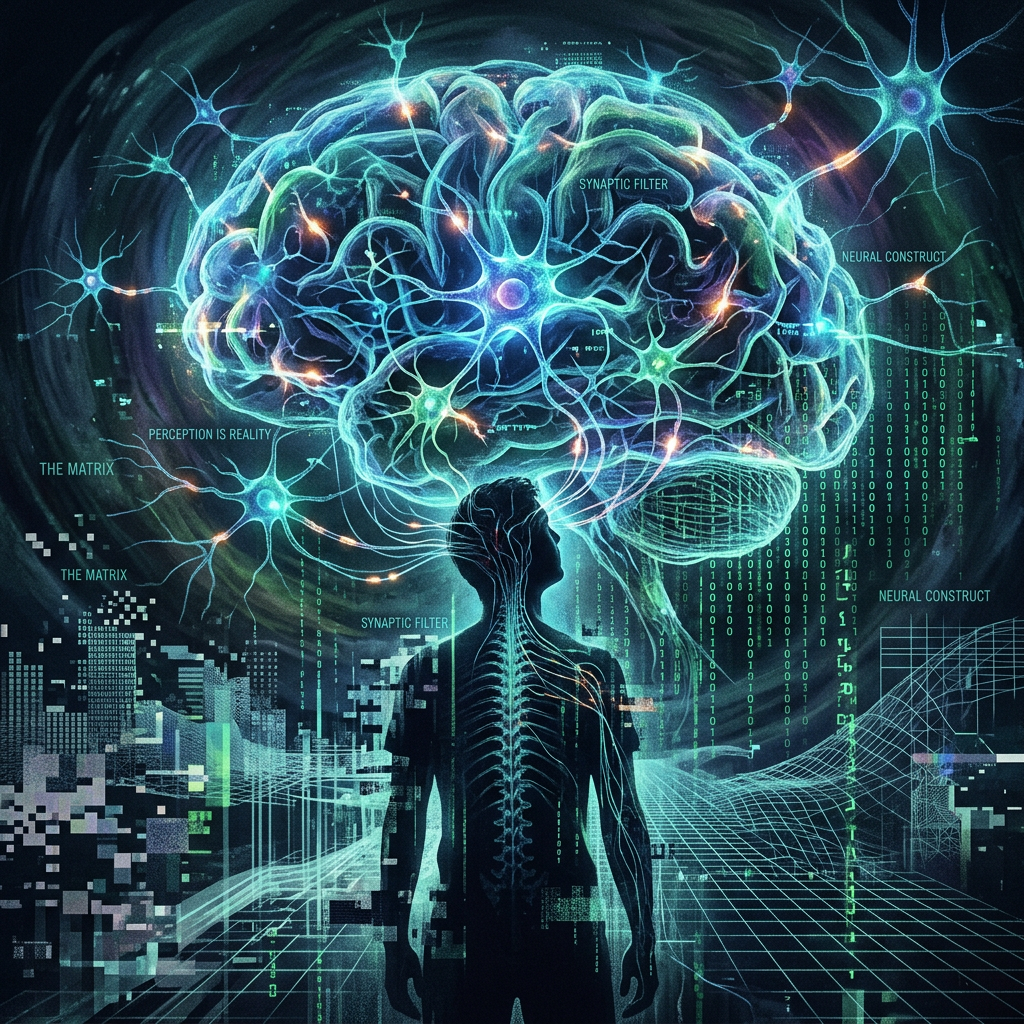
I hate this formatting of AI that cannot make proper paragraphs but anyway, at least I could manage to transcribe my thoughts without interference and AI generated ideas. And I am too lazy to edit.
Yesterday I had anesthesia for a little operation on my hand, and it felt strange in a way.
The injection hurt more than I expected, probably because there are so many nerves in the finger. At least, doctor agreed. It was also interesting experience to be operated like that. Enough time to make jokes, hear jokes and philosophize the process.
Although, it is not something uncommon. I still felt differently.
After a few minutes, the feeling just disappeared. It was like someone had unplugged a cable.
They worked on my finger. I could watch without any pain and dizziness, and the only obvious difference between my body and a device seemed to be the blood.
It reminded me of my previous experiences in hospitals and operating rooms as an engineer.
I noticed how doctors often have to approach the human body almost mechanically. Otherwise, I imagine it would be an emotionally exhausting job. They can talk, joke, and maintain a cheerful atmosphere while working on someone’s body. From the outside, the whole process can seem surprisingly mechanical.
But there is another side to it. When the operation is finished, something has been repaired or removed, and the patient is happy, there must be an enormous emotional reward. It cannot like we fix the devices, since devices or their relatives doesn’t thank to us. Even at home, I don’t remember if I ever thought about appreciating engineers who build TV that I can watch, who built the plane or any tools, we use everyday.
That contrast is interesting to me.
On the other hand, it is a huge systematic work that we lose or forget the trace of people on the way. It is similar with the work itself. When a system becomes complex enough, we no longer fully understand everything happening inside it.
Yet we continue working with it.
Actually, this is how we live. We survive by being part of systems that we don’t necessarily understand completely.
Think about programming.
You start with the basics. You learn how individual components work, how memory is managed, how instructions are executed, and how different parts communicate.
Then you start building abstractions.
Over time, you work at increasingly higher levels. You use libraries, frameworks, operating systems, and tools developed by other people. Eventually, you stop thinking about what happens underneath.
You trust the system and build something new on top of it.
And perhaps the people who developed those lower layers were doing exactly the same thing. At some point, nobody involved in the process necessarily understands the entire system anymore.
Today, we discuss artificial intelligence tools and say that they are so complex that we don’t fully understand what happens inside them.
But is that really unusual?
We have been doing something similar for a long time.
We develop systems, learn to use them, build new systems on top of them, and gradually forget the underlying complexity.
And these systems don’t remain the same.
They evolve.
A system that initially had a clear structure and purpose can become something completely different after years of development, modifications, improvements, and interactions with other systems.
Think about the societies we live in.
We have economic systems, political institutions, legal structures, transportation networks, communication technologies, and countless other interconnected mechanisms.
Most of us don’t know exactly how these systems originated, why they developed in a particular way, or how all their components interact.
We learn their rules, adapt to them, and become part of them.
We don’t necessarily question their foundations because, for most of our daily activities, we don’t need to.
And while we are living inside these systems, they continue evolving.
We change them through our actions, and they change the way we live.
Perhaps this is one of the most interesting characteristics of complex systems: We can participate in their development without understanding their entire structure or even remembering how they originally emerged.
And this complexity is not limited to technology or institutions. It exists in almost everything we do in daily life.
Like languages…
We use language every day. We construct sentences, understand meanings, recognize emotions through words, and communicate complicated ideas without consciously thinking about the underlying processes.
But how does a baby learn a language?
A baby starts without knowing words, grammar, or sentence structures. Yet, through exposure, interaction, and experience, the brain gradually develops the ability to understand and produce language.
We can study this process, describe parts of it, and develop theories about how it works. But explaining every mechanism involved is still an enormous challenge.
And once we learn a language, we simply use it.
We don’t consciously calculate grammar rules every time we speak. We don’t think about how our brain recognizes individual sounds or connects words with meanings.
The complexity becomes invisible to us.
The same happens with walking, recognizing faces, interpreting emotions, and countless other everyday activities.
We perform incredibly complicated tasks without understanding how we perform them.
Perhaps this is another characteristic of complex systems. Once something becomes familiar and reliable, we stop noticing the complexity behind it.
We simply trust that it works.
Until something goes wrong.
I feel that the human body is similar.
We know many individual mechanisms. We can study organs, cells, electrical signals, chemical reactions, and biological processes.
We can even intervene in these processes.
But understanding individual components doesn’t necessarily mean understanding the entire system.
And somehow, we live inside this biological system every day without thinking much about how it works.
Maybe we are just incredibly complex biochemical robots with blood.
When I think about our bodies, our perception, and our physical capacities, another question comes to mind.
How far can we actually push our limits?
We can train our bodies, improve our endurance, become stronger, and develop new skills.
We can train our minds too. We can learn, solve complicated problems, improve our concentration, and expand our knowledge.
In some sense, we can go beyond what we previously believed were our limits.
But there is always another limit.
Our bodies have physical constraints. Our brains have limitations. We need energy, rest, and recovery.
After all, we are biochemical, electrical, and mechanical systems. (Well, perhaps our idea about body will be changed with new discovery. After Industrial Revolution, it was thought it is mechanical but obviously that assumption was not accurate.)
And like every physical system, we operate within certain boundaries.
What I find particularly interesting is how much of our experience depends on how these systems interpret information.
During the injection, I felt pain.
That part was obvious.
There are nerves in my finger, the needle stimulates them, and signals travel through my nervous system.
But how do I actually experience that pain? Except, receptors electrically transmit the information and brain says yes, it is pain. When we consider this, it makes it actual illusion which explains also why some people have better tolerances or no pain at all. Isn’t it funny that no nerves no pain?
This question has been discussed by philosophers and scientists for centuries.
If someone else received exactly the same injection, would they experience the same pain?
Probably not.
We know that some people have higher pain tolerance than others. Some react strongly to sensations that others can tolerate relatively easily.
But the interesting part is not only the physical sensation.
It is the perception of that sensation.
Two people can experience similar physical events but interpret them very differently. Similar with emotional perception.
And even the same person might experience pain differently depending on their emotional state, expectations, attention, or previous experiences.
So how much of what we feel is determined by the physical signal, and how much by the way our brain processes it?
And more importantly, how much can we influence that process?
Anesthesia is an interesting example.
A chemical substance can temporarily block the transmission of certain nerve signals, and suddenly something that would normally be painful becomes something we can watch almost indifferently.
General anesthesia and sedation make this even more interesting.
Under general anesthesia, we can lose consciousness and have no ordinary awareness or memory of the procedure.
With certain forms of sedation, we might remain partly responsive but remember very little afterward.
Then there are alcohol, drugs, and other substances that can change our senses, emotions, memory, and perception.
It is quite strange how easily our experience of reality can be altered. We can rewire the brain, change the existing memory or corrupt it completely. We can remove the memory and we can even change our reality and perception entirely which makes our all senses useless.
The physical world is what we perceive is very wrong idea because although it is the same, we have different realities out of it and it can be even modified and manipulated socially, chemically, culturally and physically.
Things that feel so personal and fundamental to our existence depend on biological processes that can be influenced by relatively small chemical interventions.
But this also works in the other direction.
If our perception can be changed, perhaps we can change the way we experience negative emotions and memories.
A bad experience does not necessarily have to remain a bad memory forever.
We might reinterpret it, find something meaningful in it, turn it into a positive experience, or at least learn to accept it.
Of course, this doesn’t mean that every negative experience can simply be transformed into something positive.
But the possibility of changing our relationship with an experience is interesting.
Psychology, psychotherapy, psychiatry, and other approaches explore different aspects of this.
And people were experimenting with their minds long before modern medicine existed.
Think about monks, meditation traditions, or older societies that developed techniques to influence their emotions, attention, and perception of pain.
They didn’t necessarily understand the biological mechanisms involved, but they discovered ways to interact with the system.
Once again, we have people working with a complex system without fully understanding what happens inside it.
And in this case, the system is their own brain.
From an engineering perspective, the brain itself is also astonishing.
Such a relatively small biological structure can store memories, recognize patterns, interpret sensory information, control movement, generate ideas, learn languages, and manage countless processes simultaneously.
And it does all this without the enormous power supplies or conventional cooling systems that many of our computing machines require.
Of course, the comparison isn’t entirely fair.
The brain operates differently from a conventional computer. It has different strengths, weaknesses, and limitations.
But perhaps that is exactly what makes it interesting.
When we design computing systems, we often focus on increasing processing power.
More calculations, faster processors, more memory, and more computational resources. That means much more complexity than our biological brains can ever process.
But maybe the brain’s efficiency comes partly from doing something different.
Maybe the key is not processing more information, but processing less.
Our brains don’t consciously process every signal they receive.
Our attention is selective. Our memories are incomplete. We ignore enormous amounts of information, simplify our surroundings, recognize patterns, and make decisions without calculating every possible outcome.
And many processes happen simultaneously without requiring our conscious attention.
Perhaps this ability to reduce complexity is one of the reasons biological intelligence can be so efficient.
Instead of calculating everything, the brain might focus on what is relevant, use previous experiences, and approximate the rest.
This also brings me back to engineering and also fundamental question what intelligence mean. What do we talk about human intelligence and also machine intelligence?
We often try to solve complex problems by adding computational resources.
But perhaps we should also think more about which calculations are actually necessary.
Can we achieve useful results by processing less information?
Can we design systems that operate more selectively?
Can we distribute tasks differently, perform more operations in parallel, or avoid unnecessary calculations altogether?
Of course, the brain has physical limits too.
It consumes energy, generates heat, makes mistakes, forgets information, and cannot process unlimited amounts of data. Other question is, what happens with overload? What is behind feeling overwhelmed and our brain cannot handle any more information?
Better to ask what tiredness means for the brain?
But it seems to approach certain computational problems very differently from the machines we usually build.
And perhaps understanding these principles could help us develop entirely different computing systems.
But there is another side to this efficiency.
Our brains are incredibly powerful, yet surprisingly easy to trick. Besides, it needs a lot of energy from body to operate it.
We experience illusions. We misinterpret situations. We remember things incorrectly. We perceive patterns that might not exist.
Our perception of reality can change depending on our expectations, emotional state, previous experiences, and even the information we have recently encountered.
And these changes don’t necessarily require strong drugs or medical interventions.
Something we watch, a conversation we have, a sound we hear, or an unexpected event can influence our emotions, attention, and perception.
Even ordinary daily experiences continuously affect how our brains operate.
Then there are more direct interventions.
Anesthesia, medications, alcohol, and other chemical substances can alter the functioning of our nervous system.
A relatively small chemical intervention can change what we feel, how we think, what we remember, or how we experience the world around us.
From an engineering perspective, this is fascinating. but also, it makes me feel how close we are to mimic human system artificially while we are already beyond human capacity in few ways.
We have an incredibly complicated processing system, yet changing certain chemical or electrical conditions can significantly alter its behavior.
Sometimes the changes are temporary. Sometimes they can have longer-lasting effects.
And the interesting part is that these are physical processes.
Chemical substances interact with receptors. Electrical activity changes. Communication between neurons is modified.
But not every change requires introducing something directly into the body.
We can also influence the brain through experience, learning, repetition, attention, and psychological processes.
In a way, this reminds me of the difference between hardware and software.
Some interventions seem closer to changing the physical operating conditions of a system, while others resemble changing the information, patterns, or instructions that influence its behavior.
Of course, the brain doesn’t have a clean separation between hardware and software like a conventional computer. Learning itself involves physical changes in neural connections and activity.
But the analogy is still interesting.
We can change the behavior of a system without necessarily replacing its physical components.
A new experience can change our interpretation of an old memory.
Repeated practice can change how we perform a task.
Psychological experiences can influence physiological responses.
And chemical changes can influence psychological experiences.
Everything is connected.
What we experience as psychological can influence our biology, and what happens biologically can influence our psychological experience. This is also reason why some people experiment the drugs or drugs are so popular in entertainment sphere.
This makes me wonder how much control we actually have over our perception.
We tend to trust our senses and memories because they feel immediate and personal.
But if our experiences can be influenced so easily, how reliable are they? (This remind me the time how we discussed at high school, a common event happened in primary school. Same event, same people but completely different memory and some were even conflicting. 180 degree different. )
And if the brain can be tricked into perceiving something differently, can we also deliberately use some of these mechanisms to improve how we learn, manage emotions, or deal with negative experiences?
Perhaps this is another important lesson for engineering.
We often evaluate a system by its processing capabilities, but understanding its limitations, vulnerabilities, and failure mechanisms can be equally important.
The brain is no exception.
It is an extraordinarily capable biological system, but it is not a perfect one.
And perhaps some of its apparent weaknesses are closely connected to the mechanisms that make it so efficient in the first place.
One addition to here that this is not only lessons for engineering but also good reflection of self. Because it really helps to improve learning, control emotions, reactions and setting correct boundaries of self.
Getting back to finger, all these thoughts started with a needle in my finger and completely intentional and aware. Do not say what the heck you are talking about.
The source of all these thoughts were coming from how doctor explained what would happen after needle and how it felt. So, the question was “did somebody feel exactly the same?”. This question is followed by existential reality and best way to escape from existential crisis is to accept that we are part of a system. Sounds like religious belief, partly yes. Depending on, what we mean with system and what we expect from it.
We live inside biological systems that we don’t fully understand.
We build technological systems that eventually become too complex for any individual to understand completely.
We create social structures, institutions, and technologies that evolve over time, while we gradually lose track of their original foundations.
Yet we continue functioning within all these systems.
We trust them, adapt to them, modify them, and build new things on top of them.
Perhaps our brains do something similar with reality itself.
They receive information, filter it, simplify it, and construct an experience that allows us to function without understanding every detail.
I don’t know whether we will ever fully understand the human brain or build something truly comparable to it. but I guess, we are very closed to that but something with millions of single point of failure and trillions of unexpected issues.
And I don’t know exactly where the boundary between a biological organism and a machine lies.
But I find the similarities fascinating.
Maybe we really are just incredibly complicated robots with blood.
And maybe understanding how these systems work, how they evolve, and how we experience them is one of the most interesting things we can explore.


Leave a Reply