After coming together and working with enough peasants from different nations, I started writing this piece while thinking: why shouldn’t I criticize these peasants mercilessly?
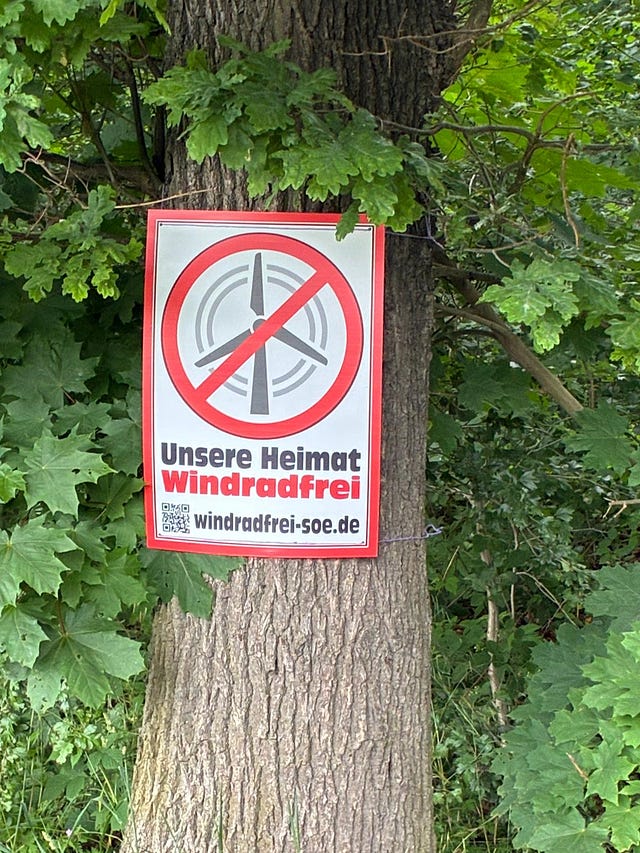
Actually, my starting point was a sign hanging in the forest where I walk during work breaks. It said: “We do not want wind panels in our homeland.” I was going to gather the peasants and say, “You should see hydroelectric power plants too,” but it didn’t happen. I also couldn’t ask, “Do you have a zillion problems, what did the wind panel do to you?”
After Hungary explained its withdrawal from Eurovision as “too gay,” this is not surprising either. Everyone has their favorite conspiracy that they believe in. One of the workers at the factory was whispering, “Electric cars reduce the population.”
The advantage of our peasants in Turkey may be their ability to adapt to technology quickly, they do whatever the Leader says. And the Leader does the opposite of whatever the people say. If something is criticized enough, he immediately says, “I am the expert in that business,” and lays it down in every country.
Anyway, let’s return to peasantry. Not to the producing, working peasants who are the masters of the nation(this is said in early Turkish Republic to motivate people for reconstruction of the new born country), but to the peasants we use as a mentality. That is, those who cannot mentally migrate from the village to the city, the townspeople in the words of the late İlber Ortaylı(Turkish Intellectual), or those who cannot pass from the 20th century to the 21st. In other words, the grandchildren of those who could not pass from the 19th to the 20th.
Peasantry is the morality of a closed community, narrow belonging, fear of the outside and of innovation, suspicion toward what is different, surrender to authority, and the state of replacing the whole truth with one’s own little world.
Therefore, what we call peasantry is not only in the countryside, but in cities, on television, in the neighborhood, in the family, in the company, in the state, on social media, in the nation, in other words everywhere. In recent years, thanks to algorithms as well, this peasantry has become the new global trend. How?
By placing one’s own group above everyone else, by accepting one’s own truth as the most important, by dividing people into “us” and “them,” by blaming, snitching, and measuring morality through loyalty to relatives, neighborhood, belief, party, nation, and community.
This is also why Marx and Engels said, “Workers unite, peasants, you wait a little.” The expression “the idiocy of rural life,” just like Aziz Nesin (another Turkish Intellectual) supposedly calling the people stupid, can be thought of not as a phrase used to belittle human beings, but as a phrase used to describe the narrow horizon produced by a closed, fragmented, primitive life. Marx’s concern was that human beings could not grasp their relationship with production within their own narrow environment.
See the biiig picture!!!
For the peasant imprisoned in his own world, the world is his own surroundings. His understanding of morality is the morality of his own neighborhood. What he sees as order is his own interest; his common sense is actually his own fears; and his maturity is his own silence. When you think like this, you can actually see how much peasantry exists even in megacities. Or simply by looking at Twitter or so called X.
Today, it is possible to see the trace of peasantry in many examples, from racism to violence. The reason for this is the understanding of morality we are talking about, or rather the narrowing of morality. Because what we call morality is not something innate. I have never seen babies accusing each other of immorality.
Generally, morality is shaped more by one’s environment and the expectations of that environment. The question “Is this person being treated unjustly?” stops being asked over time, because someone needs to be blamed. Even if conscience and an ethical stance occasionally poke from inside, the pressure of “what will our people say?” weighs heavier. Then come questions like “What will happen to me if I say this?”, “What will people say, will they misunderstand?”, “Will I and my relatives be excluded?” And eventually, everyone meets in a shared silence. Its political version is: “If the state says so, there must be a reason.”
The first seed of violence is actually this passive behavior. The moment when conscience falls silent and the environment becomes dominant.
In small places, the pressure becomes even more visible. Everyone knows everyone. It is known who speaks to whom, who greets whom, and who remains silent on what issue. I suppose gossip comes at the very beginning of universal peasant behaviors.
In such places, thinking differently is not only a difference of opinion, but also a social risk. Exclusion, life becoming more difficult, family pressure, and gossip. As a result, the person remains silent not because they support evil, but because they fear loneliness. This silence turns into a habit over time.
Example:
Silivri is cold.
(this is a common joke in Turkey last years. It refers the Marmara Prison that many journalists, opposition politicians, intellectuals, academics, students are kept. The joke says in subtext if we talk, we can be sent there.
When an injustice first happens, it disturbs you; over time, it shakes you less; you get used to it. When it repeats, it becomes part of life. The human mind is like this. When it hears a sound continuously, it no longer hears it; it no longer smells the odor. In the same way, societies can get used to injustice.
This is also why dictators support peasants so much and draw power from them. The masses that will accept evil the fastest are peasants.
The normalization of oppression is something like this too. What is first perceived as ugly turns into a joke over time. The first lawlessness creates anger, but if it is made acceptable, it suddenly becomes the reality of the country.
I will give the same reference here that I gave in the previous article: “The Banality of Evil.” Arendt’s observation was that great evils happen not through demonic passions, but through thoughtlessness, the language of duty, and escape from reality. If you pay attention, what all evil characters do is the same anyway: detach human beings from reality.
See: the orange-faced yellow pee-pee, middle east’s modern evil, the blond iron man, and Darth Vader.
According to her, a person who acts without thinking and sees himself only as a function can become part of horrifying consequences. And for those who do not see it that way, their own end may also be horrifying. Is silence the best option? No.
Adolf Eichmann was an SS officer who played a central role in Nazi Germany and in sending Jews to concentration and extermination camps. At his trial in Jerusalem in 1961, he said, “I was only doing my duty.”
When Arendt followed this trial in Jerusalem, she saw not a demonic genius or an ideological fanatic, but rather a bureaucrat who spoke in clichés and could not truly think about the consequences of his own actions. In other words, a man who shaped his morality according to his environment, who was far from ethics, and who accepted whatever came before him as right simply because it was legal. The most dangerous thing is this. For this reason, Arendt associated Nazi violence with the immorality of small worlds.
Peasantry is actually the socialization of thoughtlessness. Instead of thinking on his own, the person prefers to conform to the group. Hating something that everyone hates therefore appears like common sense. Its reflection in today’s world is the same: “love of homeland and nation.”
What Nietzsche called “herd morality” is also this. Instead of creating one’s own value, the person takes refuge in the safe values of the crowd. Of course, this is not only related to peasantry. A similar thing is what kept the caveman alive. See: Plato’s “Allegory of the Cave.”
Such a morality presents itself as the one true morality. “This is how we are,” “this is what is right,” “this is morality.”
Most of the time, this is not a brave morality, but the morality of fear. It fears what is different, fears thinking alone, fears individual responsibility. When you think like this, it is possible to see that nothing has changed in Turkey for centuries; only the dominant herd has changed.
Nietzsche’s critique of herd-animal morality shows how closed communities experience an intellectual famine while imagining themselves to be the owners of morality.
Let’s return to violence. To the inevitable end. The preparation for violence often begins in language. It is possible to see this change today in every society through the words we have gotten used to. When names, faces, and stories become unimportant, labels come into play. “These people,” “those people,” then “traitors,” “immoral people,” and then “terrorists,” “foreign powers.”
This change first pushes human beings out of language and makes what is done to them less disturbing. What was done to Jews in Nazi Germany was exactly the continuation of such a process.
Have you heard of René Girard’s “scapegoat theory”?
I heard of it recently too. It describes closed societies choosing a target in order to resolve their own internal tensions. When economic hardship, loss of status, fear, moral panic, or political crisis cannot be solved directly, society looks for a victim that will relieve itself. That is, a figure onto whom blame can be thrown. Thus, violence does not appear random either. It is more often explained through phrases such as “cleansing society,” “protecting order,” or “defending morality.” Just like the way refugees are blamed today for all the problems of the world. Or the way the decline in quality of life brought by ecological and economic changes in the world is supported by conspiracies.
For this reason, in peasantry, violence can often be described not as a mindless explosion, but as the community collectively throwing off its fear onto someone else.
The moral collapse seen in the villages, towns, and ordinary police units of Nazi Germany is among the examples of this. Most evils came not from ideological fanatics, but from ordinary people. Looting, attacks…
Browning, one of the historians who studied the Nazi period, explains in his work Ordinary Men, just like Arendt, that mass evil came from ordinary people. When he examined Reserve Police Battalion 101, he revealed that these were not elite SS killers, but ordinary Germans from the working class or lower-middle class, middle-aged men. This reminds me of a story my friend told me about his uncle. He is Syrian. His uncle had worked as a doctor in Germany for years. He also had a summer house in Antalya. When he retired, he moved to Antalya completely. After the migration in 2015, they left him no peace in his own home; his house was attacked with stones twice. When he investigated who had done it, he saw that they were neighborhood residents with whom he had lived for years and exchanged greetings.
Isn’t it horrifying? A person can easily become part of brutality while feeling completely normal.
Another example is Milgram’s obedience experiments. These are probably the most popular experiments. They show that ordinary people can be obedient in the face of authority despite moral discomfort. Asch’s conformity experiments show that a person can deny even a truth they clearly see under group pressure. When authority and the crowd come together, conscience goes on vacation.
This is also why we hear disgusting stories one after another. Closed societies create work for tv shows.
Not being able to see the whole is an important part of violence. Everyone actually sees a small part and believes in the innocence of that part. Someone sees that some people are being excluded, someone sees someone’s shop forcibly closed, someone sees children humiliated at school, someone sees all someone’s property confiscated, someone sees someone thrown into jail in a hurry, but says nothing. They find reasons for themselves and do not think about the rest, or they care only as much as it benefits them. Because seeing the whole requires responsibility.
A person can see the part and say, “It is not my business.” Dozens of changing laws and the situation of people unjustly imprisoned are the same. Small parts inside the whole. Each one is in that situation for supposedly justified reasons for a small part of society.
I do not remember who it was, but one of the Holocaust researchers said that modern brutality does not operate only through primitive hatred, but through division of labor, bureaucracy, technical reason, and distance. Violence is fragmented inside modern institutions and divided into lists, files, and orders. Some transport, some watch, and some approve. The result is ovens where people are burned, people displaced from their homes, cities flattened. It has been the same for centuries.
Peasantry does not always mean ignorance. It can also be a conscious narrow-mindedness. Because seeing the whole and reacting to it also means facing your own silence. This is a heavy thing. Therefore, instead of denying the truth, a person may choose to divide it and explain the small pieces.
Just one decision, just one change in the law, just one rumor, just a security measure, just an exception, just something specific to these people.
Oppression, too, is the sum of these “justs.”
Foucault describes power not merely as a crude force descending from above, but as a structure operating through gazes, institutions, language, school, family, hospital, police station, workplace, media, and everyday habits. In small places, this power is more naked because everyone watches everyone else. Therefore, a person regulates himself according to both the gaze of the state and the gaze of the neighborhood. Thus, external pressure is no longer even necessary. Self-censorship begins: restraining oneself and minding one’s own business.
In other words, people begin to become their own prison guards. Mukhtars, watchmen, and online snitching systems are not for nothing.
Freud, in mass psychology, explains that within a community, the individual’s self weakens and the person identifies with the leader, the group, or common symbols. Bring out the rakı, we are going to recite a march.
Thus, the individual’s own responsibility decreases and emotional contagion increases. The person does something in a crowd that they normally could not do alone. In other words, the crowd gives people both a feeling of power and a feeling of innocence.
That is why what we call lynching is actually an effort to see oneself as right and to prove that rightness even more loudly.
Another danger in peasantry is gossip replacing morality. In closed societies, information spreads not through investigation, but through rumor. Therefore, truth loses its importance and stories are believed. I do not know if there is a cheaper method of judgment than gossip. No need for evidence, no need for reasoning, no responsibility. The more you repeat it, the truer it becomes.
Today, thanks to technology, these closed communities have turned into millions of people talking about the same thing. Therefore, accurate information has also lost all importance. Whoever has Twitter wins.
While we thought we were moving forward, have we become even more peasant-like?
Yes. All of social media is built on this peasantry. The only difference is that self-display, sharing every moment, and the habit of accumulating life instead of living it have been added to it. This, too, is actually peasantry. Social backwardness.
On social media, people can quickly split into groups and spread lynching to the whole world. Exclusion, gossip, labeling, and collective anger are the fuel of this business. Although modern human beings think they have left the village, it is more accurate to say that they have brought the village into their pocket. Now everyone is in everyone else’s square, everyone watches and judges one another. Everyone tries to belong to a group and attacks the other group whenever they find the opportunity. Even more interestingly, if you do not take part in this, you are considered strange, marginal, or nonexistent. In other words, it is exactly the same as village behavior. The one who speaks up is excluded, and in order not to be excluded, they become part of the same game.
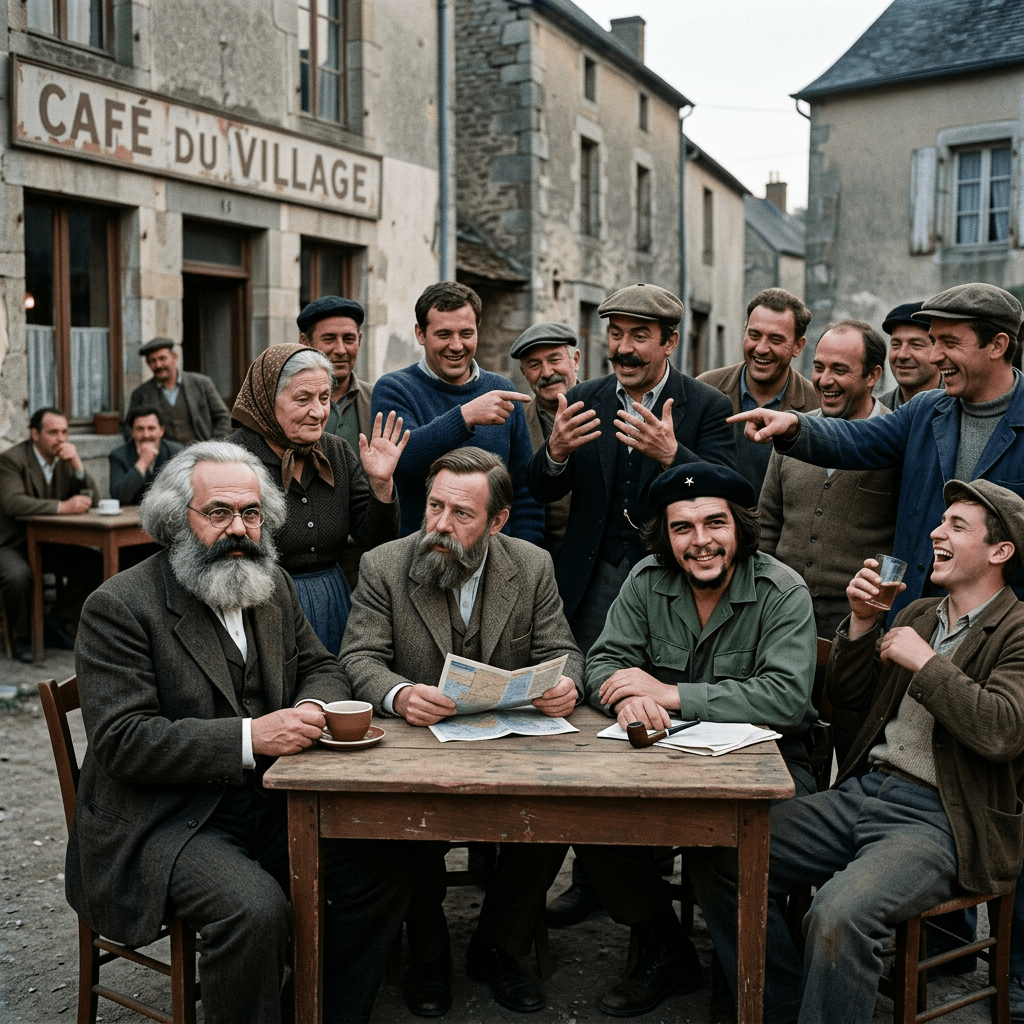
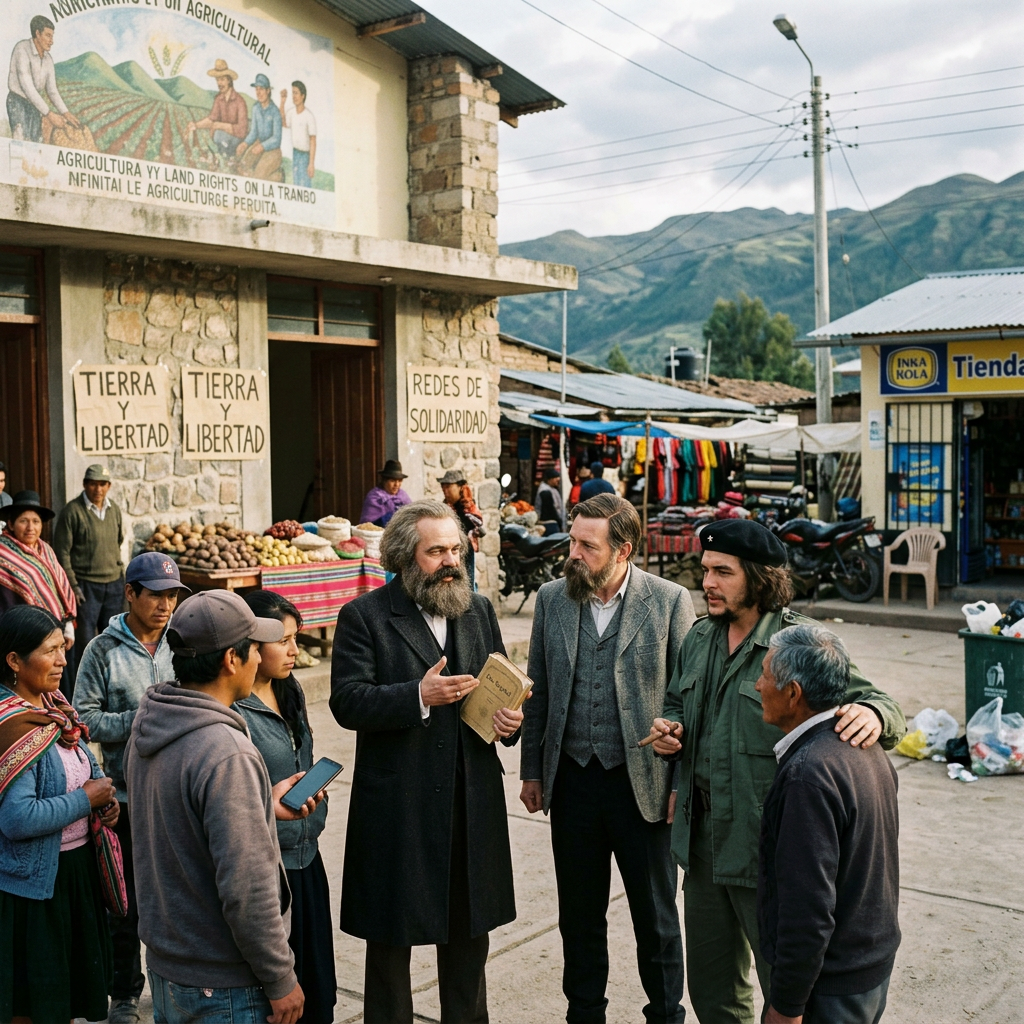
For this reason, peasantry can be defined not as the opposite of modernity, but as something that continues to live by taking new forms within modernity. This is why the revolutionary tries to educate the peasant. This is why peasants are said to be the masters of the nation. But look at that, Che Guevara was also betrayed by peasants.
Fromm, one of the thinkers I like very much — I could not find the correct title for the man — explains that human beings can be afraid of freedom. He says that thinking on one’s own, making decisions, and taking responsibility may feel heavy. He does not say that when you manage this, you become Buddha or something. In this situation, he says, people take refuge in a strong leader, a strict order, a clear enemy, and simple explanations. Peasantry, too, is often not about being a free individual, but more about wanting belonging. Instead of questioning, surrendering; instead of complex truth, an easy enemy; instead of conscience, obedience.
Similar examples exist everywhere. For example, in companies, people may remain silent about systematic exclusion, wrongdoing, sexism, and mobbing in order to protect their own position and say, “Let’s not disturb our peace,” Or in schools, in order not to deal with parents, what is done to children who are targeted, excluded, and humiliated can be brushed aside.
In the neighborhood, a young person with different preferences and lifestyle can become a target. The explanation is: “If he does not fit in here, he should leave.” Or the state can point to different groups as targets.
When you think about all of this, the definition of violence also changes. Leaving someone alone, laughing, remaining silent, saying “they must have deserved it” are actually also parts of systematic violence.
The brutality of peasantry is actually that it traps human beings inside their own small safe space. The person begins to think only of their own family, their own neighborhood, their own belief, their own group, their own interest. Even if this is a natural reflex at first, this is where the collapse of common morality begins. When common morality collapses, law weakens. When law slows down, injustices become normalized. The thought “everyone is doing it, why shouldn’t I?” becomes normal. See: zoning amnesty and many others. When law ends, the word of the powerful turns into absolute reality. Thus, a de facto order is formed in society and rules remain only on paper. Real life turns into an activity determined by power relations. In other words, everyone becomes complicit in crime. Just like the stories of incestuous rape we see in the third-page news, the way all villagers remain unresponsive to it, and the way this filth is hidden for years.
Within this order, people begin to accept disorder and see it as part of the order. When this happens, we can explain police violence as “security,” lynching as “public reaction,” censorship as “national sensitivity,” pressure on women as “family structure,” attacks on minorities as “society’s values,” pressure on the opposition as “the survival of the state,” and pressure on workers and retirees as “economic necessity.” Like in villages: small pieces, social acceptance, and simple explanations.
Because peasantry does not embrace uncertainty and complexity. Life must be simple. If something is wrong, the culprit must be clear. After all, everyone already knows everyone else. Let the enemy be clear so that it becomes obvious who is one of us and who is not. And whoever is not one of us, we can stare them down as they pass by and scare them away anyway. The stranger, the minority, the woman, the opposition member, the youth, the city people, the migrants, the infidels — all of them are actually like stress balls for the peasant.
That is why peasantry can also be seen not as ignorance, but as surrendering to the lies of one’s own group. It can be defined as mental narrowing. If you support this with media, news, and politics, then a better thing for an authoritarian regime can hardly be imagined.
Whereas morality should be the opposite: it should be tested by how one behaves toward “those who are not one of us.” Though I think of morality as a spineless behavior. Ethics, which has a stance, is more important.
Protecting one’s own, getting angry for one’s own, or remaining silent for one’s own is the easiest behavior. The difficult thing is to truly put emotions aside and show a stance. In peasantry, however, it is exactly the opposite. It is not universal.
Therefore, peasantry is actually the foundation of division and the point where evil is prepared. When the matter turns into actual violence, it is already too late. The society that unleashes brutality can only become a spectator to itself. In other words, it becomes the silent pieces and fuel of this order.
So in fact, rather than asking why peasants became brutal or what the nature of peasantry is, the formula that will lead to development is to expose and solve the social conditions that bring peasantry and what it brings to the foreground.
When social conditions are provided, even if a person sees himself as good, orderly, moral, honorable, patriotic, and devoted to his duty, he can become part of brutality. Dealing with this hidden evil is probably harder than dealing with pure evil.
In Nazi Germany, and also in the wars everyone takes sides in today, what happens is actually this: people surrender their conscience to the community. Because brutality is not the work of monsters, but the sum of small moral abandonments made for the sake of remaining normal.
Note: One reason why the words brutality and peasantry are so intertwined is also village life. As much as the human being’s distancing from nature is a problem, the freedom within nature is also a problem. In modern societies, the same freedom is not possible. Like a lion locked in a cage. Intellectual peasantry is much more brutal and aggressive than physical peasantry.


Leave a Reply