
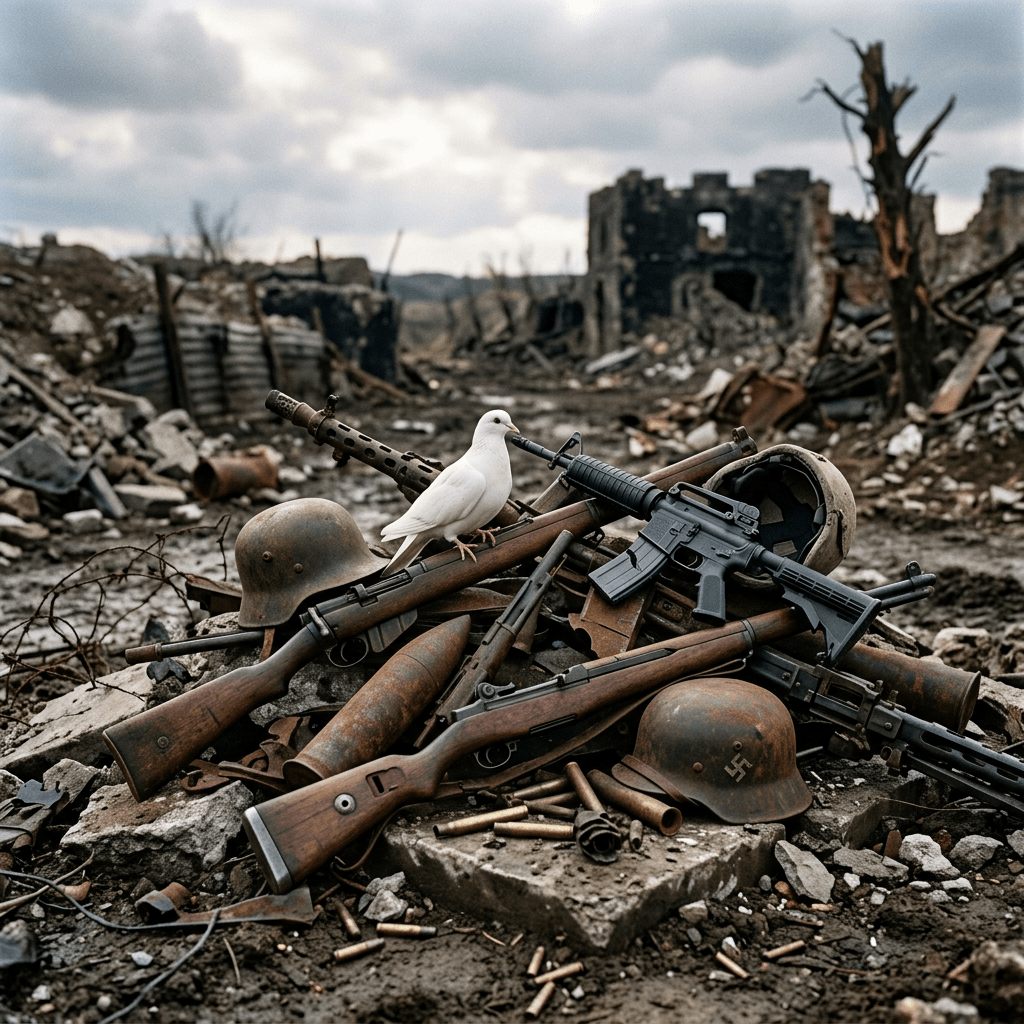
Today I feel like being a doom prophet.
There is a YouTube page called https://www.youtube.com/@TheGreatWar . It is an excellent channel. It explains the First World War week by week. How events developed, what the attitude of countries was. I definitely recommend it because we usually see the event only from our own perspective, and then we blame everyone left and right by saying we were not actually defeated.
With the Industrial Revolution, steam machines, printing press, the French Revolution and so on, a huge change had started in Europe in the 1800s. Railways, industry, newspapers, stock markets, banking systems, universities, science — empires were in a race to modernize.
Behind this modernity, however, there was also a hidden virus. Not plague or tuberculosis. Nationalism, militarism and imperialism. Although the assassination of Franz Ferdinand is seen as the beginning, there were already many factors ready for this explosion.
Militarism had turned into an ego war with modern armies and weapons. To survive, you had to have the best army. Germany, France, Russia, Austria and Britain were competing with each other. This was not exactly preparation for war; it was more like an effort not to be caught with your pants down if war broke out.
The Germans were looking to the right, the French to the left, the Russians to the sky, and the British to the sea. France was thinking, “We lost to the Germans in 1871, these people are unpredictable.” The Russians, meanwhile, had become obsessed with the Balkans for warm seas, fun, and prestige. The Austro-Hungarian Empire was more like the Ottoman Empire. It was thinking, “We stayed like this as an empire, but if the Slavs gain identity, we are screwed.” The British were thinking, “The Germans have become obsessed with the seas, what is going on here?” and started preparations.
Actually, the point of increasing military investment was this:
If someone attacks, we must stay standing. For that, we need modern weapons, an army with fast movement capacity, and good friendships.
Time passed. The British convinced France and Russia. The Germans said, “We like Italians, but without German it does not work,” and walked arm in arm with Italy and Austria-Hungary. At the same time, plans were being made. Unnecessary movement everywhere. The Germans said, “If we fight France, first let’s enter Belgium and the Netherlands and cut Paris off from the sea. That way we close the Western Front, then focus on the Russians.” The French said, “Let’s take back the places we lost in 1871 and annoy the Germans.” Later this war cost 329,000 people. The Austrian general was also heating up the atmosphere by saying, “We will make Austria great again.” The Russians said, “The atmosphere is tense. Let’s pile troops on the border. Austria, behave yourself; the moment you make a move, I will release all the gopniks on you.”
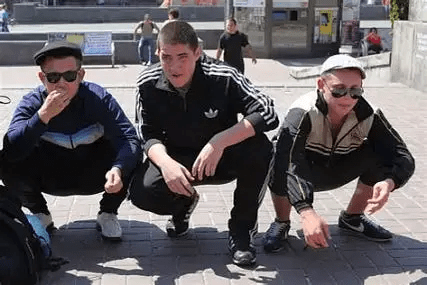
Gopnik
Meanwhile, the British king, the Russian Tsar and the German Kaiser were cousins. All of them were grandchildren of Queen Victoria. So they were also discussing the issue among themselves. The German said, “What war? Is there still war in this era? Well, let’s say it happens, we are behind Austria.” Cousin Nicholas said, “We said what we had to say. If Austria acts crooked, the Gopnik attack plan is ready.” George from Britain said, “Guys, calm down. But French is, in my opinion, a better language than German.”
On top of all this, there were the Balkans. “We do not want the Ottomans, Austria-Hungary is bad.” They could not even unite over rakı. “Best thing is, one of us for none of us, none of us for one of us,” and tension kept building on tension. When the Russians piled troops on the border, the Germans set off saying, “Belgium’s chocolate.” The British then landed, saying, “Wait, what is going on? When Belgium has beer, why chocolate?”
At that moment, while they were saying, “We will judge them at the border,” and border courts were being established, Franz Ferdinand was shot. Some said Austria arranged it to look justified. Others said, “See, these are traitors, these are terrorists.” The Russians came out and said, “Serbia is right.” Germany had already sent the letter: “If you go in, our heart is with those who speak German.”
While Austria was fighting, the Russians also entered the continent. The Germans said, “Oh come on!” and decided to quickly sort out Belgium. At the same time, they told Austria, “Before the Russians multiply, quickly build railways so we can send soldiers east and stop the Russians.” Austria said, “Sure, my pasha, anything else you want? I am already fighting down south.” And so the Germans ended up with two fronts.
Belgium was already chaotic. The army Germany sent east could not go without licking Austria’s southern border. When it reached the east, it was too late. The Russians had fallen behind. Loss after loss. Always Austria’s problems.
The west was chaos. Belgians, British, French. Blood everywhere. They said, “This is not working like this. Ottomans, what is your situation?” The Ottoman Empire, meanwhile, was tired of Russian expansion and its salty Mediterranean love, tired of the subtle pressure and expansion of the British and French, upset because of what happened in the Balkans, and did not want to answer the question of whether the empire was ending. On the other hand, it was following the tension in Europe and saying, “Let’s stay positive, let’s imagine good things.” There was also German love on one side. It was thinking, “If anyone protects us, the Germans will. The others are either enemies or have their eyes on our land.” And just like that, it found itself in the middle of the fire. The calculation was simple. If we win, we survive and celebrate with German beer and pretzels. If we lose, we say, “We are neutral,” and try to slip away. If we cannot slip away, then we are already fucked.
Actually, what happened was this: armament created panic, the “who is more of a man” race fed the tension. Meanwhile, there was also preparation. Railways, bridges, people called to military service, border security, and so on. Mutual loss of trust and one bullet made everything explode.
The First World War did not export violence only to the European continent, but also to Africa, the Middle East, Asia, every place where trade routes passed, all colonies and resources. At the same time, it opened the way for stronger nationalism. In other words, more people ready to fight.
Second Round
After war and destruction came a bunch of treaties, shows of power, misery and economic crises.
Germany was in ruins. Rearmament was forbidden, assets had been seized, and it had been subjected to heavy sanctions. It was looking for a hero to save it. Italy was similar. Time passed and some people appeared, again wanting to make something great again. Someone shouted, “I will bring back old Germany.” The people applauded. “Go on, chief, you are the man.” Italy was similar. Britain and France, meanwhile, preferred to enjoy the trauma a little longer and tried to calm the atmosphere down. They were in the mood of “It’s okay, we are miserable but happy.” When things heated up, they said, “Calm down.”
The United States of America had been united for quite some time by then. It said, “How nice it is to watch from afar.” On the other hand, it also said, “Just in case, let’s gather our strength. Worst case, we sell weapons. There is money in this business,” and started working.
The Soviets, meanwhile, kept recruiting whoever passed by, saying, “We have many gopniks,” while also putting all their effort into industrialization.
Let’s also look a bit to the east. To Japan. They said, “How long can we continue island by island?” and started trying to expand in the Pacific. They had already started fighting with China in between. They had increased their military spending.
After the First World War, I think the most obvious thing was that nobody was happy with the borders that were drawn. Everyone still had something stuck inside. We were also like that, but since we had different problems, we said, “Well, at least this is something.”
As Germany developed and the short moustache became stronger, the rhetoric of “our old power” also increased. The rules of the Treaty of Versailles started to be bent. Short moustache began testing everything step by step. He turned industrial investment into defense investment and checked whether anyone said anything. Did they say anything? No. Then let me place some soldiers in the Rhineland. Look, again they did not say anything. Let’s unite with Austria. Since they are still not saying anything, let me also grab the Sudetenland. Then that was not enough, he said, “I will also take the Czech Republic,” and then he entered Poland. And here we go again: tension brings more tension, everyone gets involved.
Compared to the previous war, here there were more provocations. There were more leaders saying “Make xx Great Again.” Those who secured their military power started eating from the edges. Not like before, with threats and all that. More like, “Let’s see how far it goes.” When nobody reacted, they gained the confidence of “They cannot stop us anymore.” Compared to the previous war, this was a more ideological war. Also somewhat a war of revenge.
In the previous war, Austria was saying, “We need to protect order, we will punish Serbia,” while Serbia was defending its national honor. Therefore, for everyone, it was “just a war.” Temporary. The Russians got excited by saying, “If there is a threat against Slavs, then we will also defend our own peoples.” For the Germans, war was still not possible, but when the atmosphere heated up, they took action by saying, “We are surrounded by fire, now or never.” France joined this aggressive atmosphere by saying, “This is a national security issue, we have the right to defend ourselves.” The British, meanwhile, entered Belgium by saying, “How can Belgians defend themselves? It is a tiny country. This cousin is confused. We need to balance power.”
In the Second World War, however, the Germans said the Treaty of Versailles contained extreme injustice and that they did not accept it. The Italians insisted, “Why don’t we have an empire? We are also imperialists.” The Japanese said, “Life on the island is boring. Let’s fight a little, get some resources, make them accept our leadership, and then leave.” The British and French were saying, “No to war, yes to peace, but we will not allow them to carve us up.” Those who joined the war later also became actors in the most destructive war in history by saying, “We need to lower this tension.” The Turks escaped by playing Swiss-style neutrality. They only declared war on Germany and Japan in 1945 in order to sit at the post-war international table. In other words, they did not play the gamble the Ottomans had played.
This is the theory of “just war,” meaning “only a war.” When you look at each side separately, everyone is right. Most stories are about self-defense, but over time national security can turn into domination, protecting people can turn into invading other people’s borders, and historical rights can turn into weapons. Until that moment when everything goes silent.
Third Round
Are we having fun?
When we come to today’s world, on one side there are selfies, parties, entertainment, the World Cup. On the other side, there are people burning, dying, beheading, being blown up by bombs.
There is also the virtual side of this business. Look at this map and see what kind of war we are inside.
MAP | Kaspersky Cyberthreat live map
Countries are making serious investments to resist these attacks. The EU Cyber Resilience Act is similarly not paranoia from the European Union, but a set of rules created to prevent all systems from collapsing in the case of a possible war. That is why it is extremely comprehensive. They do not want to leave even the smallest vulnerability.
Similarly, many countries, especially Russian-speaking Slavic countries, are giving their citizens digital literacy education. How to verify information, how to approach information. It is not exactly the kind of education where you say, “Oh how nice, Europeans have solved this.” It is actually preparation against possible scenarios. Because Russia is already constantly pumping news into European media, social media, Turkish media and American media; using Telegram’s lack of control and privacy for propaganda; interfering in politics. It is not a coincidence, for example, that European racists walk around with Russian flags.
So we are back to the beginning. Instead of talking about how not to fight, we have started talking about what we will do if war happens.
Just like in the past, there are plenty of mutual provocations. Europe stands behind Ukraine and is investing heavily. The name of this investment is “defense.” Different NATO missions are also conducting exercises based on different scenarios. Transparent allied coordination, air defense systems installed in NATO countries bordering Russia, suddenly increasing railway and highway investments are similar. In other words, the sudden renovation and construction issue in Europe is more about security than rent-seeking.
In recent years, for example, an army without the United States has been discussed in Europe. In Germany, compulsory military service is on the agenda, while at the same time the biggest military investment of the last 50 years is being made. Defense industry companies have almost been flooded with money. It is the same in almost every country. Poland is rapidly increasing its land power. It has become Europe’s most crowded land force. While Norway focuses on energy reserves, France and Sweden have focused on naval power. Spain has increased its investments in both air defense and cybersecurity. An Israeli-style Iron Dome is also on the agenda in Europe.
Again, just like before the Second World War, we see tests. For example, Israel pushes as far as it can. So does the US, Russia and China. There is a serious race in the Mediterranean. It is said that even a Brazilian submarine is there. China has started to become dominant. Russia is doing the same in the Baltic Sea. The attempts to cut undersea cables, which they say “we did not do,” are also signs of what may happen.
Alternatives to cables are satellites. In space too, many agreements have become trash. Many countries, especially the EU, the US, Russia and China, are both in a race and in a war. They sabotage each other’s satellites, or develop technology so that their own satellites do not fall.
Besides all this, one thing is missing. People to fight. The fact that Europe has allowed space for nationalism in recent years, despite attacks on its founding principles, seems related to this. At the same time, this is also a big risk, because there is the possibility of provocation. Exactly because of this, while countries develop their own defenses and armies one by one, multinational army structures are also supported. NATO has also increased its work in this area.
When we say army, Turkey comes to mind. On one hand they argue with Turkey, on the other hand they send the message “we need you,” and increase military and commercial relations because there is a real need. In a defense scenario without the US, Turkey’s land power and war experience are important for Europe. Even though Greece and Southern Cyprus oppose this. We read these things in the newspapers every day anyway. The reason our Darth Vader is so confident, occasionally getting angry and shouting “eeey” and then attacking Greece verbally, while saying “the West is like this” every day and signing agreements in the evening, is also this. Once again, he landed on all fours. Even though his closeness to Russia and unpredictability are a problem. The EU’s approach is probably more agreement, more interdependence and not breaking away. Of course, meanwhile, the largest spy network uncovered in Germany being linked to Turkey is a completely different matter. Maybe mutual threat, reminder, warning.
On the other hand, we have also gotten used to wars. Just like before the two world wars, many small(!) wars have become our normal. Again, everyone is right in their own way, everyone is defending themselves, everyone is pushing borders, some are calling for common sense because they cannot defend themselves even if they wanted to, and some are trying to make their country great again as if it had ever been great. A strange period.
Philosophers argue that sociologists and philosophers should have a larger role in state governance. At the same time, they argue that the sanctioning power of international organizations should be increased, but there is no such environment at all.
On the contrary, every kind of international organization is being challenged. Even the World Health Organization is a target. The ECHR and the UN are seen as dysfunctional organizations and pressure bodies interfering in countries’ internal affairs. On the other hand, countries are also fighting each other to make noise there.
According to some, the world war has already started with the latest Israel–Palestine war; according to others, with the Ukraine–Russia war. When you look at the past and today, the chain of events is similar. Fear, increased military investments, neighbors threatening each other, strengthening and weakening alliances, crises, border wars, coups, boycotts, ultimatums, territorial occupations, leaders who consider waiting dangerous, and national security emphasis — all of them flow in the same way. From this perspective, the Ukraine–Russia war is truly the beginning of something and a development that escalates tension. The approach of countries is also, “Let’s act before it is too late for something.” In other words, war logic.
So, how does a limited and regional war turn into a world war?
First, by becoming normalized. Armament becomes normalized, the word war and discussions of possible war become normalized. Just like today. The media discusses possible scenarios. Just like on TV every day. Politicians, meanwhile, demand sacrifice with national emphasis. This part is not yet fully clear, maybe.
What follows this is polarization and blocs. This actually never disappeared from the world, but it seems to have sharpened again lately. It becomes “us” and “them.” Small crises and problems lose their importance.
What follows that? Hatred and simplified morality. In other words, the enemy replaces the rival. The word enemy does not create in the human mind the sense of a mutual struggle like the word rival does. It awakens the most primitive feeling. A threat to your existence. Do we not see this today in discussions about immigrants? In discussions about family? In other words, even the most basic, most common issues that can exist in a country somehow turn into nationalist motivation. No matter which language you look at, the scene we see in today’s world is the same.
Mobility is another step. Meaning the mobility of armies and resources. What does this mean? Moving weapons, vehicles and people from one place to another as quickly as possible. For example, if you look at the locations, flow and integration of the new highways in Eastern Europe, you can also see what kind of mobilization this is. Of course, this is not only about war, but the fact that it is increasing together with military investments is a sign.
We already mentioned the crises. The world is full of crises, and now hopelessness is also increasing. The feeling that there is no escape from the situation we have fallen into today, no way out. In some countries this is felt more strongly, in others relatively less. But hopelessness is not only about one generation; it is a general condition. Today, people who fight against wars, who show strong civil resistance, who go out into the streets in their comfortable countries, are fighting exactly this. In fact, they are giving the most correct, unarmed struggle for peace. There is no armed war for peace.
Expansion is also something we see today. Countries expand territory through wars, push maritime borders, return to commercial colonies, and push borders everywhere in space, in the virtual environment, everywhere.
Today, we sit and watch how regional wars turn into allied wars, how border violations and harassment turn into regional struggle. The next step beyond this is continental war and a war spreading to the entire world. We still have a chance to prevent this. To prevent it, we are actually in the right place, at the right time, and we have the right means. The important thing is not to lose hope.
Although being able to defend ourselves is important, the thought that expands by saying “we need to defend ourselves” is just as dangerous. Therefore, at least individually, not taking sides in things, and opposing war and every kind of discourse, policy and thought that could cause war, is, in my opinion, the most correct stance.
Besides all this, there are also many things specific to this age that could prevent war, but today I am in disaster mode. I could not even keep my unserious tone until the end of the text, and I do not want to write good things. :)


Leave a Reply