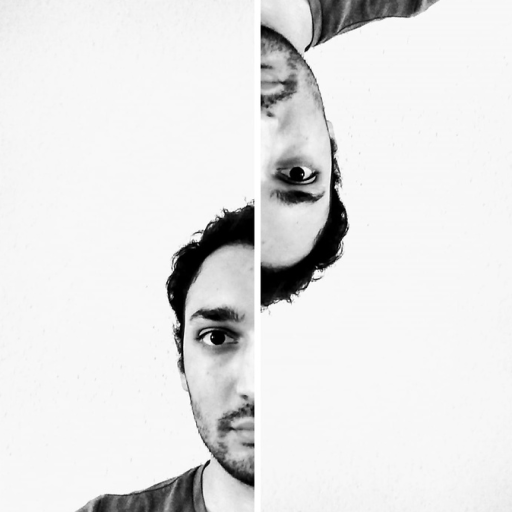

Human beings want to express themselves. They can’t keep it inside; the more they do, the harder it gets, turning into a kind of noise within. The purpose of expression is not always to convey something to others; sometimes it is simply to get rid of that noise, to make space for new kinds of noise.
Photo by Rowan Heuvel on Unsplash
Novel, poetry, story, essay, painting, music, dance, photography, sculpture. There are so many forms of expression. Yet it feels like the more freedom of expression increases, the more everything becomes uniform. As if some systems cannot tolerate freedom. Being like everyone else is seen as part of living collectively, yet most individuals who stood out in history did so by rejecting that sameness.
When I look at social media, I feel this even more. Everything seems the same. You are free to say whatever you want, but you end up choosing what everyone else is saying and expressing it in the same rhythm, the same tone. Belonging seems to outweigh expression. So much so that free will and expression, instead of leading to diversity and quality, turn into a monotonous choir.
This ordinariness and superficiality make me nauseous. The constructed value judgments, the normalized aesthetic perspectives, the conversations that feel out of place. Beauty and ugliness, good and bad, right and wrong are not such distant extremes from one another.
To escape all this, I tried many things. Music, art, writing. I found myself most in writing. It felt good to explain myself at length. I was telling things to myself, then I started sharing. Still, in a way, I was talking to myself. After all, it is one-sided. I even tried podcasts. Monologues that didn’t turn into dialogues, yet they still found a response. And as they did, I found myself again in the same vortex of superficiality. Speaking just to speak, writing just to have written something, and falling into expectation.
Once, I had the chance to talk to a rock musician I really liked, during a break in a concert. It was in a bar, packed, full of energy—both from the audience and him. But during the break, it was the opposite. I tried to start a conversation saying how great the concert was, how good the crowd was. He said he was tired of it. I asked why. “Because it’s a job,” he said. “I’m in love with music, it keeps me alive, but doing it for money kills the joy. Right now, I’d rather be in your place.”
I sometimes feel something similar when writing blogs. When I used to earn money from blogging, it was when I wrote about the same topics. I even received an offer from a magazine. I rejected it, saying I chose science and technology. In the end, even science became a kind of story, but seeing that writing the same things attracted attention, and writing more frequently increased readership—it bothered me. Eventually, I shut that blog down too. Now I write whatever I feel like. A poor but happy blog.
Recently, I started reading my own writing. I hadn’t done that before. As I read, I sometimes ask myself: what am I telling myself, and to whom?
At its core, it’s the same thing—an expression of emotion. Thinking this way increased my interest in art. Theater, cinema, painting, sculpture, music. Once you get into it, it’s an ocean. But the deeper I went, I encountered structures again. Categories that separate, sometimes exclude one another. I used to say I didn’t care at all how an artwork in some museum was made. Why should I care what technique was used? What mattered to me was what it expressed and what it made me feel. That changed too.
As I moved away from the functional perspective that engineering gave me, my view of art changed as well. Why does everything have to be functional? Why does everything have to follow rules? Back when I used to dance horon, the joy wasn’t in lining up perfectly and doing the same movements—it was in the movement itself. The feeling while jumping, the mind disconnecting from the world. I think I enjoyed it most when I couldn’t see the audience, when I forgot the presence of others around me.
Maybe that’s why, in conversations about European museums and artworks, I took great pleasure in pretending not to understand anything, playing the role of “this is all nonsense, the only truth is the soil.”
It’s a bit like philosophy. When someone says they love philosophy and starts recounting its history, I get bored. But when we take philosophical concepts and use them to discuss everyday life, I enjoy it immensely. Because then it moves beyond imitation and memorization. The conversation escapes the endless loop of gossip.
Even football, which I started watching again out of nostalgia and later followed almost fanatically, feels the same. Sitting and criticizing every pass, every shot—it feels ridiculous. Arguing about referees, about what someone did. Sometimes I see it as a complete waste of time, sometimes as another form of emotional expression. The aggressive, chaotic matches can feel almost therapeutic. But what interests me more are the players’ reactions, their facial expressions during the game, and even the physics of the ball in tense moments.
I don’t know how I got from art to football. One thought led to another, and I found myself in a long internal conversation. As I began to see art, music, and dance as forms of expression beyond rules, not only did my interest grow, but my perspective on life changed too. Then I started wondering—why do I even need to form long sentences?
The answer is simple: lack of talent. The easiest way to release what’s inside is to form sentences.
I think being productive matters. Being only a consumer feels both boring and like the opposite of expression—it feels like locking yourself into predefined molds. The same applies to painting: not what is drawn by copying something, but what emerges on its own feels more like art to me. Things that resemble nothing, that are chaotic, messy, original.
As my “why am I writing this?” feeling grew, I became more interested in painting and music. Painting is somewhat accessible. Technique matters, but it’s not everything. In the end, being an artist is not about intention but about releasing what’s inside at that moment. Music, however, didn’t work for me. To be original, technique and knowledge seem essential. In both, they matter—but in painting, it feels like you can learn while doing, whereas in music, you can only do something after learning. Learning to play is not enough to create. And learning to play has no clear definition.
As I struggled with my lack of talent, my perception of the artists I follow also changed. I wasn’t interested in who they were, and still am not. My interest in what they intended to express also decreased. Because no matter what they do, I realized we will never understand it the way they do. It’s simple physics: what we see, hear, perceive is never the same. Even if we look at the same thing, our perceptions differ greatly. It’s astonishing that so many people can coexist in the same world—how is a shared culture even possible?
So yes, the artist may have a story behind what they create, but what it evokes in us is entirely different and completely personal. Thinking this way reduced my anxiety about writing. No matter what I write, the reader’s experiences, conditions, and background will shape how it is understood. This is not a failure of expression, but the beauty of perception.
The desire to be liked, I think, is what pushes everything toward sameness and monotony. Without that concern, one can overcome the inner noise and express freely. And the most beautiful part of such freedom is the ability to step away from everyday worries and see human beings in their most essential form—beyond identities and molds.
 bahadirhancicek
Leave a comment