
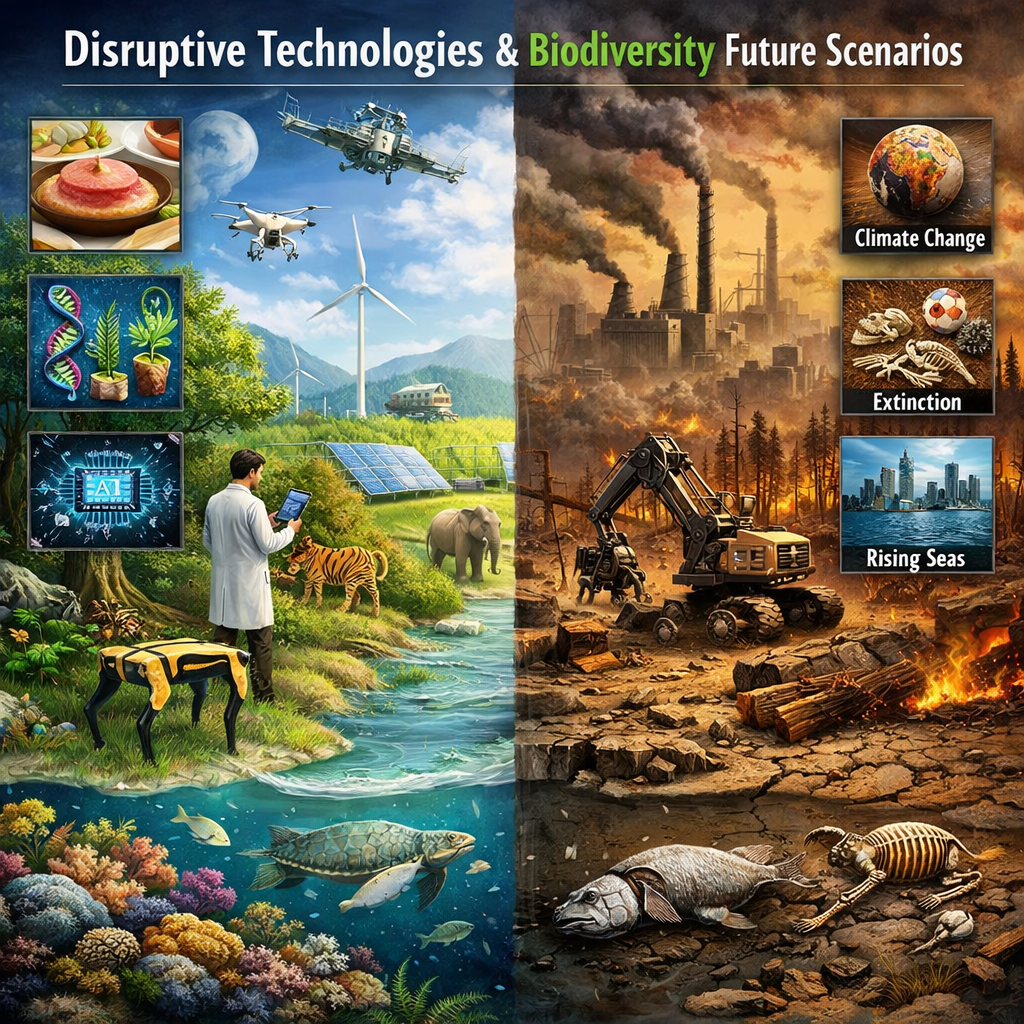
With the Age of Discovery, the world changed completely. New trade routes were opened. The tools required to use those routes developed rapidly. Of course, for this reason, many wars also broke out. A serious arms race began. That arms race eventually reached an entirely different point with the atomic bomb. It became not only a form of physical power, but also a tool of psychological dominance.
The second turning point for both humanity and nature was the Industrial Revolution. Thanks to the Industrial Revolution, distances between different locations became shorter. Humanity began consuming resources faster than ever before and creating innovations from those resources. The world became connected much more quickly. Great empires that could not keep up with this development collapsed. What followed was a massive race of industrialization.

Industrialization, while increasing human welfare on the one hand, also turned into a tool that destroys human beings on the other. It affected everything from humanity’s values to its beliefs. And of course, nature as well. Even today, this race is still going on. Developed countries have, in part, entered a period of stagnation because endless growth is not possible. They turned their attention to social issues that were ignored or forgotten during industrialization. They began focusing on the continuity and sustainability of the system. Other countries, meanwhile, have only just arrived at the phase of greed that those developed countries once went through, and they are now in a ruthless race driven by the idea of endless growth. Reaching this stage at the wrong time also brings many political crises with it. On the one hand, they say, “It was fine when you were developing, but now that it’s our turn, suddenly the environment and humanity matter?” On the other hand, under compulsory environmental and social policies, they try to do the bare minimum of what they can. Countries that are sensitive on these issues, meanwhile, are accused of not feeding the business world, and are driven into political deadlock and conflict.
In a general sense, we can consider all the technologies within this process to be disruptive technologies. Because each of them developed within this race for advancement, and each of them caused social, cultural, environmental, political, and psychological changes through that same race. Our topic today, as you can already see from the title, is the environment, biodiversity, and the world.
The destructive nature of technology has helped us solve many problems, but it has also created just as many new ones. By the time we reached the 21st century, we understood that the issue is not just about development. Alongside that development, we also need not to become disconnected from our essence. In other words, we need to preserve ecological balance and approach innovation not as the enemy of nature, but as a part of it. We must understand the harm technology causes to climate change, cultural destruction, and biodiversity.

1. Technology as the Devil
Let’s mythologize it a little and demonize technology, and take a look at how it has been gradually making our lives worse.
Resource Consumption: The other day, while talking with a friend, he said this: “You don’t drive an electric vehicle. So how can you claim to care about the environment? Every day you release carbon dioxide into the world.”
I can’t really argue much against that, but what caught my attention was that he thought using an electric vehicle made him environmentally conscious. Lithium-ion batteries are used in everything from the phones we use to automobiles. So where do those batteries come from?
From forests destroyed for mining in lands we do not see. Those forests are the Amazon, which I wrote about in another piece — the lungs of the world. In order not to emit carbon dioxide, we are destroying the very structure that would absorb carbon dioxide and regulate the climate, and we call this environmentalism. Is there a solution? Actually, yes. But the whole world would have to agree on one common idea. And there would also have to be an upper limit to wealth.
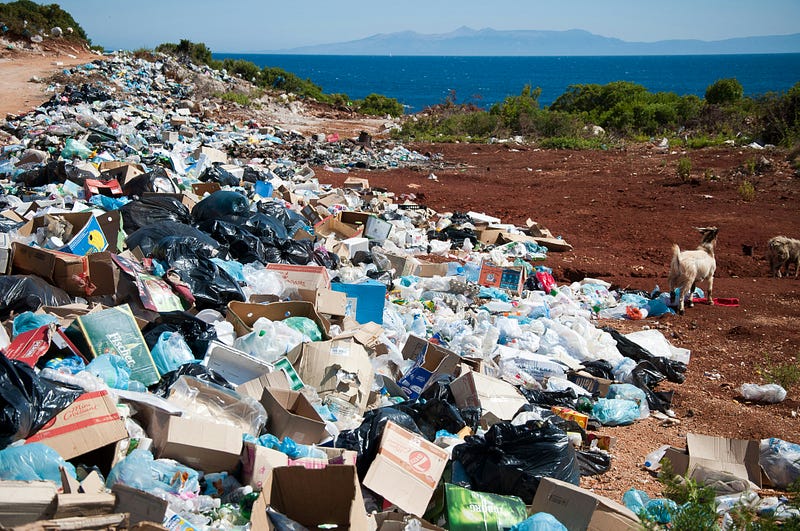
Pollution and Climate Impact: Another side of the issue is electronic waste. Have you ever seen how the chemicals inside an old battery leak out? And have you thought about how much garbage we produce? The products we buy, the vehicles that bring them, the packaging of those products, and even the things we buy to keep those products clean… In other words, everything we buy becomes waste.
Another example is data centers, servers, and the infrastructure used for cryptocurrency mining. We spend an unbelievable amount of energy so that some people can get rich or play games. But what do you think the real cost of that energy is?
When you think about the climate, climate-related problems, the illnesses they trigger, the energy used to treat those illnesses, the materials produced, the resources consumed, and the waste generated, you realize just how wrongly you understand the word “cost.” A product that comes from China for 1 dollar may actually have a real cost of a ten-year future and a process worth trillions of dollars.
Industrial Agriculture and Livestock: New agricultural methods may handle many things more effectively and quickly, but they also affect both soil health and the genetic diversity within the soil. As a result, we experience climate shocks, yet it is more convenient for us to shrug and say, “Didn’t these things happen in the past too?” No matter how much technology advances, the mindset of “we must produce more” — the old mindset — never really evolves. We are not aware that every resource has a capacity, a limit. Even the sun does.
2. Technology as the Savior
Artificial Intelligence and Big Data: Although machine learning may be hype, and although we are currently living through the Wild West of technology, it still strengthens our hand in many areas and increases our knowledge and awareness. One of those areas is tracking wildlife populations, migration routes, and deforestation. In fact, this is how we are even able to access the information needed to write this article. It helps us realize that something is going wrong and that it can no longer be ignored. (Take a look at Forest Monitoring, Land Use & Deforestation Trends | Global Forest Watch. There is some great data there.)
CRISPR and Bioengineering: Although genetic alteration and modification may feel like playing God, it prevents many species from disappearing and even makes it possible for some to exist again. In this way, we also gain a chance to preserve biodiversity. (Actually, we could ask a slightly philosophical question here: is a product whose genetics we changed still the same as the original product?)

Renewable Energy: While the world’s most powerful man may continue saying global warming does not exist and diseases are a lie, the increase in alternative energy sources and the use of smart electrical grids allow us both to meet our energy needs in a nature-friendly way (even if production itself often does the opposite) and to use energy in the most optimal way. Perhaps when smart cities become a reality, home systems will also largely prevent energy waste and make it possible to share and transfer unused energy. Maybe this could be one of the benefits of globalization.
Drones and IoT: Drones are used to image deforested forests and even for reforestation efforts. Similarly, thanks to the Internet of Things, it is possible to access more sensor data about air, water, and soil quality.
3. Social and Cultural Change
Cultural Changes: Technology is homogenizing cultures and ways of life. While we are living through the Wild West of technology and seeing how everything is becoming the same, the shadow over different cultures and traditions is also being lifted. For example, thanks to digital platforms, we can see that every country has its own good films, its own good literature, and similar ways of living.
Dollar Street — photos as data to kill country stereotypes visualizes the concept described in the book Factfulness. Hans Rosling focuses more on income levels than on culture, arguing that similar income levels lead to similar lifestyles all around the world.
I think this is partly the effect of capitalism and the sameness that comes with it, but it is still interesting. Especially in an age when we generalize everyone as refugee, Middle Eastern, Asian, European, American, immigrant, etc., and assume our own way of life is the most correct one.
Economic Destruction: Marc Zuckerberg said that within this year, he would lay off all mid-level software engineers. “Artificial intelligence is already doing it,” he said. The World Economic Forum also stated that software jobs will decrease. Soon, they will probably say, “Most civil servants are unnecessary too, let’s get rid of them.”
A similar situation applies to every sector. During the Industrial Revolution, machines took our jobs; in this age, it is computers. Not refugees and immigrants. On the other hand, thanks to computers — and thanks to a possible real artificial intelligence — many new jobs may also open up in renewable energy and living environments.
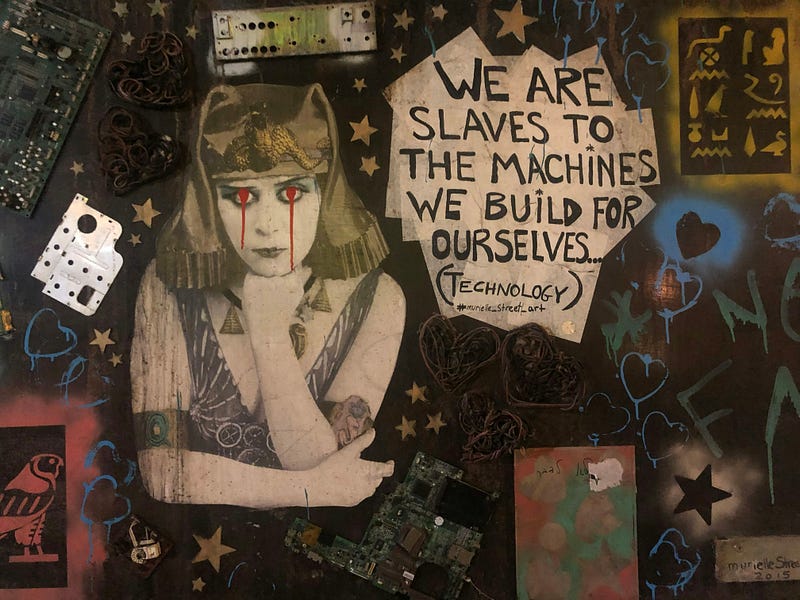
Human beings will probably return to their essence and become slaves to machines. Digitalization still creates major inequality. One reason is excessive enrichment and the fact that companies have become more powerful than states. The other reason is what I call the Wild West: the technology world is driven almost entirely by unconsciousness.
Technology is a huge field of experimentation. That is true for the producer, the consumer, and the regulator alike. Everyone is doing something, but neither the user understands what they are using and how it affects them, nor does the producer.
Technology education is on its way to becoming one of the most important issues of this era. One reason for this is that current education systems are still cumbersome systems thousands of years old, and after the Industrial Revolution they focused on specialization in one field and on training people to serve the system. The system no longer needs workers in that way.
Ethical Contradictions: Imaging technologies, private data, and the use of that data involve major ethical problems. Similarly, developments in biotechnology also raise issues about “playing God.” In my view, we have already been playing God for centuries by destroying nature.
Search engine suggestion: Ecosia — the search engine that plants trees
It may not be perfectly environmentally friendly, but at least they are trying to do what they can.
4. Why is biodiversity important?
The simplest reason is that we are also a part of this diversity, and biodiversity is the essence of life itself.
Apparently nature provides around 125 trillion dollars’ worth of ecosystem services each year. I do not know how they calculated that, but it can be explained through the following points:
- Survival: Pollinators ensure the survival and production of 75% of food crops.
- Health: 50% of modern medicines are derived from natural products.
- Resilience: Ecosystems with greater diversity are more resistant to extreme natural events and also reduce how often such events occur.
Today, biodiversity is disappearing 1000 times faster than before. Watch David Attenborough: A Life on Our Planet on Netflix. He explains this incredibly well through his own life and what he has personally witnessed. We are moving toward a point of no return, but there is still hope.
5. Protecting Biodiversity: Policy, Innovation, and Collective Consciousness
When you say collective consciousness, people immediately dismiss it as leftist or woke, but I will still use that phrase. Because developing a collective consciousness and seeing the world as a single whole is more important than ever.
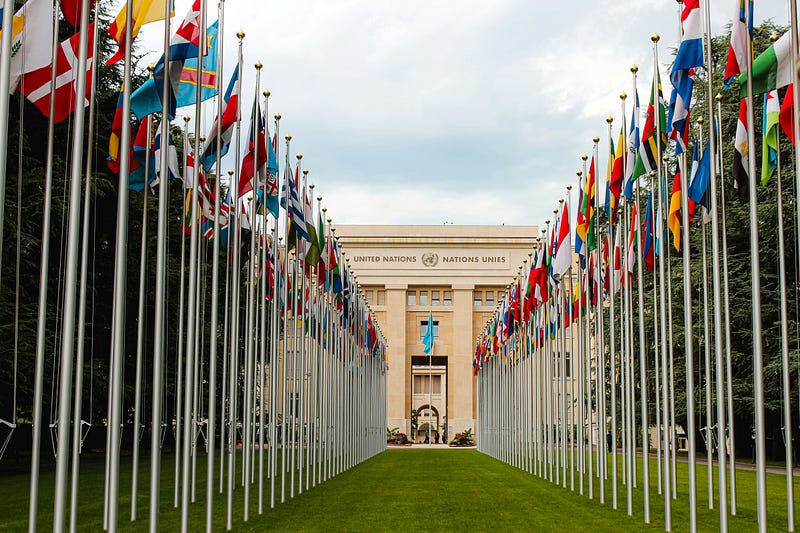
International Agreements: If there were a truly powerful United Nations, like in Battlestar Galactica or The Expanse, and if such institutions had stronger enforcement powers, many of these problems could be overcome. Wouldn’t it be better if institutions like the Paris Agreement or the United Nations Biodiversity Conference stood above all other policies?
(For example, they could stop Israel’s genocide, tie the hands of countries that produce terrorism, and hold accountable those who hunt animals for pleasure or destroy nature.)
(And now they will say “globalist bastard.” The people who say that are often the same ones who praise empires that tried to conquer the whole world and contained many cultures within them.)
Corporate Sanctions: We talked above about cost. Cost is not just materials, design, production, and supply. If the economic system could be built around recycling and zero waste, we could prevent many environmental problems and slow the speed of destruction.
Unfortunately, in the current system, there is no real power capable of enforcing such sanctions on companies. The only thing that matters is data privacy.
(Recycling also needs a parenthesis. Recycling is not automatically environmentally friendly. The chemicals used for recycling have major negative effects on both the environment and the health of the people who produce and use those products. It is important to approach recycling correctly, but even more important is changing our current habits.)
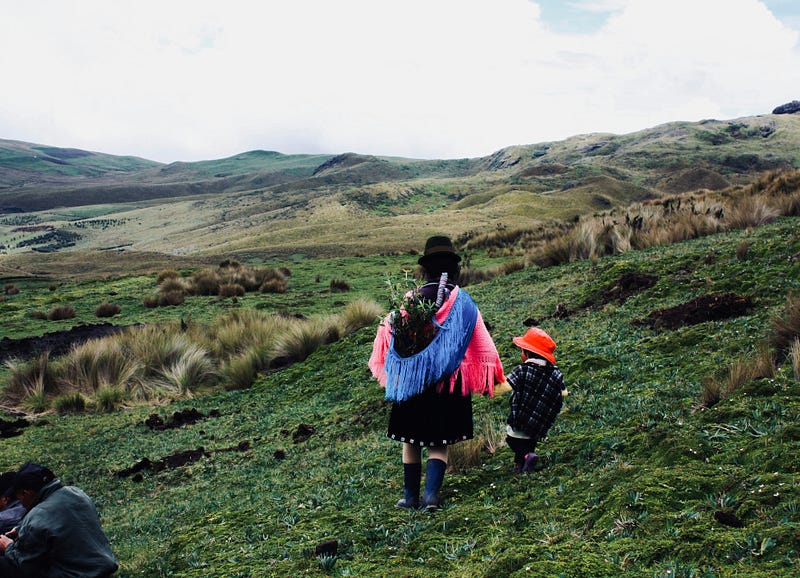
The Power of Society: It is also important to amplify the voices of indigenous peoples who are trying to protect global biodiversity. You cannot get anywhere by saying, “I built a mine, done and dusted,” or “I built a hotel, end of story.” For the opposite to happen, proper education and a real democracy are essential.
Ethical Technology Development: It is important for ecological and ethical design to come first. In fact, we already have enough technology. It is absolutely possible to design and produce consumer electronics in ways that can largely disappear in nature. Ethics should be the first thing considered in all forms of production. Right now, the opposite is true. Ethics are only considered if complaints come in.

Conclusion: A Balanced Process
If we want, we can create a balanced model in which technology, development, welfare, and the environment coexist. Sustainable methods should not remain just another marketing keyword.
With policies that emphasize ethical artificial intelligence, solar energy, and green urban design, biodiversity can be protected, or at least the speed of its destruction can be drastically limited. But this requires common awareness and shared responsibility.
Developing countries should no longer see development as their own opportunity for unlimited production. Developed countries, in turn, should not use environmental policies to slow others down. On the contrary, with more shared policies and more sensible bureaucracy, the destruction of nature can be prevented.
Similarly, companies should treat social projects not as a publicity tool, but as a concern that comes before profit and before everything else. The same applies to politics: it should protect interests, yes, but also restrain greed. The same is true for individuals.
Technology is destructive by nature, but it is not inherently negatively destructive. Whether it becomes positive or negative depends entirely on how we approach it. We are more aware of the past than ever before, more informed about the present, and more capable of anticipating the future. Naturally, we should think at every moment about how the decisions we make affect both our own lives and the future. Wealth is not the money in our pockets; wealth is the quality of the nature we live in, the diversity of that nature, and what it is able to offer us.

What is our role in this? To become informed, to think about the consequences of our actions, to support policy, to support initiatives, to reduce waste, to listen to different voices, to make them heard, to hear, to teach, to come together, and to struggle together.
Extras
- IPBES estimates that 1 million species are at risk.
- Since 1990, 420 million hectares of forest have been destroyed due to agricultural and industrial expansion. (Six times the size of Turkey, an area equal to 420 million football fields.)
- According to the WWF 2022 report, vertebrate animal populations have declined by 69% compared to 1969. Of these, 47% are due to climate change-related causes. (IPCC)
- From 2001 to 2020, 1.4 million hectares of forest were destroyed for mining alone. (Three times the size of Istanbul.) To extract lithium, nickel, and cobalt.
- To meet 18% of the world’s calorie needs through animals, 77% of global agricultural land is used to feed them and provide grazing space.
- Every year, 12 million tons of plastic waste are dumped into seas and oceans. (UNEP, 2023) (The equivalent of 8 million cars, or 60% of Turkey’s wheat production, or the total number of chickens produced in Turkey over five years.)
- Bird populations in the Amazon have declined by 50% due to rising temperatures and changing food sources. (The Guardian)
- According to a 2023 study, plastic recycling causes 22% more carbon dioxide emissions than producing new plastic. (This does not mean we should not recycle, but that we should think about everything as a whole.)
- Because these processes require high heat, they consume 5–10 times more energy than mechanical recycling. (MIT Review — this and Harvard’s monthly magazine both offer really good content. I recommend them.)
- Because of lithium extraction for electric vehicles, many parts of South America are experiencing water shortages. It takes 500,000 gallons of water to produce 1 ton of lithium. With that amount of water, 946 people could drink for 2.5 years, one person could shower for 518 years, flush the toilet 315,417 times, do laundry 31,541 times, fill 76% of an Olympic swimming pool, or wash 12,000 cars.
- Producing one EV battery causes 74% more carbon dioxide emissions than producing an internal combustion vehicle. The reason is mining and current battery technology. (ICCT, 2023). (If the effort and resources spent on battery production were invested in alternative processes as well…)
- Forests are also being destroyed for biofuel, which is presented as an alternative to fossil fuels like gasoline. Because of palm oil and soybeans, many forests in Indonesia and Malaysia have been destroyed. (45% of Europe’s palm oil imports are apparently used for biodiesel.)
 bahadirhancicek
Leave a comment