
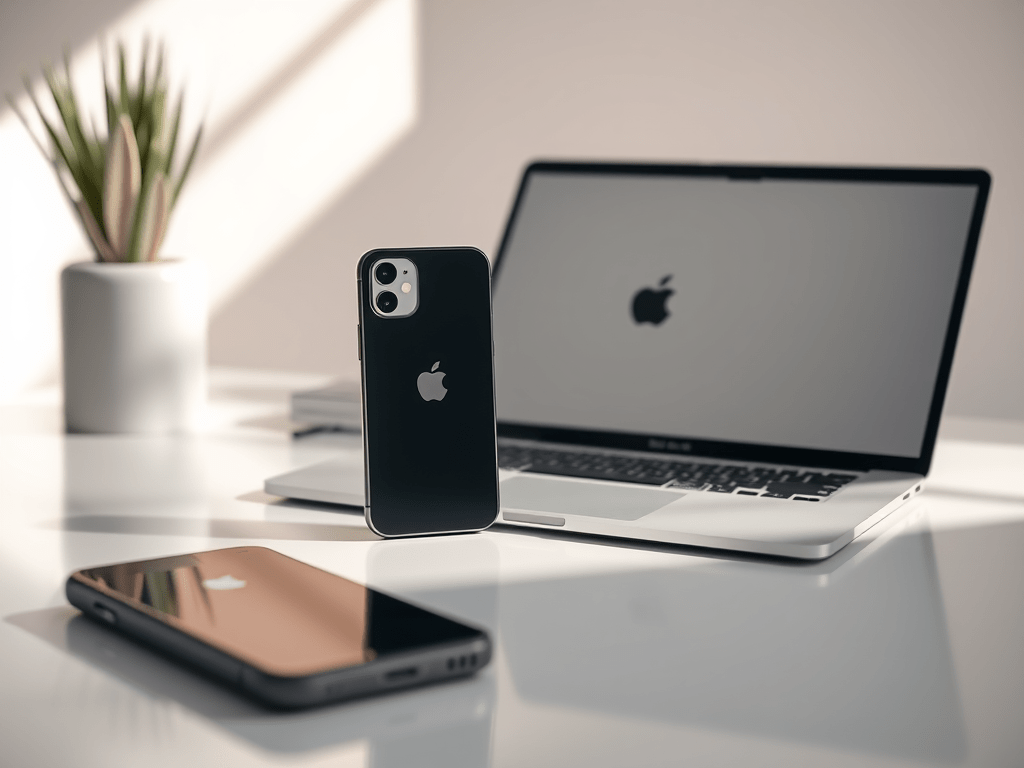
For years, my ongoing dislike of Apple ended because of two discounts.
I first bought an iPhone 11 in 2020 or 2021. This year, I bought a MacBook Air for the first time. The reason was a discount offer so shamelessly good that I couldn’t refuse it — and iOS.
My opinions about Apple haven’t completely changed. I still think it’s unnecessarily expensive. People who aren’t deeply involved in tech may assume it’s the best simply because of the price, but it isn’t. The price is mostly perception and advertising. On top of that, you give up your freedom after paying that much. Apple isn’t the best at anything. Just like Germany — not the best at anything, but above average in many things. A system that works.
Apple is a true consumption product. Once you enter the Apple universe, it’s hard to leave. A few years of maximum comfort, then it slowly turns into torture. It pushes you toward buying the next product.
Of course, there are good sides. Everything is connected effortlessly. This is both an advantage and, in terms of data privacy, a disadvantage. Still, we’re talking about an ecosystem that works without much thinking or discussion. Since the app ecosystem is more controlled, randomly installed apps don’t immediately hurt performance. All Apple products are aware of each other — they work more like a single body.
The hardware side is optimized — and this is also where freedom is restricted. You have no option to upgrade or improve the hardware. That means “development” always translates to more money and a new device. This is what bothers me the most. Still, it’s a solid sales strategy. You feel capitalism deep in your bones.
Looking at it as an engineer, two things stand out. Apple, currently one of the richest companies in the world — richer than many countries — is an attraction center for engineering practices. As electronics become more modular, they produce more efficient hardware. What does that mean?
Simply put: imagine you commute 50 km every day for work. That commute exhausts you, and you repeat it for every task. Naturally, your efficiency drops, and your reaction time slows. You waste energy and resources on the road. But if you could walk to work in five minutes, all that time would stay with you. Efficiency increases, and you get things done faster. Electronics work the same way. When the camera controller, main processor, and memory are connected with cables, efficiency drops as cable length increases. When you build a Lego-like system where everything is tightly integrated, heat issues decrease and speed improves. Of course, as processing power and resource demands grow, these problems reappear.
That’s exactly what Apple does — it builds the system in the smallest possible space, like Lego. In this regard, it’s a very well-optimized system. Another distinguishing feature of Apple products is design finesse. It’s not just engineering; there’s a strong emphasis on design and aesthetics. This design precision is what creates the feeling of “this is the best.” So much so that the emergence of USB-C was driven by Apple’s ability to adapt Lightning instead of USB-A and B for phones.
When I bought the phone, the only reason was the discount. I don’t think switching from Android to Apple made any real difference. On the contrary, I had to replace the phone sooner, and recently the battery life dropped to half a day. The only advantage was getting to know the Apple ecosystem. Once you’re deeply inside it, leaving and moving everything back to Android is unfortunately difficult.
With computers, it’s slightly different. Not being able to change hardware and having to accept the system as a whole does annoy me, but when I listed my needs, Apple, Lenovo, and Acer were left. I excluded Acer because I usually remember it as good hardware with poor materials. Another reason was wanting to get familiar with macOS and develop things there. I already have both Windows and Linux installed on my desktop PC. Another factor was, again, the discount. It was cheaper than the Lenovo Yoga, and it was lighter, smaller, and more portable in terms of design.
I don’t think an average user truly needs Apple products. For everyday use, there’s no real difference. That’s why I think they’re overrated. For graphic designers, musicians, filmmakers — people who spend their days editing video and audio — optimized hardware can be a big advantage. It’s more of an alternative to desktop computers, especially for people who don’t build their own PCs or upgrade hardware. For everyone else, it’s just part of a status-driven show.
 bahadirhancicek
Leave a comment