It was my second time in Riga. Unlike my first visit, this time I was greeted not by the sun, but by gray clouds.
I had planned this trip simply to get away from mz surronding for a bit. But as the clouds and the cold Soviet architecture welcomed me, I wondered—had I made a mistake? Was coming here the wrong decision?
Yet when a friend told me a week earlier that there were cheap tickets to Riga and asked if I wanted to go, the Riga in my mind was much more colorful and lively.
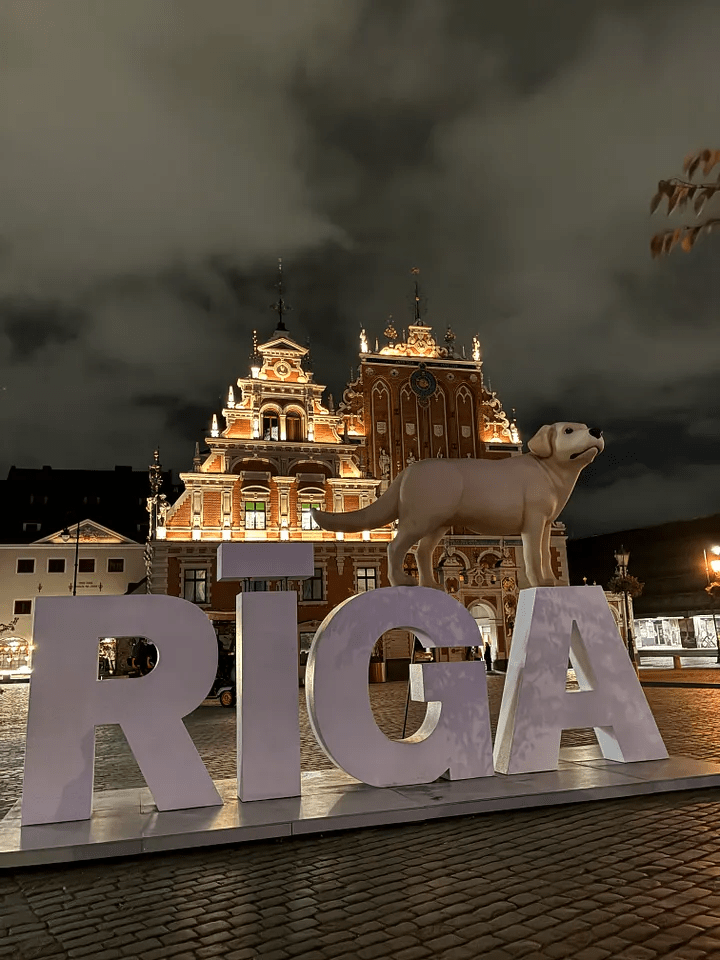
My first impression was of coldness. Gray buildings, long shadows, and a sun that never rose. When we got into the city center, the buildings were a bit more colorful, but the streets were empty. Around 10 a.m. on a weekday—people must have been at work. As we walked toward our hotel, the smell of coffee drifting from cafés on both sides softened the city a little, merging it with my warmer memories.
It was clear that, unlike in summer, life in Riga takes place indoors. The gloom outside is balanced by interiors full of warmth—through design, atmosphere, and people’s joy. Melancholy and color, history and creativity, silence and music—all coexist here. Like two strangers sitting at a bar, familiar with each other, yet still curious.
I haven’t seen many cities where interiors are so original and vibrant. I had been deeply impressed by the cafés and bars in Seville, and Riga became the second on that list. There’s Nordic simplicity on one hand, and a harmonious blend of modernity and heritage on the other. They don’t try too hard to be different or “alternative.” They’ve managed to rise above the global hipster aesthetic and create something genuinely their own—using art and design to bring beauty to the grayness.

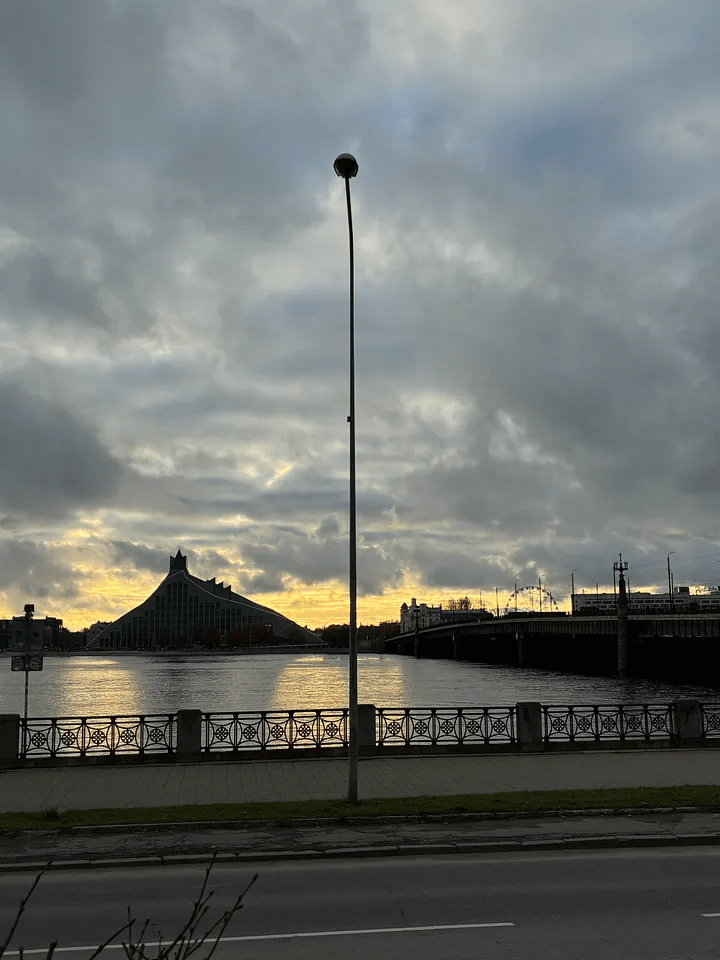
There was also a new building that hadn’t existed on my previous visit: the National Library of Latvia. Rising by the river like a glass mountain, standing proudly beside the main bridge, it has become part of the city’s skyline—a true symbol. Locals call it the “Castle of Light.” Once you step inside, it feels as if time slows down and the world’s troubles, the cold, everything outside, simply fade away. It’s like a bridge connecting past and future.
The architecture fascinated me. It wasn’t built to be “the biggest” or “the tallest,” yet it became an icon. What could be a better city symbol than a library?
Beyond its architecture, the exhibitions inside were both educational and inspiring—blending history lessons with a modern reflection on the importance of reading. There were reading statistics, motivational quotes, images of the city’s destruction and of books that were burned—and also stories about those that were saved.
“Books inspire change,” one wall read. “They make you laugh, comfort you. Perhaps books are the most revolutionary invention in human history. They are the key to critical thinking—and we will always need them.”
I found the presentation fascinating. It said that books represent knowledge, completeness, and stability. There were clever modern examples, too—like how having a bookshelf in the background of an online meeting influences perception. “Even for those who don’t read,” it said, “books remain powerful symbols—status symbols for some, but tools for survival for others.”
It showed how, during wartime, Latvians fought to save books, as occupying forces targeted libraries and culture. To destroy a nation, you destroy its books and libraries. And to survive, Latvians treated books as essential to life—like air or water. Their freedom today, the exhibition said, is partly owed to that devotion.
It portrayed the connection between reading and freedom beautifully:
“Those who learn to read gain greater access to their rights and the ability to exercise them. Reading and freedom are inseparable. Once, this path was taken by peasants and women; now, every child must walk it individually. Libraries have long been public spaces, yet in truth, not everyone climbs those stairs. How can we preserve the ‘elite’ art of reading while making it inclusive for those who might never reach such heights? How do we protect the fragile nature of printed books while keeping libraries open to all?”
For Latvia, this was the ultimate answer to fascism.
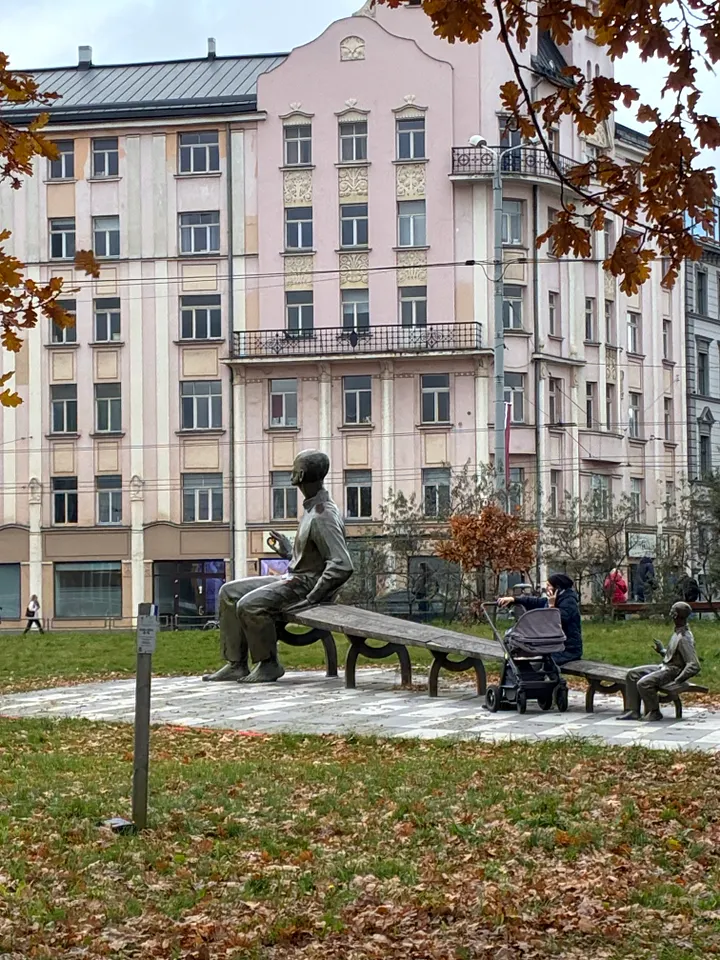
In front of the library stands a remarkable statue—Rainis, Latvia’s greatest poet, thinker, and dreamer of freedom. The statue depicts two Rainises: one small, one large. One represents youth, the other maturity. It seems to say, “You grow as you read.”
That was the essence of the city as well—having endured wars, occupations, silence, and darkness, yet never losing itself. Within its Soviet melancholy, Riga carries music, design, and art. I don’t know what Latvian homes look like, but many public spaces were full of beautiful details—some filled with light, some dimly lit. The color palettes reflected Northern simplicity: natural wood, calm tones, handcrafted elements. And the people—behind their seemingly cold faces—there was warmth.
When I entered cafés or restaurants, I felt that warmth too. They love to eat and drink, and they seem to enjoy long conversations over the table—just like us.
In bars, the same blend of melancholy and warmth lives on. There are countless events, concerts, and art performances at night. I didn’t get the chance to attend any, but later I learned that the city is full of small art galleries. Tourist areas are as you’d expect—the “Old Town,” packed with camera-holding tourists by day and drunk Englishmen by night. To truly experience Riga, it’s best to stay away from the touristic core (as it is everywhere).
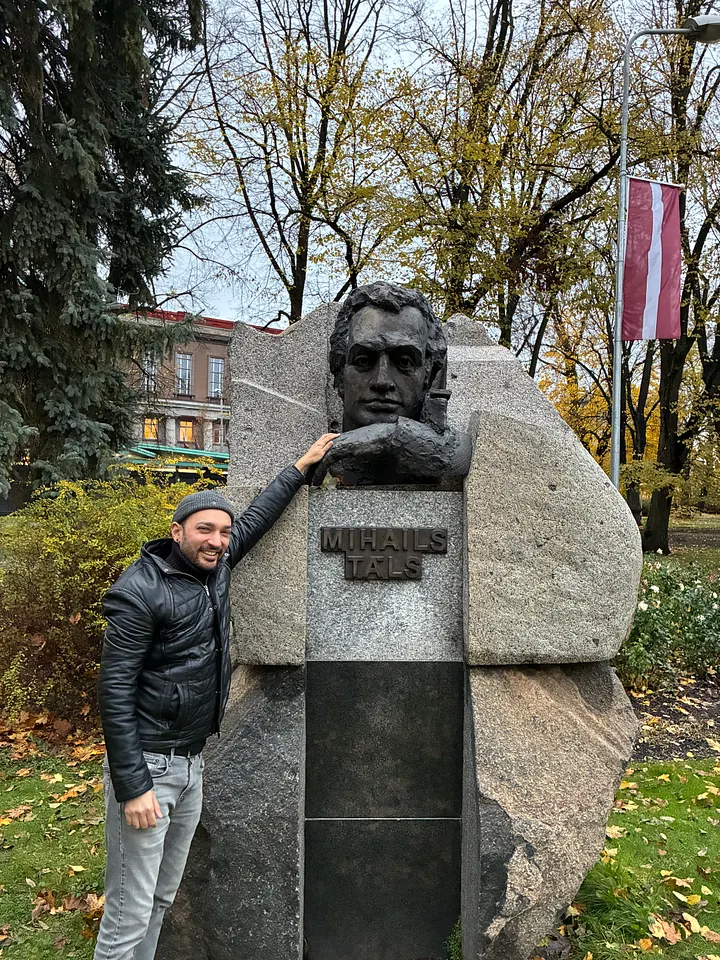
And behind the city’s name shines another one—Mikhail Tal. The “Magician from Riga.” The chess grandmaster who enchanted the world. I had heard of Tal before, but never paid much attention. They say his playing style was aggressive—logic fused with madness, rules intertwined with imagination. Unpredictable, intuitive, melancholic yet elegant. Just like Riga itself.
The feeling the city left in me was this: resistance and transformation. Darkness and hope.
 bahadirhancicek
Leave a comment