
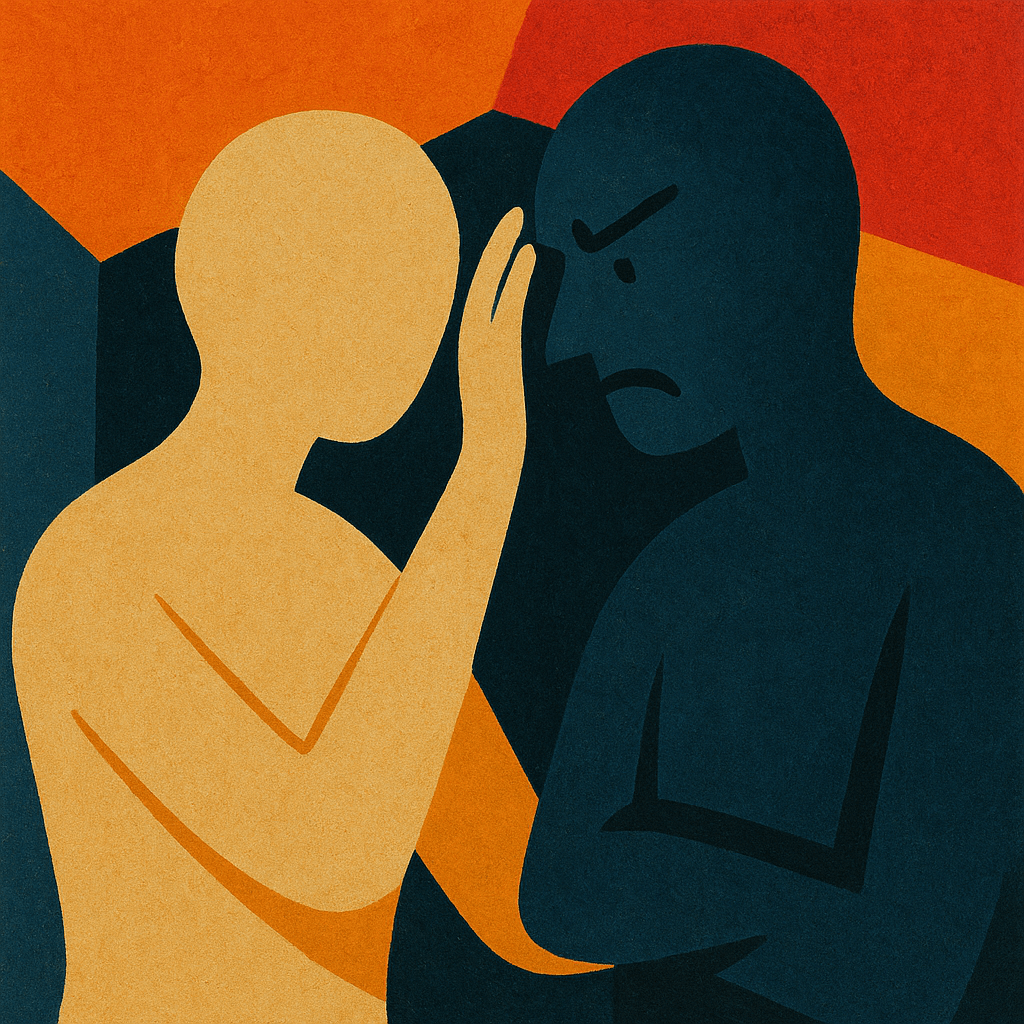
As economic pressure grows, we see more and more arguments on the streets. Add to that the effects of cancel culture, shrinking comfort zones, stress, and personal frustrations — and you get a society where people are constantly provoking each other, trying to find weak spots, humiliate, or hurt. It’s now normal to see people yelling, insulting, or arguing on every corner.
It’s incredibly easy to break someone’s spirit. Especially when we’re vulnerable — one careless word can drain our motivation completely. At home, in public transport, among friends or relatives, even on TV — we’re surrounded by words that crush our energy without much thought behind them.
These conversations don’t just kill motivation — they drain life itself. They destroy inspiration. We lose the desire to do anything, we become irritated, and negativity spreads.
Just like in the Middle East’s fatalistic mindset, being constantly surrounded by negativity makes us lose faith in change, progress, and goodness.
So today’s article is about how to resist this.
What can we do to protect our mood and respond wisely to words or actions meant to hurt us?
Like most things, this too can be handled systematically — there are real methods to stay centered and react in a healthy way.
1️⃣ Don’t Take Everything Personally

Being pushed or elbowed on public transport is nothing new. You try to board calmly, someone shoves you, and within seconds your head fills with anger — maybe even a few creative swear words. The mental debate rarely feels satisfying.
Now, of course, I could tell you to take a deep breath and stay calm…
But here’s my dark-humor alternative:
“Next time someone shoves you, calmly punch them under the nose, knee them in the stomach, and finish with an uppercut — just make sure they don’t have a weapon, or you’ll lose your chance at further self-development.”
Jokes aside — I personally prefer a symbolic elbow to the diaphragm. (It’s the imagination that counts.)
If that’s not your style, there’s a much better approach: see the situation differently. Maybe that person is having a terrible day, maybe they’re mentally unstable, or simply lack the IQ to behave decently. People who insult or lash out physically often do so because they feel powerless. Sometimes they don’t even realize what they’re doing.
Or think of it this way — maybe they’re rushing to the hospital, or their house is on fire, or they’re panicking about something real. In that state, everything around them becomes an obstacle. How would you behave then?
🎥 Watch: Brené Brown — The Power of Empathy (RSA Short)
We tend to judge people quickly — by appearance, tone, a single move. Cancel culture amplified that habit. But we can’t possibly know the full story behind every behavior.
And realizing that helps us stay calmer — at least calm enough not to ruin our own mood.
Does that mean we should tolerate injustice or let people walk over us?
Of course not. The goal is simply to avoid turning every rude moment into a personal wound.
2️⃣ Say What Hurts You — Clearly
Will your mood ever be untouched? No.
Will people say things that hurt? Absolutely.
But most of the time, they don’t even realize it. So when someone’s words sting, look them in the eye and ask, “Did you really mean it that way?” If they apologize or try to clarify, they probably didn’t mean to offend you. Either way, explain how it made you feel. It helps them be more mindful next time — and clears the air immediately.
3️⃣ Use Humor
Humor is my favorite method. Life doesn’t need to be so serious.
Especially with family or close friends — they often mean well but express it poorly.
Or they give random “advice” that’s just speculation. Instead of arguing, answer with humor.
🎥 Watch: Andrew Tarvin — The Skill of Humor (TEDxTAMU)
Example:
“Once you get married and have kids, everything will fall into place!”
Option A:
“Marriage? Have you seen the world population numbers? Resources are running out! Plus, I have dreams…”
Option B:
“Of course! How many kids do you need? Ten enough?”
Guess which one works better?
In my experience, A leads to endless debate, sadness, and exhaustion.
B ends the topic immediately — with laughter.
4️⃣ Pretend It’s Not About You
Like “playing dead” when you meet a bear. (Does it really work? No idea. I doubt I’d remember to try.)
🎥 Watch: TED-Ed — How to Stay Calm Under Pressure (Noa Kageyama & Pen-Pen Chen)
Just ignore it. Public figures do this all the time when journalists throw provocative questions. Sometimes the comment is so absurd it doesn’t deserve a response. Sometimes silence is wiser than saying something you’ll regret.
Trying to argue or “defend your honor” only makes things worse.
If someone’s goal is to provoke, embarrass, or unload their anger, that’s their problem — not yours.
Why let a fool ruin your peace?
5️⃣ Analyze the Words — Find the Real Message
One of the best gifts of reading books is the ability to empathize and read between the lines. Unfortunately, where reading habits are weak, empathy tends to be weak too.
Example:
Your partner says, “We never spend time together anymore. We don’t go out. We don’t do anything.”
You might reply:
“Do you think I’m working for fun? I’m doing all this for us! You want better conditions, right?”
That’s when the classic “I bring bread to the table!” speech arrives — like the tax-payer’s version of love.
But what if your partner isn’t counting minutes, but expressing loneliness? Feeling neglected, invisible, disconnected? A neglected spouse can become angry, manipulative, or emotionally detached.
When someone says “We don’t spend time together,” it’s often a cry for connection, not an accusation.
The best answer might simply be:
“Do you feel I’m not giving you enough attention? Let’s go out tonight.”
A small gesture can save a relationship.
Aggressive reactions, on the other hand, can destroy it.
Sometimes harsh words come because you’ve already hurt them first. So before you fight back, ask: Is this really about me? Why is this happening now? That thought alone can stop many disasters.
6️⃣ Kill the Urge to Fight Back
Eye-for-an-eye is one of humanity’s oldest instincts — and one of its least effective. If revenge solved problems, wars in the Middle East (and everywhere else) would’ve ended centuries ago.
It all starts with how we speak to those closest to us.
Some people get used to making fun of us — in front of everyone. Not because they’re evil, but because they lack empathy. “I’m just joking,” they say. But that “joke” might sting for days.
You can warn them beforehand:
“If you say that again, I’ll laugh hysterically, put a bag over my head, and start dancing. Maybe then you’ll feel embarrassed.”
And then — actually do it. They’ll stop eventually.
I once had a friend who loved teasing everyone. One day he said, “You’re the only one I can’t tease.”
I asked why.
He replied: “Because you make the joke about yourself first.”
Moral: When you’re at peace with yourself, no one can truly insult you.
You can even laugh at your own flaws. That ability warms people up, melts tension, and ends conflicts instantly.
No one mocks you because they know they’ll look like the killjoy if they try.
Ultimately, protection from humiliation or verbal attacks comes through education and self-confidence.
People with better emotional intelligence know when to stay calm, when to ignore, and how to laugh things off.
In our culture, “being calm” is often mistaken for weakness — but if you’re sure of yourself, no one can overpower you.
You become a mirror: others see their own insecurity reflected back at them.
Instead of reacting aggressively, learn to ignore the sting, question its root, and stay centered.
You’ll sleep better, avoid pointless arguments, and protect your peace.
🎥 Watch: Daniel Levitin — How to Stay Calm When You Know You’ll Be Stressed (TED)
 bahadirhancicek
Leave a comment