
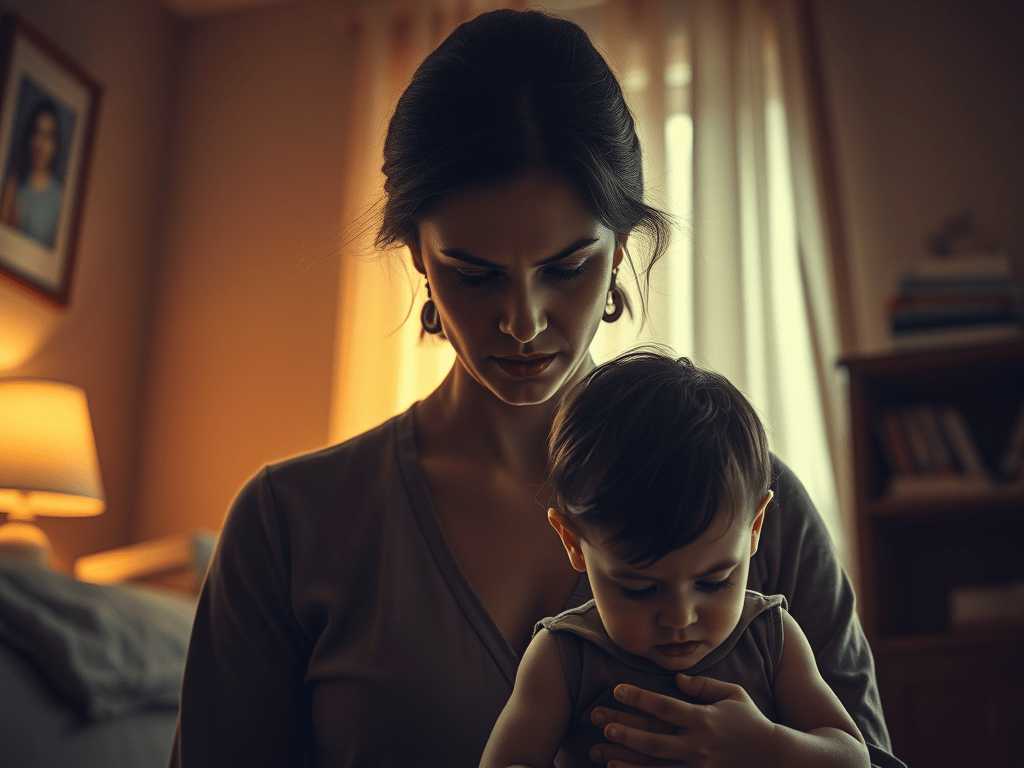
Our fears, excitements, and even the way we use our talents—or which talents we end up developing—depend largely on how we grew up. Psychologically speaking, an authoritarian mother can deeply shape a child’s identity, personality traits, and relationships with others.
A similar pattern exists among cat owners. Some cats are aggressive, others calm and affectionate. Some behave inconsistently, others are predictable. Interestingly, these differences often reflect not the cat’s breed, but the owner’s attitude.
When it comes to humans, a mother’s love is the most influential kind of love. She nourishes, raises, and teaches us. She shows us how to behave, how to overcome challenges, how to control ourselves, and how to balance work and rest. Of course, it’s not solely a mother’s responsibility—but emotionally, the person who shapes a child the most is often the mother.
Continuing with this gendered (and slightly provocative) approach: the mother develops our abilities, inspires us, protects us, comforts us, heals us when we’re sick, and stands by us with incredible patience and attention. She teaches us responsibility, independence, and courage—and sometimes punishes us when necessary.
Almost like a demi-god, isn’t she? Indeed. Among all living creatures, human mothers carry far greater responsibility—mainly because our nurturing period is so long.
But are all these behaviors signs of love?
Not always. Sometimes, they express hidden authoritarian feelings—the satisfaction of controlling others, or the desire to solve every problem through power. Reward and punishment. Being everything for the child. Feeling like a half-god. These traits describe what we might call the authoritarian mother.
But wait—aren’t parents supposed to know everything about their child, control their environment, and protect them?
Yes, parents sometimes must use their authority to teach or protect. But there’s a crucial difference between guidance and control.
So when does a mother’s behavior cross the line? What exactly does “authoritarian” mean? Let’s dive deeper.
Having or Being?
German social psychologist Erich Seligmann Fromm, in his book To Have or To Be?, describes two ways of living: having and being. The question is—which one do we live by?
These two orientations shape how we think, feel, and act. They define not only personal identity but also family and social relationships.
The “having” orientation is active, but self-realization comes through possession and consumption. The person strives to prove themselves—to achieve, accumulate, and earn validation from others. Fromm explains this as the urge to display all one’s abilities and seek appreciation for them.
The “being” orientation, on the other hand, is rooted in growth, curiosity, and genuine connection. It’s generous—sharing time, attention, love, and presence. Such a person gives freely, not for recognition but for the joy of connection. Fromm suggests that only those who are free from illusions can truly love—even their own children.
If a mother follows the “being” approach, she accepts her child unconditionally. She doesn’t label actions as good or bad, doesn’t tie love to grades, looks, or social approval. She makes her child feel safe, nurtured, and independent at the same time. This balance between love and freedom builds emotional strength, self-expression, and confidence.
Children raised this way grow up calm, self-assured, and free from unnecessary complexes—they understand their potential and use it wisely.
Greed and the Need for More
Fromm argues that modern consumer society glorifies possessions, wealth, and power. The more you have, the more you matter.
Power shapes identity. The sense of ownership directs the ego. Our name, status, knowledge—everything we own defines how we see ourselves and what image we project. In a consumer society, even the self becomes just another consumable product.
Those who live by the “having” mode evaluate themselves through others’ eyes. As I also discussed in How Do You Know Yourself?, the environment becomes the foundation of identity. Every action aims to earn recognition—through education, social roles, possessions, and even children.
For such a mother, children are not individuals but products. And like all possessions, they must be kept clean, orderly, and “well-maintained.” These mothers list their own needs and expect their children to adapt. They rarely tune into the child’s emotions; instead, they impose their own will—just as they do with their other belongings.
The authoritarian mother knows what her child wants and tries to solve problems—but also restricts friendships, interests, and choices to maintain control and satisfy her own craving for power.
And a dominant mother? She’s dominant in everything—even in the absurd.
“Berkcan, put your jacket on immediately!”
“No, mom, I’m hot.”
“I said put it on! A mother knows better whether you’re hot or cold!”
This level of control often masks anxiety and excessive responsibility. The child remains a child for too long—because, deep down, the authoritarian mother cannot bear to lose control. She cannot accept that her child no longer belongs to her.
If what makes me “me” are the things I possess—then who am I when I lose them?
For those living in the “having” mode, the greatest fear is loss—of possessions, status, or love. Fear of theft, illness, change, even freedom or affection. That fear breeds stress, rigidity, and aggression. Such people become skeptical and withdrawn.
And yes—many of them grow up to run the world around us.
Because change means uncertainty. Uncertainty causes anxiety. And the fear that stability might break dominates everything.
This mindset even breeds hypochondria. The fear of losing what one has leads to chronic stress and hostility. People become harsher, more suspicious, more closed off. And perhaps the children of such mothers are now the very people making decisions that shape our lives.
Desire, Need, and Emotional Poverty
Desire creates need. To feel secure, one seeks to possess more—and then justifies it as “deserved.” That’s why people with a having mindset often dramatize and seek attention. Sound familiar?
So, how do children of such mothers feel?
They often seem content. After all, their mother is strong.
How Does a Woman Become a Dominant Mother?
Usually, it stems from upbringing and social environment. Every family has its own culture, but authoritarian mothers tend to exert heavy control—not only over their children but also over themselves. Their lives revolve around discipline and control, which damages both mental and emotional health. Even learning ability can suffer.
For a mother rooted in being, what matters is depth.
For one rooted in having, it’s quantity—the more information, the better.
Recognize that pattern?
Dominant mothers want their children to outshine everyone else. They sign them up for endless activities and classes but rarely stop to understand their child’s real interests or talents. It’s like upgrading to a better car—constant improvement for its own sake.
The child, in turn, tries hard not to disappoint. When things go wrong, they feel crushed, anxious, or depressed.
But life unfolds according to its own nature. That’s why children of dominant families eventually fight for their freedom. Rebellion can take many forms:
refusing to clean their room, overeating or not eating at all, showing sadistic tendencies, making noise, or becoming aggressive.
Sometimes rebellion is passive—doing nothing at all. Laziness, indifference, or emotional withdrawal. If rebellion never comes, it means the child’s personality stops growing. You’ve surely met adults like that.
A real example:
A 48-year-old man loses his mother. He falls into deep crisis. He never married, never moved out, never found a woman like his mother. He couldn’t leave the comfort zone she created. When she died, he plunged into depression—unable to fill the void.
“I’m a Dominant Mother—What Now?”
We say mother, but this applies to all parents. The focus on mothers simply reflects how emotionally and biologically close they are to the child. So, feminists—relax.
Now, to the question: what can you do?
First, stay calm. The fact that you can recognize and admit your dominance means you’re already self-aware—and therefore standing on the edge of change.
Second, early awareness saves lives.
Reflect on what triggers your reactions. When do you go too far? Where are your boundaries? When should you restrain yourself, and when should you let go? Honest answers—and consistent action—can save both you and your child from years of psychological harm.
Third, it’s hard for dominant mothers to have happy marriages. Their sense of control spreads to every corner—including their partners. They fear love, so marriage becomes a transaction—a distribution of property. Unless one “wins,” it often ends in cheating, separation, or endless conflict. Or one partner simply shuts down into depression.
In general, dominant mothers rarely find deep happiness in family life.
Finally, those who constantly worry, need to possess, and fight inner contradictions long for love—but rarely find it. Because love belongs to free people. Love cannot bloom where restriction and control dominate.
So the final question to such personalities is this:
Are dominant characters ready to give up “having” in order to truly “be”?
 bahadirhancicek
Leave a comment