
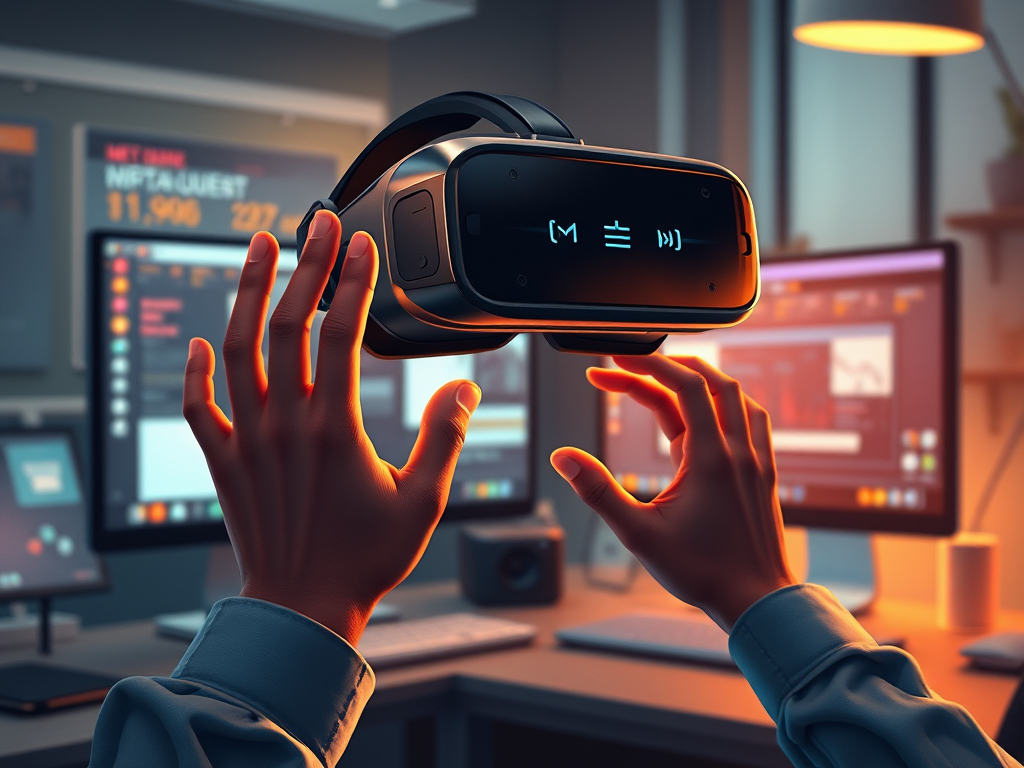
Last week, I added another unnecessary electronic purchase to my collection—I bought a Meta Quest 3. I’ve been talking about disruptive technologies lately, and I think VR is absolutely one of those technologies that will completely change our lives and our perspective on the world.
Photo by Jessica Lewis 🦋 thepaintedsquare on Unsplash
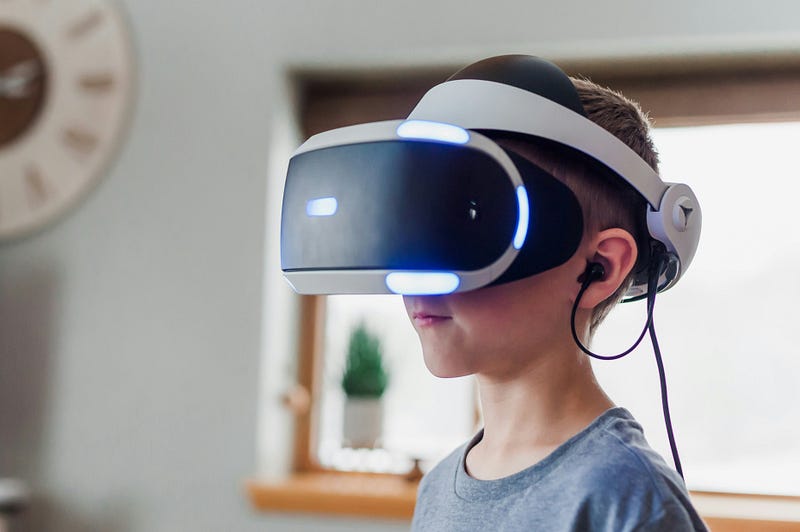
Even as an electronics engineer who is deeply involved with new technologies, I was astonished. I had tried Oculus before and found it impressive, but somehow, I had missed the evolution of VR since then. That’s why I bought the VR headset with zero expectations. Yet, it completely opened my eyes in a new way.
When Zuckerberg rebranded the company as “Meta” and launched the metaverse, the move was mocked. It was criticized as overhyped and dismissed as a bubble. My own view was that it was simply about putting a platform out there—to be the first in the race. The content didn’t matter as much; what mattered was planting a flag so that everyone else would remain followers. But when I experienced the Meta Quest 3, I realized I had been too optimistic. The metaverse is already far more advanced than I imagined.
I didn’t research the differences from earlier models, but what impressed me most was hand tracking. Without using any controllers, you can navigate menus with just your hands. The virtual keyboard works surprisingly well too. The other feature that blew me away was mixed reality. This allows your games and activities to blend seamlessly with real life. For example, it’s ideal for a home office setup. Instead of two physical monitors, you can keep one and move the rest into VR space. You can add as many monitors as you like.

On top of that, Meta has developed its own operating system, much like Windows. There’s a dedicated app store, and you can also access many apps you’d normally use on your phone. WhatsApp messages, your Instagram profile—they’re all accessible. Even when you’re fully immersed in VR, you can glance at your “phone” inside the virtual space and do everything you would in real life.
I tried a few different apps. One was a fitness app, designed like a game. It’s both intense and fun—perfect for people like me who get bored of repetitive exercises. At first, I underestimated it, but after 20 minutes, I was drenched in sweat, and the next day I felt real muscle soreness. There’s also a boxing simulator that feels incredibly realistic. The tennis app is great too, especially for people who don’t have much space but still want to practice.
Beyond sports, I explored some educational apps. One was about cells, how they work, the structure of the COVID virus, and how vaccines affect it. It was brilliant—you could travel inside a cell, tap on each part for detailed information, move them around, and watch their functions in action. Similarly, the anatomy and physiology apps allow you to explore the human body in detail. In “ant mode,” you can travel through blood vessels to see how everything connects. Or, in normal mode, you can peel back layers of the body, organs, and cells.
https://www.youtube.com/watch?v=MZiNTL1BycI?feature=oembed]
Another feature is Meta TV, which hosts tons of videos. I explored Atlantic Productions’ videos, including documentaries narrated by David Attenborough. In one insect documentary, you shrink down to their size and experience life alongside them. In another, you dive deep into the ocean to encounter sea creatures—extinct, existing, or imagined. There are also mixed reality videos where the narrator appears to be sitting right in front of you, in your own living room.
Live events are another highlight of Meta TV. When you join, you can choose to fully immerse yourself in a 360-degree experience or watch as if you’re in a cinema. Meanwhile, you can talk to other participants. In one museum app, this was hilarious—I forgot my mic was on and muttered, “What is this artist even trying to say?” The person next to me answered, giving me a full explanation!
One of my favorites was the presentation app. You can upload your own slides and practice in VR, while getting real-time AI feedback. You can choose different settings—a conference hall, a job interview, a 10-person team meeting. The system tracks whether you maintain eye contact, whether you say too many “hmm” or “uhh,” and even offers a teleprompter mode.
Another fascinating app was for brainstorming. You can map out your thoughts in 3D space and build mind maps in a structured, visual way. It’s both enjoyable and highly effective for organizing ideas.
Considering Meta’s investment in wearable sensors and its strong science team, I’d say they’ve truly broken new ground. The reason it hasn’t yet fully taken off, in my opinion, is simply because the hardware is still expensive and a bit bulky. Apple’s headset is praised for mixed reality too, but it’s heavy and very costly. Then there’s the universal electronics problem: heat. Hardware evolves, software lags; then software evolves, hardware lags. Still, the progress is undeniable.
It’s not hard to see where this is heading. Once you put on the headset, you’re transported into another world. Concerts, museums, games, even relaxation spaces—it’s all there. In the future, maybe even your home or your car will exist inside VR.
With the help of AI and VR, even our way of working could radically change. Virtual offices could become a solution to global housing shortages.
The film industry could be completely transformed. Imagine when all actors are AI-generated, and you can step into the film as a character yourself.
Official services and medical visits could also move into VR. Prescription checks, parts of nursing, even full doctor visits could take place virtually. If technology advances to meet our daily nutritional needs, then yes—a Matrix-like reality may not be far away. After just 30 minutes in VR, the line between real and artificial begins to blur. High-resolution experiences make you feel like you’re truly climbing Everest, working aboard a space station, or traveling across the world. What still limits us is resolution, content diversity, flexibility, and of course—our eyes.
Looking ahead, I think one day we’ll control these devices directly with our minds. We already control prosthetics with brain signals. With the rise of wearables, physical sensations could be simulated too. Imagine the boxing app making you actually feel the punches. Or a loved one’s touch feeling real even when they’re miles away. It would make reunions more lifelike—but it also carries risks. What happens when someone thinks they’re just playing a game in VR but are actually controlling a real robot soldier?
Just as today we debate “truth,” we’ll soon be debating “reality.” Even when the truth is explained, people still cling to their own beliefs. In the same way, millions will prefer VR over real life because it feels more satisfying. Once again, the age-old question will return: what is real?
In my view, “real,” “virtual,” “true,” and “false” are already losing meaning. Mentally, we already create our own realities. Once we physically do the same, everything we’ve believed until now will change—our jobs, education systems, learning content, relationships, expectations, even our biological appearance. Whether we become cyborgs or reduce ourselves to just a mind connected to machines, I don’t know. But I don’t think that future is far away.
The hardware and software obstacles will eventually be solved. The bigger challenges will be societal and psychological. Digital security, digital literacy, and digital education will be the defining issues of this era. And to meet them, we’ll need to change our perspective first. Because if we adapt, we’ll have a chance to thrive alongside these technologies. If not, whether we like it or not, they’ll steamroll us.
 bahadirhancicek
Leave a comment