Do you remember rotary phones? We used to look up the number in the phonebook or enter it from memory. We lined up a series of digits one after another. The phone was fixed. If you didn’t catch it, you had no idea who was calling. Sometimes we ran to pick it up, sometimes we just let it ring.
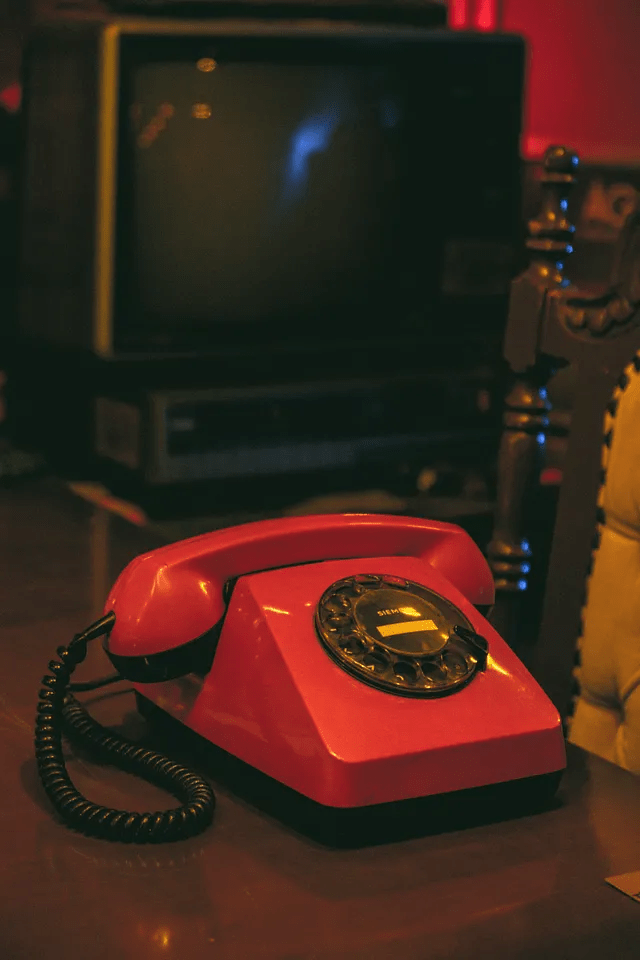
Photo by Muhammed ÖÇAL on Unsplash
With the arrival of the mobile phone, things changed. The phone became a part of our body. We no longer had to run, we could call back, we no longer had to chase the convenient times of others.
These days, the phone has become everything. From banking to government services, to daily tasks, to medical tracking—we carry every area of life in our pockets. It even became a tool of influence for authoritarian regimes, and a propaganda tool for democratic elections. In the coming years, it will be the control mechanism for our beds, our cars, all of our belongings.

Photo by Onur Binay on Unsplash
Actually, when you look at it this way, we can also call it a disruptive technology. It completely changes our lives; socially, culturally, economically. However, the topic of this article will not be disruptive technologies. (The last 2 articles of that series will come this week.) Instead, my topic is phone usage habits.
From Mobile to “Cell”
Before Martin Cooper (Motorola’s first mobile phone attempt), the home phone had already been moved into the car. The phone that traveled with the car was called “mobile”—meaning movable phone. This was the most accepted term, and it continues to this day. With the first successful call in 1973, communication antennas were also increasing. Therefore, terms like “cellular phone” and “radiophone” also found their place in the literature. Some countries translated it directly as “mobile,” others as “cellular.”
In Turkish, we say cep telefonu—a phone carried in the pocket. In German, they say Handy—meaning easy to use, practical.
So my question is this: does being portable mean it must always be reachable? I think it’s simply user convenience.
My Time in Turkey
For the past month, I was in Turkey. I went because we had a patient in the family. Of course, many people called and asked. Even though it was not recommended for our patient to talk on the phone, we could not maintain this isolation all the time. During this period, of course, many people called to say “get well soon.” My personal opinion is that in such situations, the person should not be disturbed. Just write “get well soon” and that’s it. Even if people call out of love and concern, I see this as a selfish attitude. Also, I don’t like constantly talking about illness. I came back having learned about the illnesses, experiences, surgeries, and more of all my relatives—even things hidden for years.
Some callers kept it short—no longer than 1 minute. Some, because we hadn’t spoken in years, kept dragging it out. Some called every day. You can’t really say “why didn’t you call before?” Of course, you say “I’ll call you later” but before you do, they call again and again.
By nature, I’ve never been good at small talk. Since childhood, I never liked talking on the phone. Now, since I work as a project manager, my life passes with phone and Microsoft Teams calls. In this situation, non-work conversations disturb me even more. After work, I don’t want to see a phone. With the illness situation forcing it, I paid more attention to phone usage habits. Our case was special, but on the street, on the bus, on the plane, some things stood out to me even more.
What caught my attention in Turkey first was the abundance of people talking on the phone in the street. Everyone is on the phone. Everyone seems to be handling something important. I don’t know if this was because I went to Ankara. Maybe they really are handling important things. But if that were the case, the country wouldn’t be in this condition.

internet photo
Always Reachable
Another thing I noticed among the people around me was how quickly they answered. If I was called, I must answer—that’s the thinking. Whether we are in the middle of a conversation, in a hurry, or doing something else, it doesn’t matter. If it rings, it must be picked up. As if it were a matter of life and death. And then the phone doesn’t hang up. There is no such thing as “I’m busy now, call later.” The conversation goes on and on. That ends, then another call starts.
Actually, when people are at work, they are not always reachable. They can call back later. But for some reason, in daily life, their behavior is the opposite.
And everything is discussed on the phone. Sitting in a café, you can learn a lot about people, know their troubles, even their card numbers. The phone is there because things must be solved immediately. Urgent matters needing instant support.
Another thing that caught my attention was the sound. Everyone uses the phone out loud. In my surroundings, only Middle Easterners and Russians use it like this. Key sounds, ringtones are never missing. In Turkey, I noticed it’s like this on the street. You constantly hear phone rings. People answer immediately. If there’s no call, apps are used with sound. From Duolingo to TikTok, everything is out loud. Some people scroll reels one after another, like prayer beads. All out loud, all separate. Honestly, some sounds trigger strange reactions in me. Alarm tones, some songs, Teams call tone, message tone, mail tone… Hearing them makes my heart race and panic. Do I have to listen to all this? No.
My Own Way
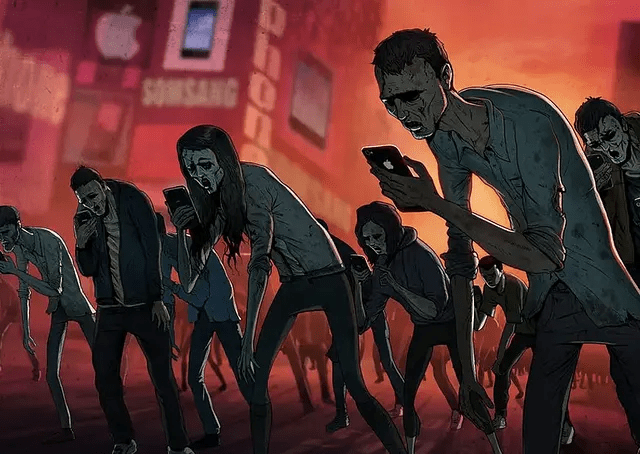
It feels dystopian. For example, I use my phone in silent mode. Sometimes people can’t reach me, but if it’s urgent, they write. And I see it within 30 minutes anyway. Or let’s say 2 hours later—what difference does it make?
Am I doing the right thing? No. Because sometimes they really can’t reach me. But what I don’t understand is—how do others use it loudly without worrying about disturbing others?
Similarly, if it’s not someone who lives far away, I prefer talking about important things in person, or by writing. Why should everyone hear my experiences, thoughts, things I want to say? Why should everyone hear the videos I watch, the meaningless background music of unrelated clips? Or why should I be exposed to sounds I hate? I really don’t understand.
In Germany too, I see this among immigrants. Loud voice and video calls. Of course, life is hard, they are far from loved ones. But giving the sound to speakers instead of headphones doesn’t increase love, I think. Therefore, I don’t see using the phone out loud as something positive or civilized. On the contrary, I see it as extremely selfish behavior. Of course, there are exceptions. A doctor being urgently called from the operating room cannot miss the call because the phone is on silent. But even for this, there are many solutions—pagers, smartwatches, etc.
Conclusion
The idea that the mobile phone must mean constant availability disturbs me. Sometimes you don’t want to talk, but if you don’t answer, it turns into repeated calls. At work, in the shower, in the toilet, on the plane—does something really important change in your life? In a world where 90% of what we talk about is trash, what could be that urgent? Before cell phones, before smartphones, were there no emergencies? There were, and life went on. So why grab the phone to say every little thing that comes to mind?
It seems very strange to me. I think in today’s world everyone has been convinced they are “special” individuals. Everything we do is important. Everything revolves around us. Naturally, when someone says “let me call,” the fact that the other person may have a completely different life, may not answer, may have seen the messages but not replied yet—this disturbs people. Maybe that’s why they want immediate reach. Some people, knowing this feeling, think they themselves must also be immediately reachable.
In short, I think today’s phone habits are both primitive and selfish. We are living through the Wild West of technology. Everyone has drawn their gun and is firing.
Without thinking, we use everything and make it indispensable in our lives. I hope we don’t end up victims of the speed of technological development. On the contrary, maybe our approach changes a little, and we can become healthier societies.
 bahadirhancicek
Leave a comment