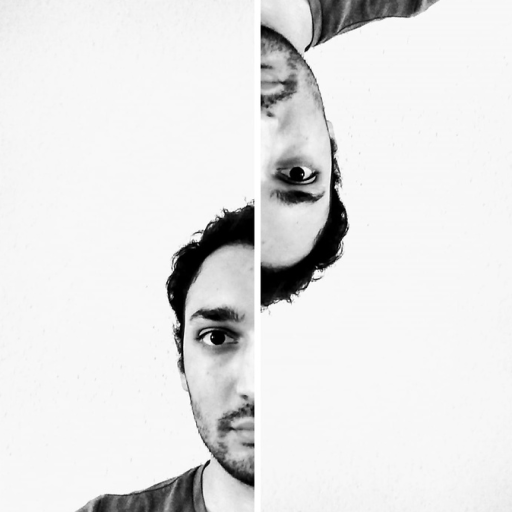
When I sat down for a moment and thought, Who am I?, the first things that came to mind were my name, age, hometown, job, and beliefs. This really bothered me because when I thought about it more deeply, I realized these things don’t actually represent me.
When I paid attention to how people I meet introduce themselves, it was the same. Within two or three minutes, I would hear everything—from their name to their hometown to their job. Are these really the things that define them? I don’t think so.
When I thought about the people I’m closest to, it was the complete opposite. Closeness had nothing to do with any of that. The people I most enjoyed meeting were the same—those topics that normally come up in the first five minutes of conversation often didn’t even appear until days or months later.

So why is it like this? Why do we introduce ourselves by our jobs?
I think it’s about ego and social norms—plus centuries of conditioning.
Human beings love to feel special. Thinking that everything they do or believe in is unique feeds their ego enormously. Especially if they’ve worked hard for something, it’s inevitable and natural for that achievement to turn into a status symbol.
In the past, jobs were passed down from father to son. Everyone was an expert at what they did, often the only one in their environment. Naturally, professions became a core part of a person’s identity.
These days, most of us reach our professions by going through school and various stages of training. Professions can also give clues about our interests and personality. And nowadays, they also reveal our income bracket. That’s why many educated people from elite professions adopt their job title almost as a badge of honor.

But I think that’s not entirely true. Throughout the day, we take on different roles. Dress codes, formality, waking up early against your will, burnout, the fact that many people suffer psychological issues because of their jobs—these are all proof. Career investments often erase the line between work and life balance, and whether you notice it or not, they pull you away from life itself.
Defining yourself by your job also limits your communication with others, closing the doors to people outside your field who might want to get to know you. Likewise, if your job changes—or if the way your job is done or its status changes over time—it can increase anxiety, depression, and existential issues. Notice that many people aren’t doing their dream job and aren’t happy at work. They try to comfort themselves with money, but when that satisfaction fades, hopelessness sets in.
Of course, this isn’t something we can change overnight. From childhood, we’re asked what we want to be when we grow up. Children’s minds are shaped—sometimes brainwashed—by suggestions and expectations. From an early age, a profession is turned into an identity. This prevents the emergence of truly free individuals.
For girls, it’s even more problematic. For example, engineering is often seen as a “man’s job.” Girls are expected to be well-groomed, wear makeup, and be attractive—pressures that boys do not face. Later in life, this leads to personality disorders, the “dumb blonde” stereotype, the sexualization of women, gender inequality, and women being oppressed and objectified because of social norms. This deterministic approach destroys many lives before they even begin.
So there must be another way to introduce ourselves. Our job is not what defines us. (At least not only our job, or not to such a great extent.)
The same goes for beliefs and fanaticism. As a product of human ego, belief systems often reinforce the idea that the world revolves around the individual. When combined with fear and uncertainty, this turns belief into part of one’s identity. But when you think about the 5,000 religions and countless belief systems around the world—and their contradictions—it feels meaningless for this to be the main thing that defines us.
The more people you live among, the more cultures you blend with, the more you realize that shared values matter far more. For example, at the most basic level: being human.
Similarly, fanaticism—whether it’s for a football team or nationalism—doesn’t truly represent you either. You can’t choose your nationality. You can’t choose your language. And none of that makes you superior. You can choose the team you support, but whether it wins or loses has nothing to do with you. So this kind of identity also becomes meaningless.
We especially saw how meaningless these things became during the pandemic. When you’re confined to your home, stadiums don’t fill up, your nationality doesn’t mean much, and your religion doesn’t necessarily set you free.
Many people experienced the concept of quarantine for the first time during the pandemic. Those who loved spending time outside, who recharged by socializing, who were rarely at home—found themselves falling into depression under such restrictions. Some became aggressive, some gave up on life. Over time, many started finding hobbies to entertain themselves, spending time with family, spending time with friends. And if they were even a little reflective, they realized what truly mattered to them in life.
Tragedy can happen at any time. Everything you have can vanish in an instant. That’s why it’s important to think about what your real values are—what truly makes you who you are. When materials and possessions are gone, who will you be?
Humans are social creatures. That’s why our environment affects us greatly. Family and friends are among the biggest factors shaping who we are. Beyond that, it’s actually nature and the environment. Life isn’t just about our biological bodies. If we can’t live without breathing, if there’s no life without the sun, if we can’t survive without water, if we need food, if our psychological state is influenced by all of this—then thinking of ourselves as only a biological body is absurd. At our core, we are as much a part of nature as trees, rocks, and seas, and we exist with them. We need to put our ego aside and understand—like shamans—that the harm we do to nature is harm we do to ourselves.
From Confucius to Buddha, from Buddha to Aristotle, Kant, Marx, and Freud—throughout history, many have sought the answer to this question: Do we have a true self? Are we divine? Are we rational creatures? Social? Irrational? Machines? Biological parts? Or a reality we’ve created ourselves? All of these could be true, but there’s one undeniable fact: we are beings that have evolved over millions of years. And with technology and science, we continue to evolve and transform. We may know where we came from, but we don’t know where we’re going. So our identity is partly shaped by the era we live in—but there are things beyond time that truly make us who we are.
Going back to the question of what makes us who we are, here’s what comes to mind: family, friends, hobbies, our talents, what we’ve learned, our values, our beliefs to some extent, our achievements, our life philosophy, shared culture and values, our travels, our cultural background, what we’ve read, what we’ve watched, the turning points in our lives, experiences that deeply affected us, dreams, goals, the things that motivate us, our ambitions… In short, all of our authentic sides.
Among all these, the money we earn, the car we own, the house, the profession, the stocks—these have the smallest share. Defining our lives by them is simply a sign of how big our emptiness and ego are. While each of these things may influence the flow of our lives, our thoughts, desires, and fantasies—they are not part of our true identity. They are the roles we play.
Think carefully about what will remain when you lose everything you have. Your most fundamental values are hidden there.
 bahadirhancicek
Leave a comment