
Standardization is an important thing in the field of technology. When everyone follows the same processes to do work, the quality increases. The gap between two brands doesn’t become enormous, and critical risks are also eliminated. It’s also easier to test, because no one can enter the market without passing those standards.
The downside in engineering is that as technology advances, processes become even more standardized. Everything, including academic work, starts to look alike, and creativity is entirely replaced by productivity. In other words, theory and the possibility of new inventions get cut off.

When you hear the word “fashion,” what comes to mind?
As a child, I never understood the concept of “fashion.” Someone creates something, others like it, and the whole world starts following it. Is it because it’s beautiful? No. It’s because it’s accepted.
Then our entire perception of beauty starts shaping around it. Years later, what was once beautiful suddenly becomes extremely ugly. Is it because it’s actually ugly? No. It’s because it’s no longer accepted.
Then years later again, someone says, “Hey, those were actually nice, why aren’t we using them?” They start using them again. If this person has enough influence, suddenly what was ugly is now beautiful again.
This always seemed strange to me. Can humans really be this thoughtless and foolish? Yes, they can. Then there’s the question: is what’s accepted actually “right”? If it were, the entire world wouldn’t have followed Hitler, Mussolini, Franco, Stalin, Chavez, Mugabe, Marcos, Milosevic, and dozens of other dictators I haven’t listed here.

The reason in all these cases is that they were accepted and expanded their sphere of influence. But let’s go back to our main topic—fashion. The ’90s were “cool.” Then it became funny and overly colorful. Now it’s cool and interesting again.
Techno parties exploded at the end of the ’70s and beginning of the ’80s. They became popular, then faded away. Now they’ve spread everywhere—you hear electronic music everywhere. We’ve even started to forget what “real” music sounded like and what musical instruments actually sounded like.
Is it wrong for something pleasant to the ear to become popular and embraced? Of course not. It’s perfectly natural. But are we really sure it’s genuinely pleasant to the ear?
That’s where my problem lies. Even though we call this the “age of technology,” it’s actually the “age of marketing.” Can we really determine our interests freely in this era? I’m doubtful.
It’s not just fashion that triggers these thoughts—also our perception of beauty, of goodness, of truth. What does it mean for a film to be “good”? For music to be “good”? For a painting to be “good”? For a woman, a man, or a child to be “beautiful”? We can apply this to every area of life.
In the tech world, these criteria are a bit easier—mathematical parameters speak. Even so, the concept of “good” and “best” is still mixed, because it changes according to needs. For example, can we say the iPhone is the best phone? In mainstream thinking, yes. But in what way is it “good”? In my opinion, it’s one of the best in terms of overall optimization—software updates, cloud connection, App Store… everything works seamlessly together without bothering the user. But does it have the best camera, processor, memory, or battery? Is it good in terms of price? No. So by what standard are we calling it “best”? For someone on a mid-range budget, is it the best phone? No. For someone who only uses their phone for Instagram, WhatsApp, etc.? Definitely not.
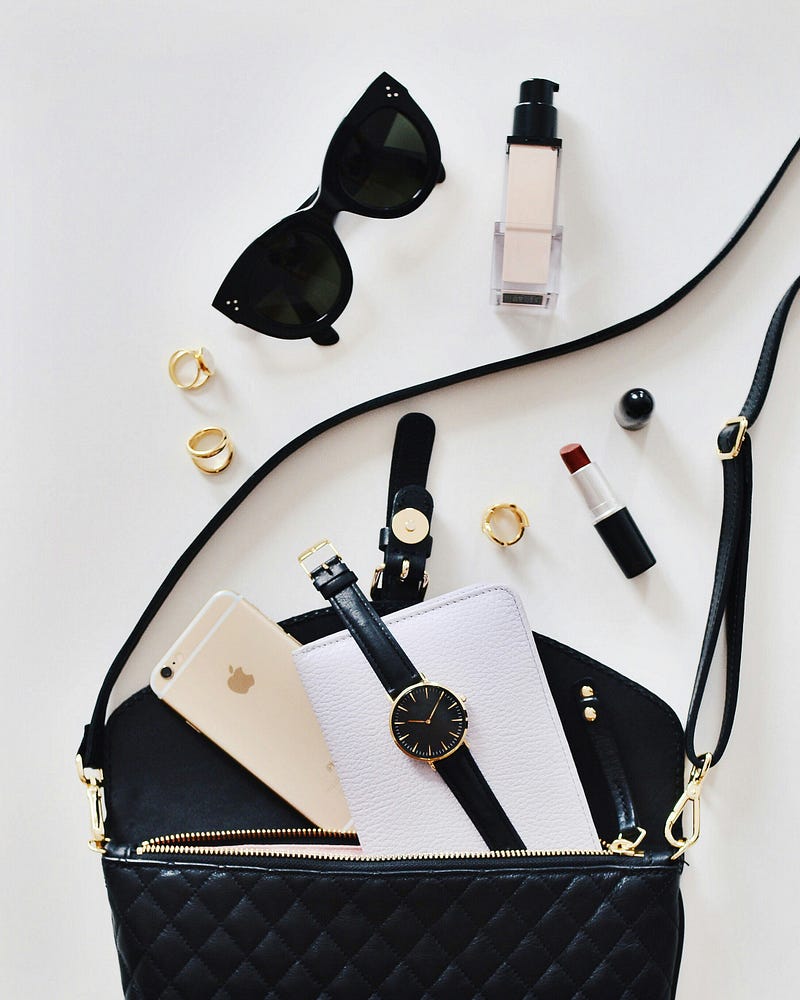
Let’s go back to the fashion example. I’m not a fashion designer, but as far as I understand, it works something like this: fashion designers and fashion houses create their own designs—it’s a form of art. Then they showcase them. Art lovers follow. Combinations, colors, and sometimes designs that are liked spread through fashion magazines, influencers, and celebrities. Agencies tracking fashion trends then guide mainstream producers in shaping their strategies. They combine them with goals like pop culture, street culture, or business attire. They adapt even the most bizarre designs into their seasonal product catalogs. Then comes the sales.
Of course, the main trendsetters aren’t the mainstream producers, but the big fashion giants selling expensive concept or special series products. The rest is just “comfort for the poor.”
That “comfort for the poor” is still important—this way, everyone’s pockets get filled. And to comfort the poor, what we call “fashion” is spread through various channels: through celebrities, films, TV series, social media, other ad campaigns, or by associating brands like Nike, Gucci, and Rolex with entire lifestyles.
On TV shows and films, “perfect” lifestyles are presented with “perfect” characters. Have you ever seen an average citizen modeling fashion? A character with a belly, a bald character, a woman with short hair, an overweight woman, an overweight man, someone with a crooked nose, someone with a disability… These are hidden as if they’re wrong. And sometimes it’s the reverse—these individuals hide themselves because they believe they’re wrong. If an overweight person said they wanted to be a model, what would your reaction be? And why would you react that way? (Thankfully, body-positivity has become a bit of a trend lately, so the perception is shifting.)
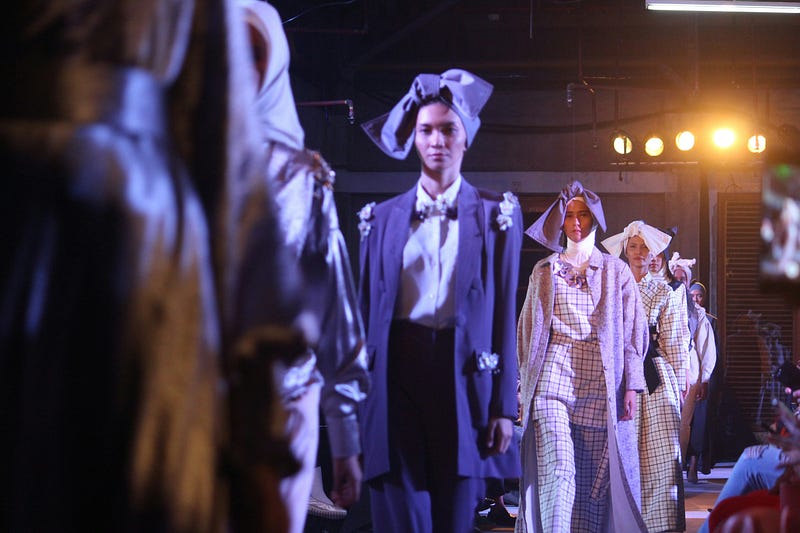
Another example: the Victoria’s Secret holiday fashion show. Isn’t it an incredible perception game? Ordinary holiday events suddenly turn into events where people watch nearly naked models—and this is considered normal. I think it’s a huge marketing success. Then people line up to buy gifts from there. If I were in a relationship and my partner bought me a gift from there, I’d question myself: does this person see me as an object, or are they imagining someone they saw on TV?
What’s the user’s initiative here? To choose between two options presented in the same way. They adopt the one they’re more familiar with because they see it more often. When millions of people do this together, a standard look becomes inevitable.
The same goes for the cosmetics world. As a result of patriarchal roles shaping marketing around female sexuality, we’ve developed an absurd beauty standard. Films, porn, magazines, and ads followed suit. Women must be attractive. Men must bring in the money and be strong; women will spend it and “take care of themselves.” And the definition of “taking care” has changed over and over again. Over time, even that reached saturation. Now, male cosmetics are in fashion. Have you ever seen an overweight person in a gym ad? If you have, they were probably trying to lose weight—and there’s always a “before” picture of their slimmer self. Yet being overweight is perfectly normal. There can be many reasons for it. Sometimes even sports won’t help, but that person can still be healthy and fit. Usually, these kinds of people are shown in ridiculous videos where they’re mocked—because we’re not used to them. It’s not what we’ve been taught.

One of Netflix’s best features was being able to watch films from different countries. The Hollywood dominance was gone, and a more colorful environment emerged. War and heroism weren’t the only narratives anymore. You didn’t need big productions for a good film. You could grab the audience’s attention without explosions. Female sexuality didn’t have to be at the forefront. These things could be told differently in different countries.
Over time, the situation changed completely. First came machine learning models, creating personalized targeting. Then came scripts focused on the majority—negative feedback loops. You offer something. Then you offer more of the same. Then you say, “Look, people prefer this,” and you produce even more of it. And you conclude, “People are happy with our work.” You also slip in your own liberal values—not wrong in my opinion, but perhaps too much. Then you filter all productions according to this.

It’s like supermarket products. Everything is shiny, perfect-looking. You’ve pumped it full of antibiotics and hormones, creating an illusion. Every tomato is almost perfectly round, redder than it should be, and never rots. The slightly imperfect ones are treated as rotten. Every piece of meat is neatly packaged, sitting there as if the animal’s suffering, the flowing blood, and the medications never happened.
It’s now hard to find a film without a sex scene. Sometimes it comes completely out of nowhere. It has nothing to do with the plot. The audience already knows what they’re doing, but sexuality is pushed to the front instead of the storyline. Those who refuse are sidelined—or replaced by a body double (see: Game of Thrones).
In almost every Netflix show now, there’s one Black character, one LGBTQ character, one Black LGBTQ character, one woman wearing a headscarf, one strong woman—(okay, I’m exaggerating a little, but you get the point). The plot doesn’t matter; people want this, or these values are considered important. I think acceptance of all these is important—but it should be relevant.
In Hollywood and Western productions, it’s hard to find characters without botox, fillers, or makeup. A 50-year-old woman acts like she’s 30, even playing the role of a 30-year-old character—as if aging were a bad thing. If you’re not like this, there’s no leading role for you. Similarly, all the men look like they just left the gym. As if doing a different sport were wrong. Everyone has six-pack abs, big arms, broad shoulders, full hair. If you don’t, no lead role. Even if the character doesn’t have these traits, the actor must.
It’s unbelievable to me—like shampoo ads with no bald people. Or toothpaste ads with no teeth that aren’t perfectly white. Of course, in terms of advertising and impact, it makes sense—but still, the perception it creates is incredible.
What perception?
For that, let me give the Instagram example. If someone had pitched me the idea for Instagram, I’d have said, “We already have Facebook, why bother?” I’d have said the same for Twitter. That’s why I’m not a millionaire.
When Instagram first came out, there was a lot of original content. Everyone could showcase their art or photography, spreading it globally without advertising. They could even make money from it. Everyone became a content creator. The advantage was that we could see very different lives, and also that we saw people with no background still being creative.
Now it’s the opposite. Everyone is a content creator, but originality is gone. Just like Netflix, everyone is copying each other. Tons of accounts are identical. People try to be like one another. I used to love travel blogs—now I can’t even open them. The angles of the photos are all the same. Same with selfies, vacation photos, the poses given, the messages sent, the activities done. Posts from gyms, coffee shops, weddings, trips—always the same. The profile people try to create is always the same.
Famous accounts are the same. They mirror the characters shown in films. And it works—they get engagement. Maybe in the background, they’re smuggling drugs or killing people—but on the surface, it’s all luxury life and a well-maintained body. Because that sells. Not literature, art, or science.
Maybe in the background, they’re selling their bodies—but on the surface, they’re constantly traveling and posting from everywhere. Sadly, this is the reality.

The marketing world. We’ve reached a point where people market their bodies—and this is considered normal. Even in art or literature sharing, the body is at the forefront.
And in recent years, there’s the rise of beauty centers and obsession with artificiality. Men and women who think beauty means artificiality. Hair transplants, double-chin removal, brow lifts, breast augmentation, face lifts, lip fillers, botox, sweat-blocking procedures, women wearing high heels even though it warps their feet, nose jobs that give everyone the same nose… Strange, isn’t it? Strange, but when you never see anything different in ads, films, series, or on stage, difference starts to feel strange to you.
For example, the uniforms of flight attendants, women’s volleyball outfits, athletes’ gear, tennis clothes… Isn’t it strange that this is considered normal? If it’s because they’re comfortable, why don’t men wear them? On the flip side, when a tennis player, athlete, or volleyball player dresses modestly, or when an airline presents a normal uniform, we find it odd. That’s the perception marketing has created.
Women in their 20s get cosmetic procedures. If they don’t, they don’t see themselves as attractive—because that’s the perception now. The man who doesn’t like her has had his brain fried by what he’s watched. Women in their 50s invest millions in their appearance—because the reason they reached their position was their body, not their talent. They can’t face the reality of aging. And their inability to face it convinces millions that aging is bad.

Because of them, millions risk their lives with ridiculous diets, undergo meaningless surgeries that put them on an irreversible path, some die on the table, some spend money they don’t have on nonsense, develop absurd complexes, limit what they can do in life, destroy their dreams. This is the marketing world.
I think of LinkedIn. It’s the same—people may be more educated, but it’s still the same. Everyone competes to be like everyone else. To get attention, they become more superficial. Not having your face on LinkedIn is like a crime—as if you never existed. And what you write there can’t be completely honest. You can’t write about how terrible the industry is, how you lie to each other every day, how your job means nothing. You have to act like your title is your ultimate goal, like you’re saving the world with your work. If you can’t stomach that, you occasionally share truly world-changing, original people—showing them off as your role models, just to soothe your conscience. Otherwise, it doesn’t work. You have to market yourself properly.
Being bipolar might actually help. The corporate me, the social media me, the me with friends, and the me at home. And the real me, lost among all the garbage content I’m exposed to daily—someone I never truly get to meet.
Of course, this isn’t just about cosmetics, fashion, or films. Education is shaped the same way. It starts with the roles you learn from your family. What do you expect from the children of parents who spend 1–2 hours a day on their appearance? If they’re not lucky and don’t have a good teacher, their only chance in life is to market themselves the same way. If a parent spends most of their time on the things they own and talking about them, what do you think the child will be like? They’ll also think those things matter. They’ll make their car, their house, their money the cornerstone of life. On social media, they’ll imitate similar types. When they start facing reality, it leads to depression. Dissatisfaction.
What’s even more interesting to me is this: with new technologies, there are countless ethical issues. Ethics committees emerge, countries and unions set rules. They forbid certain things or put them under strict control. For example, autonomous weapons, the militarization of space, human experimentation, the use of pharmaceutical technologies, having children through DNA manipulation (changing, preventing, or creating certain traits or diseases before birth)… because these are believed to directly affect human life.
So why isn’t there a similar approach for social media? Why are the limits of advertising defined only by genitals?

As new technologies arrive, it’s inevitable that we’ll face more psychological problems and experience more unusual things.
What interests me from the user’s perspective is this: on the one hand, all ads and marketing strategies attract attention by emphasizing how special and different the user is. On the other hand, they ensure the user doesn’t realize how similar they are to everyone else. They think they’re original—but they’re racing to be the same as everyone else.
As a result, from blogs to social media, from social media to the business world, we see identical figures everywhere. People who think the same way, dream the same dreams, suffer the same disappointments. As if they came out of the same factory. People who approve of each other in exactly the same way.
Maybe it’s easier this way for everyone. The secret to living easily while thinking less. Because reading and thinking require energy—not just to understand and interpret, but also to fight.
It takes energy to fight against traditions, the mainstream, million-dollar budgets, and everyone around you who accepts this madness. It takes a lot of energy to explain individual and cultural differences. Being yourself takes energy (truly being yourself, not the popular sense of it). Wearing the same clothes every day and going to work with messy hair takes energy—breaking people’s prejudices, working behind those prejudices, all takes energy.
It’s a hard fight. Some people fight it every day. Their womanhood is judged, their manhood is questioned, their identity is excluded, their choices are mocked—but still they fight. If you have such people around you, talk to them, congratulate them, because they’re accomplishing something big. Having that energy, every day, is not easy.
Do you have any chance to win this war? No.
It is the irony of the life. Whoever wins the war becomes a pop figure. Her effort and war is easily forgotten and she becomes the biggest feed for the main stream media. The message she wants to give transforms to something else.
NOTE: When I was searching for the images on google, I checked the photos related to keywords I wrote. Holiday, leading role, sport, fashion, diversity… It made me pissed off how the all photos were similar to each other. We emptied the meaning of words a lot.
 bahadirhancicek
Leave a comment