
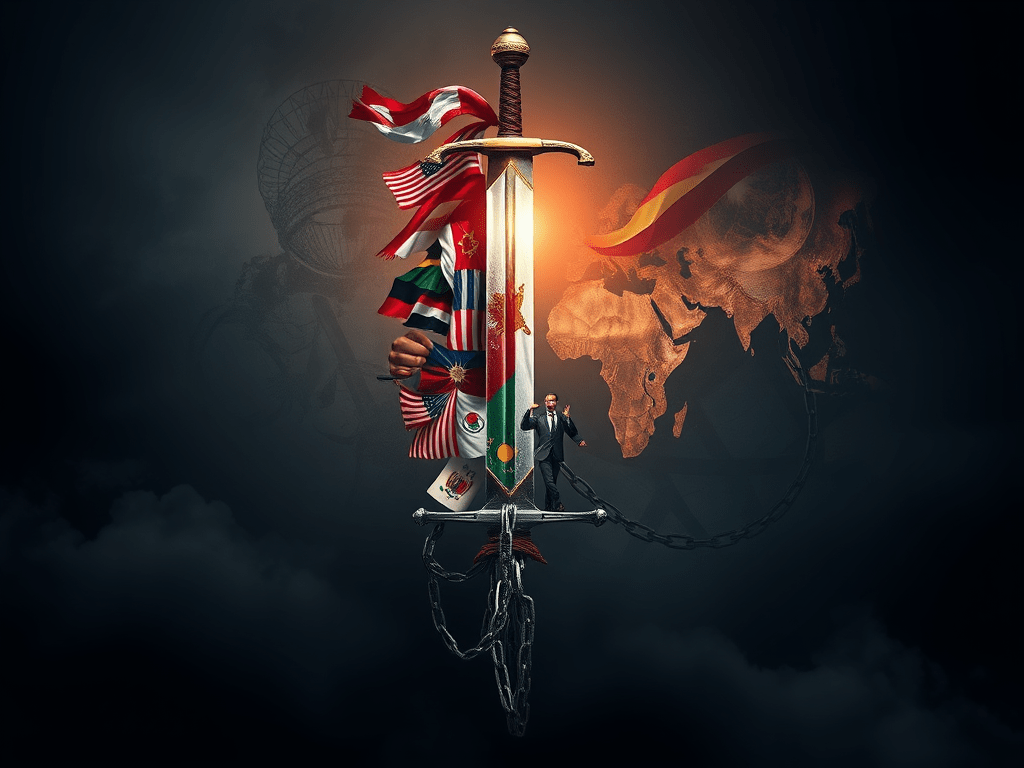
Nationalism: A Modern Virus with Ancient Roots
Migration waves, economic crises, escalating wars — all these global issues have, perhaps inevitably, fueled a resurgence in nationalism. After all, blaming others and resorting to conflict often feels easier than working together to solve problems.
In this piece, though my thoughts may not be perfectly organized, I want to reflect on the motivations behind nationalism, its historical evolution, and its present-day consequences. Fair warning: this will be a long read.

The Roots of Nationalism: From Shared Identity to Global Tensions
What is Nationalism?
Nationalism is a social force that has long served to unify people through a shared identity. But the modern idea of nationalism, as we know it, is relatively recent. Early humans identified more with small tribes or clans. Over time, as societies developed in response to the challenges of nature, broader collective consciousness emerged, laying the foundation for nations built around common language, history, and culture. Religion and other motivators would later be added to this structure.
The Enlightenment in the 18th century, with its emphasis on reason, helped shape the concept of the nation. Then came Romanticism in the 19th century, which emphasized emotional connection and national pride. These two movements set the stage for the rise of today’s nation-states.

Other Ideologies That Shaped Nationalism:
- Liberalism emphasized individual rights and self-determination, sparking independence movements. But a misinterpretation of these ideas like seeing democracy as unlimited personal freedom without social responsibility, has often led to isolationist nationalism. I think, this is also the main problem with today’s social media liberalism or freedom of speech concept.
- Romanticism glorified national languages, cultures, and traditions, reinforcing nationalist ideologies.
- Social Darwinism applied “survival of the fittest” to nations, fueling imperialism and the pseudoscience of eugenics, a dangerous distortion of Darwin’s theories that justified classism and racism.
Nationalism Today: Globalization, Populism, and Memory
- Historical Memory: Past victories and traumas continue to fuel nationalist narratives in many countries. This memories led the world to the WW2 and also main source of all conflicts in middle east today. It is still fueling the hate between all possible tow choices.
- Misunderstanding Globalization: The standardization that accompanies globalization is often perceived as a loss of identity — a key concern for nationalists.
- Populism: Politicians claiming to represent “the voice of the people” often amplify nationalist rhetoric, especially against immigrants. Phrases like “our sacred flag” or “indivisible homeland” are common tools used to stoke fear and loyalty.

Nationalism today is an amalgamation of old ideas and modern anxieties. While it can unify, it can just as easily divide.
A Brief History of Nationalism
In ancient civilizations like Egypt, Greece, and Rome, collective pride existed — but allegiance was toward empires and rulers, not nations. In Medieval Europe, loyalty shifted to the Church and feudal lords. The emergence of the nation-state in places like England and France coincided with linguistic and cultural consolidation.
In the 19th century, we saw a rise in nationalism driven by desires for unity and self-rule — the unification of Italy being a key example. This era also gave birth to dangerous ethnic nationalism.
Scientific misapplications like eugenics attempted to link race with genetics, falsely legitimizing ideas of racial purity. These pseudoscientific theories fed into political agendas and were later instrumental in the horrors of the 20th century — including the two world wars.
Nationalism in Turkish History
I am telling here as it is because it was originally written in Turkish. I think, it is good example of mind as well, still existed in many places. Also, good example of manipulation of history and national proud.
From the Göktürks to the Ottomans, Turkish identity was shaped more by dynasties and tribes than national unity. Loyalty was typically to powerful families or leaders. It wasn’t until contact with European ideas of nationhood that modern Turkish nationalism began to take shape.
The Ottoman Empire, with its multi-ethnic structure, initially attempted unity through Ottomanism, then Pan-Islamism, and later Westernization — but none of these could stop the rise of ethnic national movements, especially in the Balkans.
Eventually, Turkism gained prominence, laying the groundwork for the new Turkish Republic. Thinkers like Ziya Gökalp, Mehmet Fuad Köprülü, and Ömer Seyfettin played major roles in building a national identity rooted in shared language and culture.
Note: Ottoman Intellectuals were highly influenced by countries like France, Germany, Switzerland. French was the main foreign language and source of many reforms including education. Army was mostly trained by Germans. Western democratic values seemed as the best way to isolate Turkish nation from Arabic World.
Rousseau, the Social Contract, and Turkish Nationalism
Philosophers like Jean-Jacques Rousseau inspired the founders of many modern republics, including Mustafa Kemal Atatürk. Rousseau’s vision of nationalism centered not on ethnicity, but on shared civic values and the general will. This idea deeply influenced the Turkish Republic’s early identity.
1924 Constitution, Article 88:
“In Turkey, irrespective of religion or race, everyone is considered a Turk in terms of citizenship.”
Still, Rousseau’s ideas could be (and were) interpreted in ways that led to ethnic nationalism. Over time, both in Europe and Turkey, the concept of nationality began to shift toward ethnic identity — breeding the divisions it once aimed to avoid.
The Thin Line Between Nationalism and Racism
There’s a fine — often blurred — line between national pride and racism.
- Shared identity is central to nationalism. But when this identity becomes too narrowly defined (by race or ethnicity), it leads to exclusion and ultimately racism.
- “Us vs. Them” Thinking: Fear and a constant sense of threat drive nationalist narratives, often exploited by populist leaders.
- Scapegoating: In hard times, blaming outsiders (immigrants, minorities) becomes a convenient way to avoid deeper structural issues.
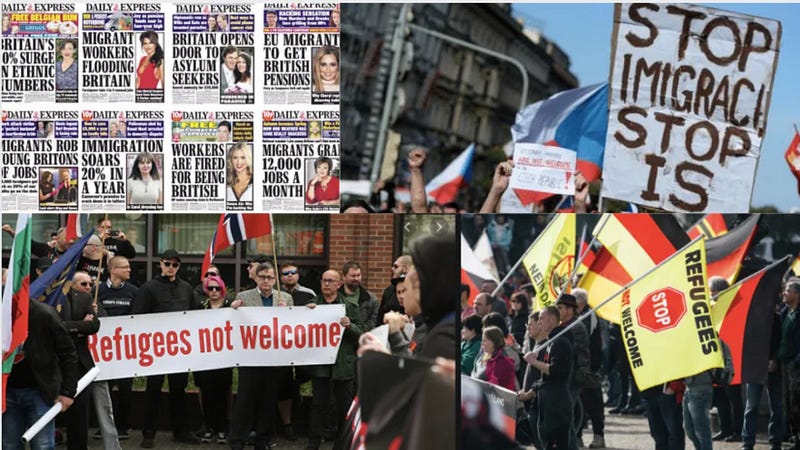
We’re not taught to recognize these dangers. In fact, exclusion seems like a national pastime. Historic narratives, miseducation, and generational bias all play a role.
Digital Nationalism: Tribalism 2.0
Social media has amplified nationalism in new and dangerous ways. Algorithms promote echo chambers, reinforcing nationalist ideas through repetition and emotional triggers.

Discussions that should be nuanced — like “Turk or Türkiyeli?” or “Israeli or Palestinian?” — are reduced to slogans and sides. Troll armies, populist leaders, and viral misinformation push nationalism further toward extremism.
Modern Nationalism: A Global Risk
In today’s interconnected world, nationalism is a virus. Racism is its most dangerous mutation.
We live in an era where total self-reliance is impossible. Economically, technologically, environmentally — we are all dependent on one another. Hyper-nationalism is simply outdated. And yet, it’s thriving.
Why?
- Migration: Mass immigration leads to cultural anxiety. “Why should we feed them when we can’t feed ourselves?” — a common argument that reveals the root of nationalist fear: loss of comfort and identity.
- Economic Crises: Recessions amplify nationalism. People seek protectionism and blame outsiders.
- War: Fear is nationalism’s favorite fuel. Wars — even rhetorical ones — deepen the “us vs. them” divide.
Final Thoughts
Nationalism has always walked the line between unity and division. But in today’s world, that line is thinner than ever.
Technological progress has outpaced our collective emotional intelligence. The world has become too fast, too interconnected for tribal ideologies to serve us anymore. Yet we continue to cling to them — out of fear, out of habit.
Multiculturalism has always moved civilization forward. Nationalism, especially in its extreme forms, only moves us backward.
The global challenges we face — climate change, inequality, digital ethics — are far bigger than the identities we didn’t choose: race, ethnicity, birthplace. Until we embrace shared values and citizenship responsibilities over bloodline and religion, we will not solve them.

A Note on “But…”
If you say, “I respect all people, but…” — you’ve already lost the argument.
The moment you say “but,” you justify injustice. You legitimize cruelty. You become part of the problem.
There’s no but in basic humanity.
 bahadirhancicek
Leave a comment