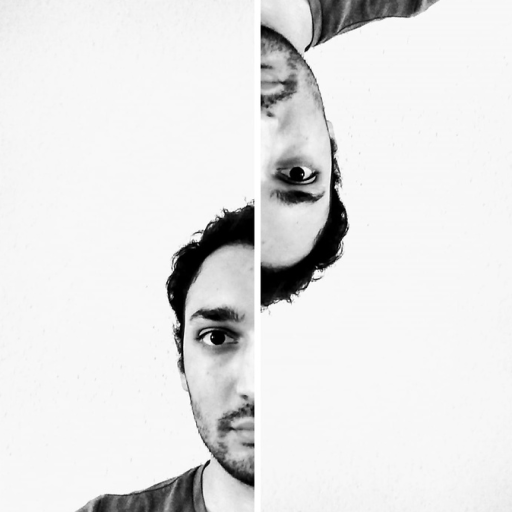
It had been so long — far too long.
And now, after all these years, I was back in the land of my childhood.
The moment I inhaled its air, thousands of thoughts rushed through my mind like a river breaking its dam.
Each breath seemed to draw not just oxygen but the essence of memory itself — images, feelings, fragments — filling my lungs, seeping into my body, flashing through my brain like an old film projected from within.
My heart raced.
A quiet excitement stirred — the kind I hadn’t felt in years — as if I were about to discover something new… or relive something old with the wonder of youth.
A childlike anticipation.
With that feeling, I flagged the first taxi I could find and told the driver to take me to the house where I had grown up.
But as we moved through the streets, that excitement gave way to something else: hesitation, unease… maybe fear, maybe sadness.
I didn’t know if it was the cab itself — after all, where I lived now, I had grown used to silent, driverless electric taxis.
No casual chatter, only a polite mechanical voice offering route information.
But here, everything felt strange.
Had I really thought that this place, my birthplace, would remain untouched by time?
I laughed quietly at myself.
It was foolish — the kind of nostalgia I used to mock in others who romanticized their homelands after years abroad.
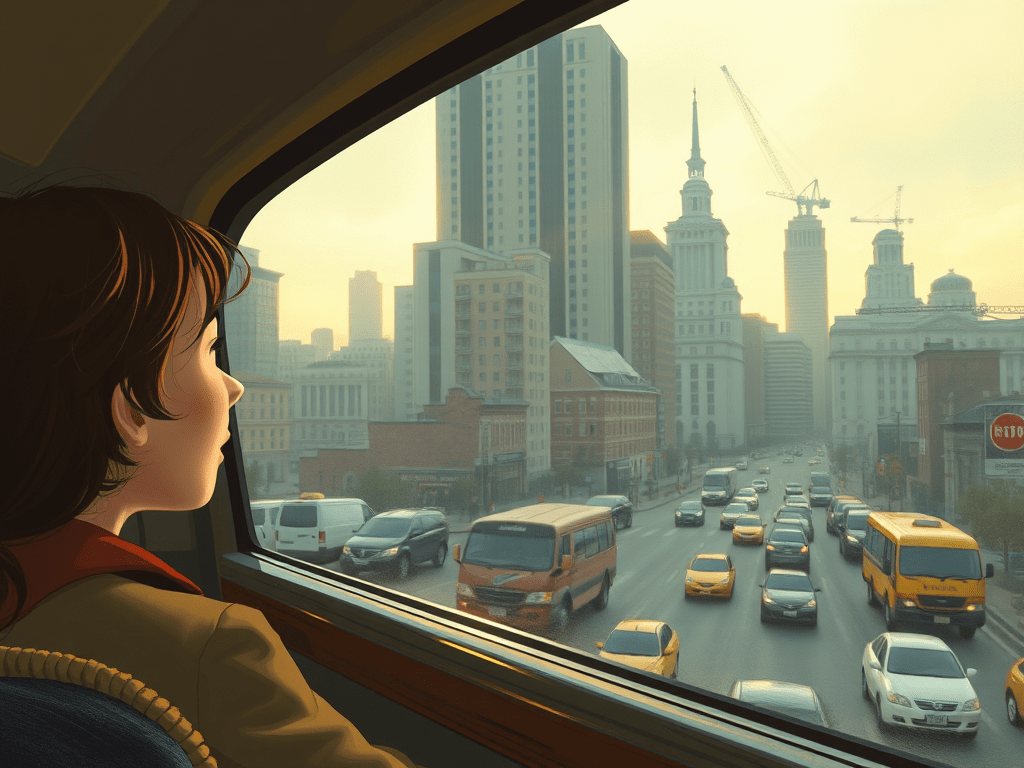
I looked out the window, but nothing looked familiar.
The city I had known was gone, replaced by an indistinguishable landscape.
The same global brands, the same cafes, the same restaurants — all filling the streets with their sterile familiarity.
The buildings too: faceless, soulless clones, as though one architect had stamped his design upon the whole world.
Each street we passed drained my excitement, replacing it with dread.
I found myself not wanting to see the street where I had grown up.
But when we finally turned onto it, a miracle: it was unchanged.
The same paving stones.
The same houses.
Relief washed over me.
When I stepped inside my childhood home, relief turned to peace.
The same furniture, the same wall colors.
Everything exactly as I remembered it.
I smiled, remembering how I had resisted my mother’s attempts to renovate.
The toys, the games, the mischief, the quarrels, the joys, the sadness — all preserved here, waiting.
Even the smell was the same.
As I ran my hands along the walls, the door handles, the bookshelves, I felt as though the house itself was whispering my own story back to me.
After a while, courage returned.
I ventured back outside, this time prepared for disappointment.
But even with low expectations, the heartbreak deepened with each step.
The swing I used to ride was gone.
The trees I climbed, the paths where I rode my bicycle, the forest where we played hide-and-seek — all erased.
The spot where I took my first date, transformed beyond recognition.
Nothing remained.
Not the places, not the people.
The whole city had become… elsewhere.
I kept walking, hoping to find some fragment of the past.
But even the city center was alien — disconnected from its geography, its history, its soul.
It could have been anywhere.
“This isn’t modernity,” I thought bitterly.
“This is an insult to both the past and the future.”
It wasn’t just the city that had been lost — it was culture itself.
Unrecorded history.
Forgotten lives.
Countless memories, simply erased.
Weary, I ducked into a café — or rather, what passed for one.
It was no different than any other place, filled with random photographs and meaningless artifacts from far-flung places.
Was it truly ugly?
I couldn’t tell anymore.
But I knew that if I ever returned, I would remember the anger I felt sitting there.
When I left, I took a different path — through narrow back streets.
And then I saw it: a small, faded shop that seemed utterly out of place amidst the glass facades and neon signs.
A secondhand shop.
Of course.
What else could it have been?
Inside, the familiar jingle of a bell greeted me — a sound that used to irritate me as a child, but now felt almost comforting.
Perhaps it was simply relief, at last finding a place where the past still lingered.
The shop was packed with objects that told the story of generations:
old mobile phones, rotary dials, pocket watches, tools, radios, cassette tapes, VHS players, denim jackets, lace doilies, wooden toys, early drones, robotic prosthetics…
Time itself seemed to be stacked on every shelf.
I explored slowly, touching everything, allowing each object to draw me into a different memory — even if they weren’t my own.
And then I discovered a second room.
This room was… strange.
All four walls were lined with vast glass cabinets, divided into countless small compartments.
Inside each one: a face.
I approached, peering closer.
There was writing around each portrait, but it was too small to read.
I touched the glass.
The portrait leapt forward like a hologram — larger, clearer.
Around it appeared a name.
When I touched again, a screen filled the air before me, displaying everything about that person’s life: their childhood, family tree, education, work, joys, sorrows…
Even where their remains were now kept.
Cemeteries, I realized, had long ago ceased to exist.
The world had run out of space.
People were now buried in biodegradable capsules that nourished trees — entire “memory forests” had sprung up this way.
An African historian had once proposed repurposing human bones, much like some ancient cultures had done.
The idea caught on:
bones became decoration, furniture, instruments, even museum pieces.
The bones of famous people adorned galleries and the homes they had once lived in.
But these faces — they weren’t famous.
They were ordinary people.
And that intrigued me even more.
I began to study them one by one, searching for anyone familiar.
Of course, I recognized no one.
I hadn’t been here in so long.
When I left the shop that evening, my mind was filled with those faces.
Who were they?
The next day, I returned.
I had lost all interest in the modern city outside.
This shop was far more fascinating.
Again, I was the only visitor.
I noted the locations where some of these people’s remains were kept and decided to visit them.
One was inside an apartment building — the 10th floor of a tall, modern tower.
When I arrived, I hesitated before ringing the bell.
A young man opened the door and smiled as if he had been expecting me.
“You’re not the first to look this surprised,” he said.
He offered me a drink and disappeared briefly.
When he returned, he was carrying a small box.
From it, he pulled out two translucent bands.
One he gave to me, one he placed on his own wrist.
“You need to see first,” he said.
He gestured to the balcony, where bones were displayed on the wall — framed like artwork.
A skull sat in the corner like a camera.
Even though I had seen bones before, knowing whose they were, knowing that this man had lived with them…
it unsettled me.
Then, without waiting for my answer, he pressed a button on the box.
Suddenly, I wasn’t in that apartment anymore.
I was back in the old city — exactly as it had once been.
Perfect.
Preserved.
Yet… different.
Before I could ask, he appeared beside me:
“We’re just observers,” he whispered.
And then we were inside another life — that person’s life.
Not just memories but emotions, sensations, experiences rushing past, engulfing me.
Childhood, joys, struggles, love, sorrow, old age, death.
And then… I was back in the apartment.
“Three minutes,” he said, smiling.
I visited others:
a school where teachers’ bones adorned the walls;
an artist’s home;
a shelter for the homeless.
Each time, I witnessed entire lives in minutes — stories that no one else remembered.
Finally, I reached a place at the edge of the city.
A vast building decorated entirely in human bones.
The bones formed the walls, the furniture, everything.
At the entrance, a plaque read:
“City Museum: The Memories of Unimportant Lives.”
And yet every bone I touched — like those in the shop — revealed an entire human life.
In some, I saw myself — as a child.
It hit me:
We spend our lives obsessed with “main characters,” never realizing how much of our lives depend on “extras” — those whose names we never know.
Every statistic, every battle lost or won, every economic crisis, every tragedy — behind them are lives that become nothing more than numbers.
And here they were:
The nameless, the forgotten, whose lives were far from insignificant.
As I returned to where I was staying, I realized three things:
First: I had been so captivated by these stories that I hadn’t even thought about the extraordinary technology that made them possible.
Second: I hadn’t stopped to reflect on how remarkable it was to turn a city into a museum of its own people — not just the famous, but everyone.
Third: What disturbed me most was how, in life, memories fade — how easily they vanish when the objects and places that held them are destroyed.
Perhaps this explained why ancient humans had once worshipped objects they made — they felt the same deep connection but didn’t have the words to articulate it.
Even more unsettling was the idea that these memories, which I could no longer recall myself, would one day be seen, known, and remembered by strangers.
And yet, there was a strange beauty too:
A memory that lives on through a body that nourishes a tree, a city where every bone carries a story.
In the end, I kept wondering:
What is life?
What is memory?
If forgetting is like death, can memory without consciousness still be called living?
Are we wasting time clinging to a past that only others will watch?
Or should we simply live — filling our time with moments worth remembering?
In the end, perhaps the wisest thing is this:
To color our “unimportant” lives as vividly as we can — and to recognize just how far our influence may reach.
The rest…
If anyone’s watching…
is for them.
 bahadirhancicek
Leave a comment