Day 1
When we landed in Medellín, the taxi fares gave us a bit of a shock. But as we headed toward the city center, that surprise faded. The distance was much longer compared to Bogotá, and we also used a toll road.
The journey itself was much more scenic than in Bogotá. As we climbed a massive mountain on winding roads, Medellín slowly began to reveal itself. Salsa music played softly in the background, adding to the mood, and our excitement grew—we could already feel the spirit of Colombia more intensely.
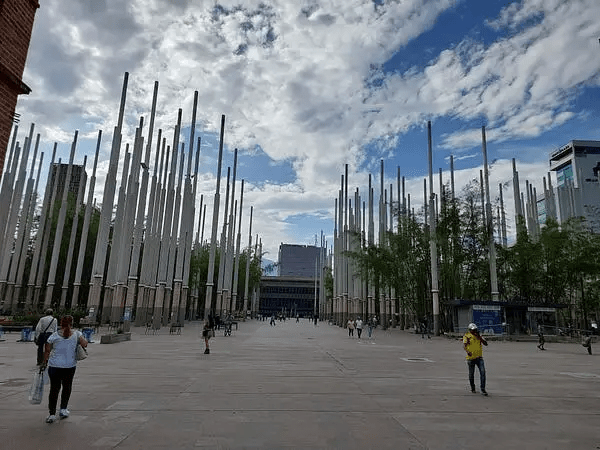
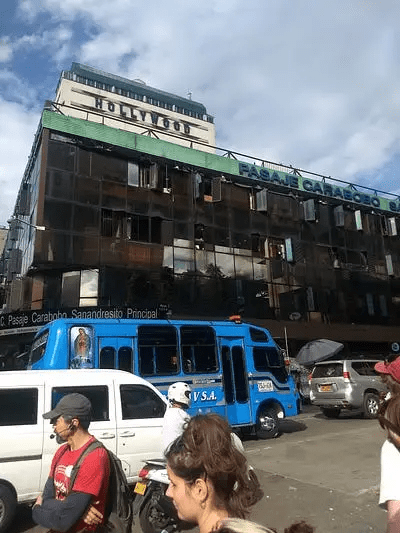
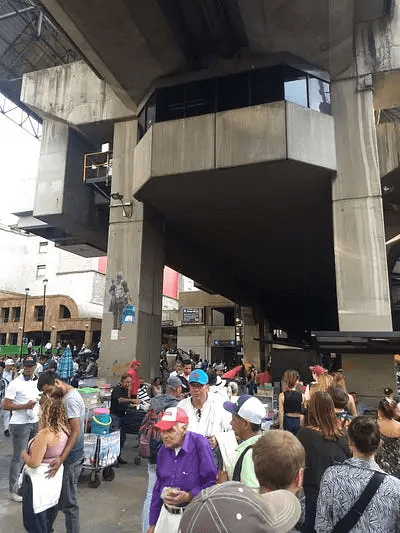
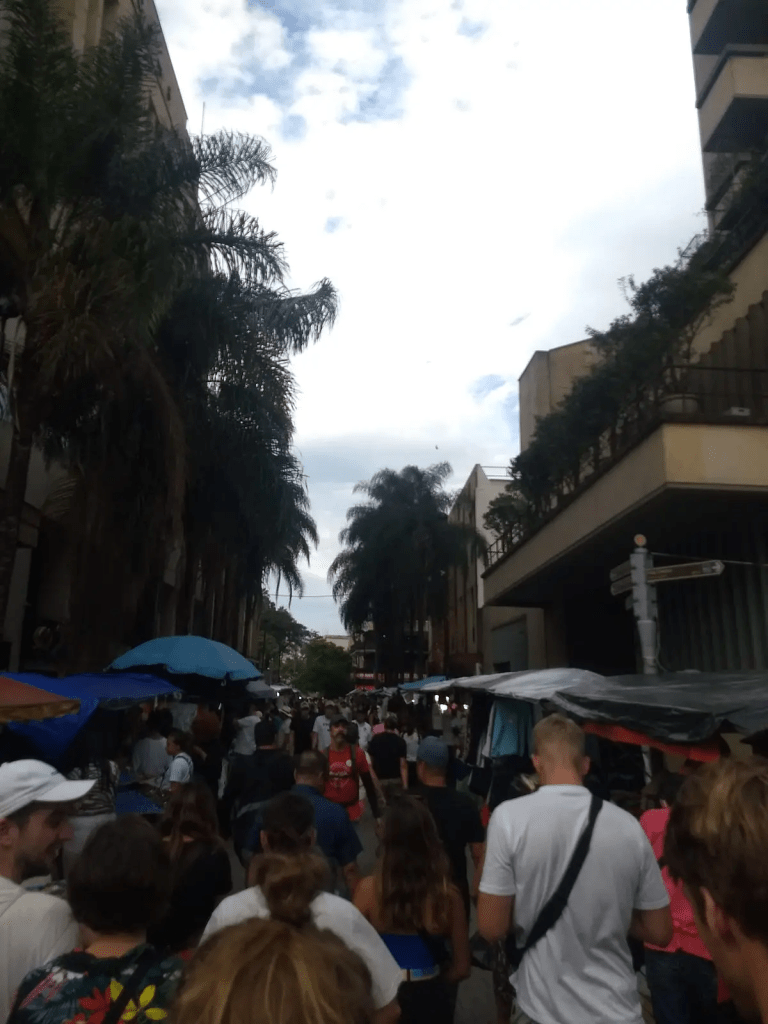
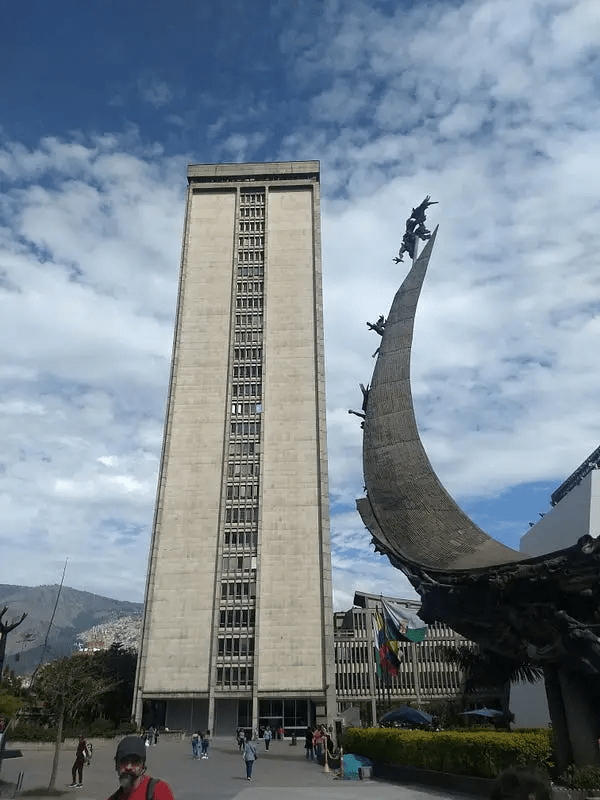
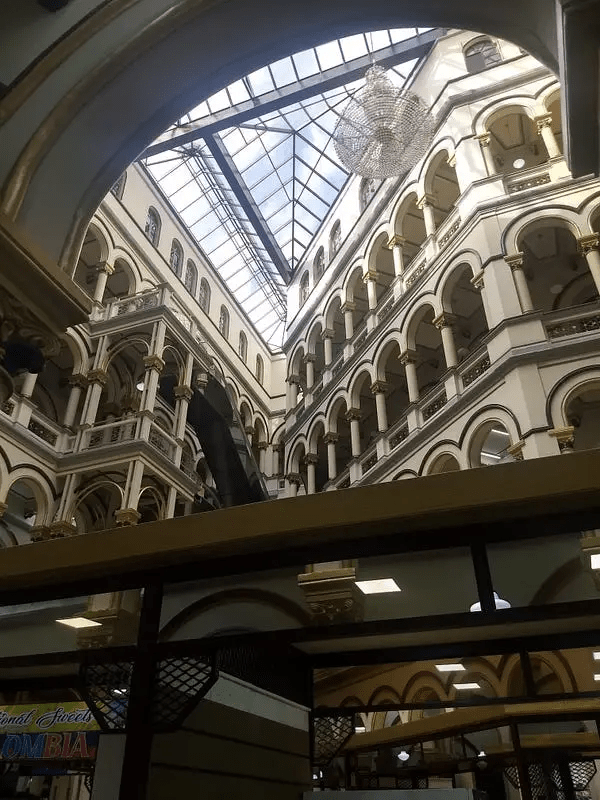
That’s our guide Hernan in the frame. The image on the right is from a kind of bazaar—it used to be a government office. It was an interesting place filled with cafes, shops, and plenty of fake products.
As soon as we arrived in the city, we joined a free walking tour. Our guide, Hernan, was professional and full of knowledge. He used to work as a software developer in New York but returned home to become a tour guide. His mission is to promote his country and break stereotypes. Another striking thing about Hernan: he had an incredible memory for names. Even though he only asked once, he addressed everyone in our international group by name—and remembered us two days later when we ran into him on the street.
During the tour, we visited the city’s main squares and landmarks while Hernan shared Medellín’s transformation—from a violent past to a city of hope. “Hope” and “change” were the keywords he repeated. Listening to him, I couldn’t help but draw comparisons to Turkey. It felt like Medellín had already gone through what we’re still struggling to reach. In some ways, Colombia is still 10–20 years behind Turkey. When I said this to a Swiss-German couple we met, they were genuinely surprised—the Turkey they had in mind was much more modern and positive.
A few things stood out during the tour. One was the curiosity of the locals. There was always someone watching or quietly listening to the tourists. Some wanted photos. Of course, there were also people trying to blend into the group for pickpocketing. Hernan warned us about this. Compared to Bogotá, Medellín felt more chaotic and crowded. In such crowds, safety is critical.
Hernan introduced us to a local saying: “No dar papaya”—literally, “don’t give papaya.” It means don’t make yourself an easy target. People here carry their bags in front of them, tuck phones into their waistbands, or even hide them in their bras. Hernan would tell us the “papaya level” of each area we visited, and we’d increase our awareness accordingly. For him, this was more about cultural difference than safety—and I agree.
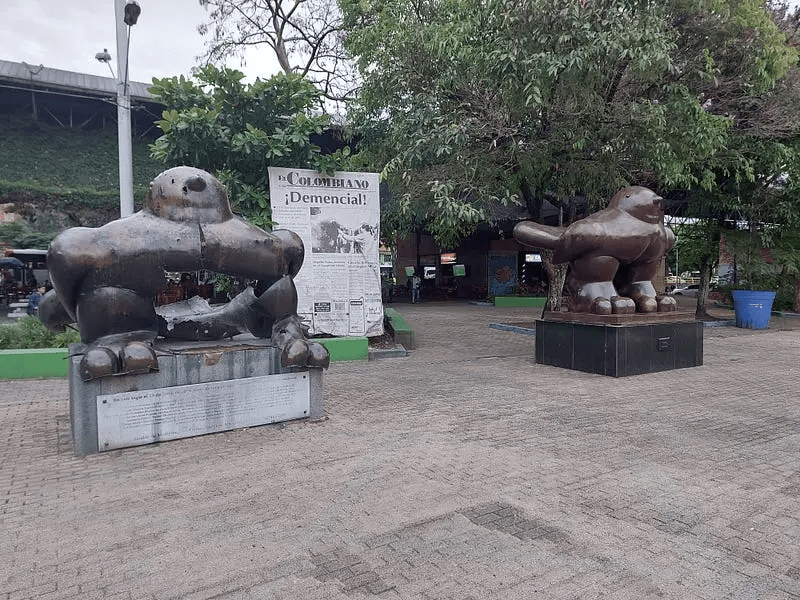
The sculptures in the image are by Botero. After a bombing destroyed one of them, the city wanted to replace it—but Botero insisted both remain. One represents the old Medellín, the other symbolizes hope and transformation.
Naturally, the subject of Escobar came up. During the entire tour, he was referred to only as “you-know-who,” never by name. Hernan explained that it was a taboo topic—locals prefer not to talk about Escobar or cocaine. Though shows like Narcos have popularized the story, for Colombians it’s a dark past they’d rather forget. They’re uneasy about tourists turning it into a photo op.
Day 2
On our second day, we joined a tour of Comuna 13. Although we had read that it’s now overly touristy and that there might be better places to visit, we chose to go—partly because of time constraints and partly due to lingering safety concerns. We decided to explore on our own after the tour.
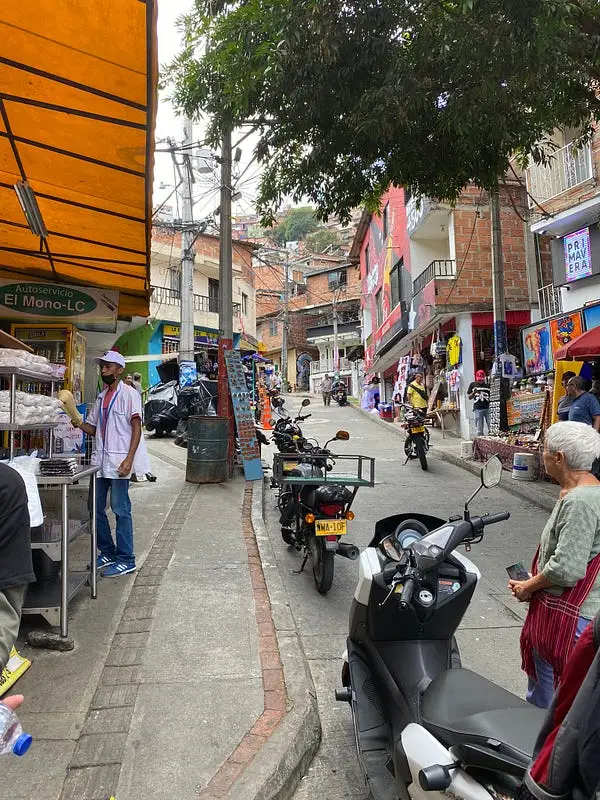
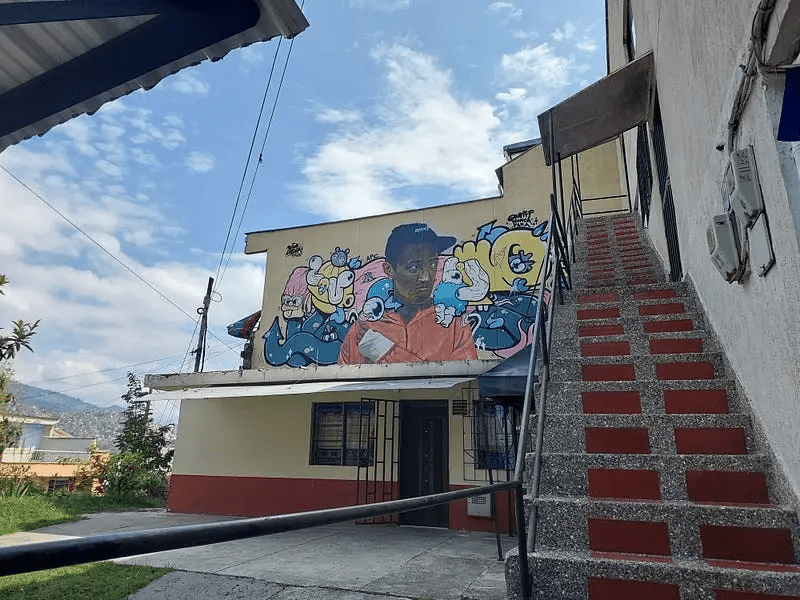
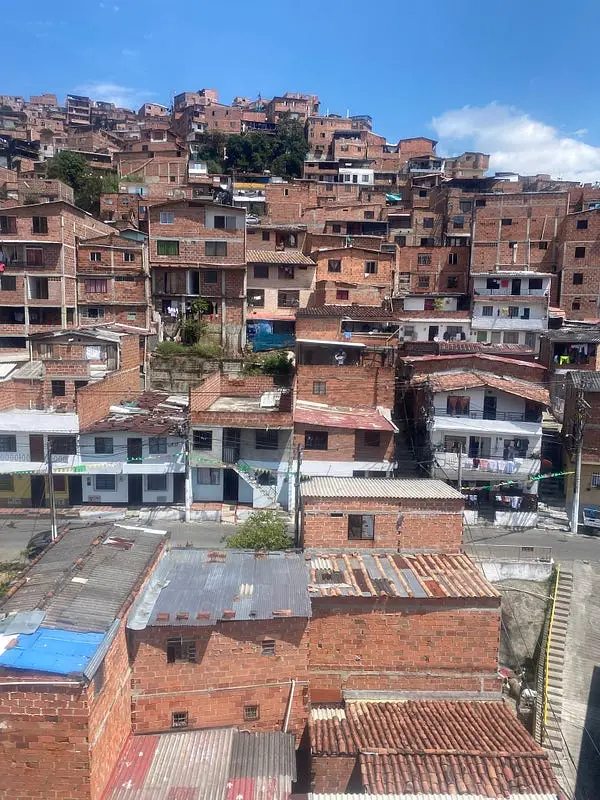
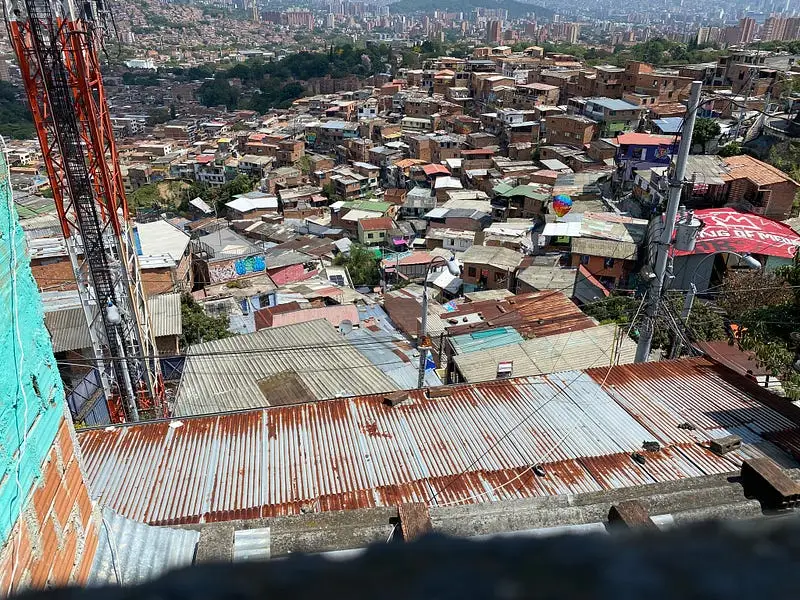
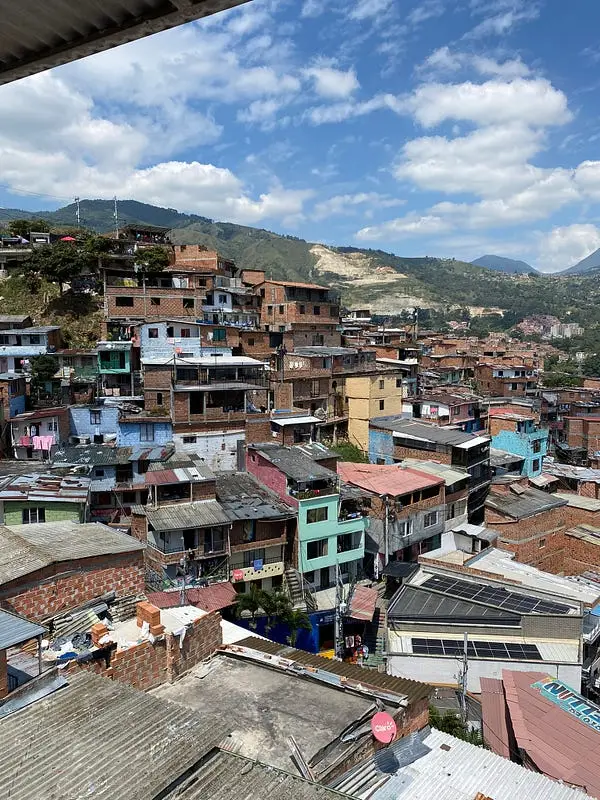
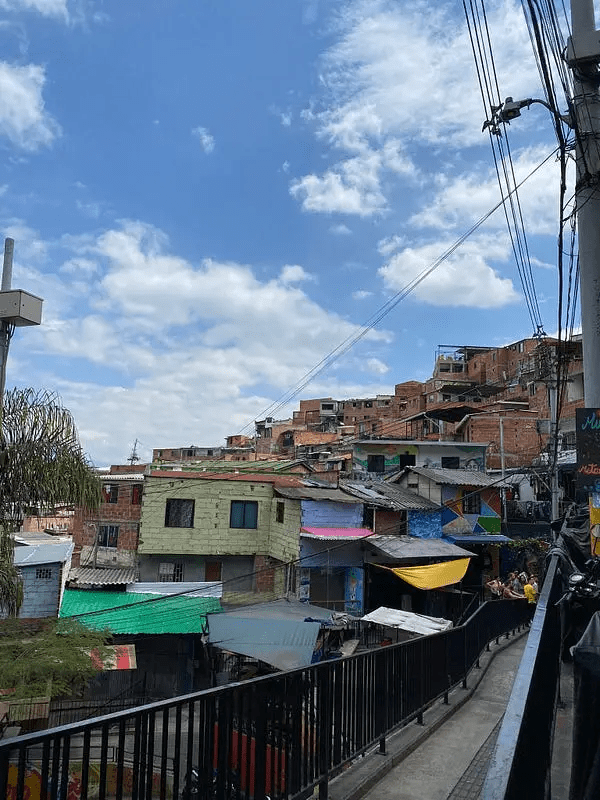
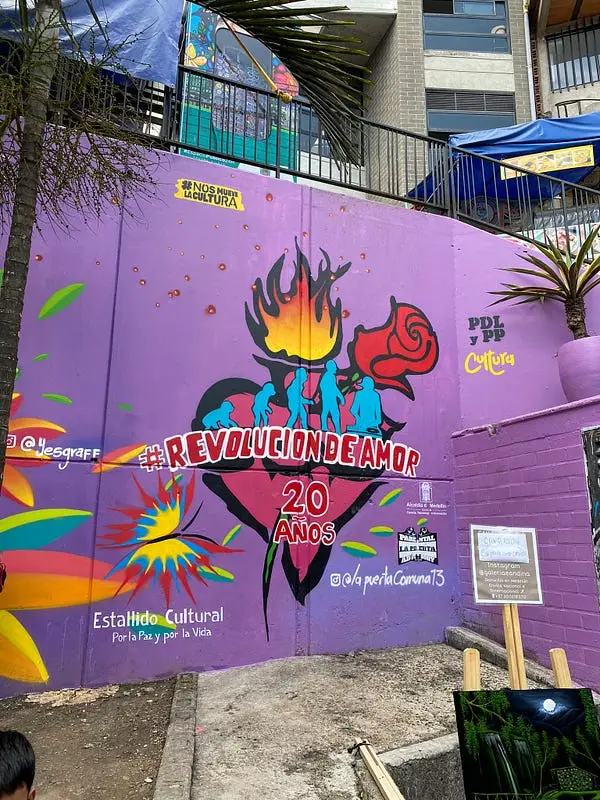
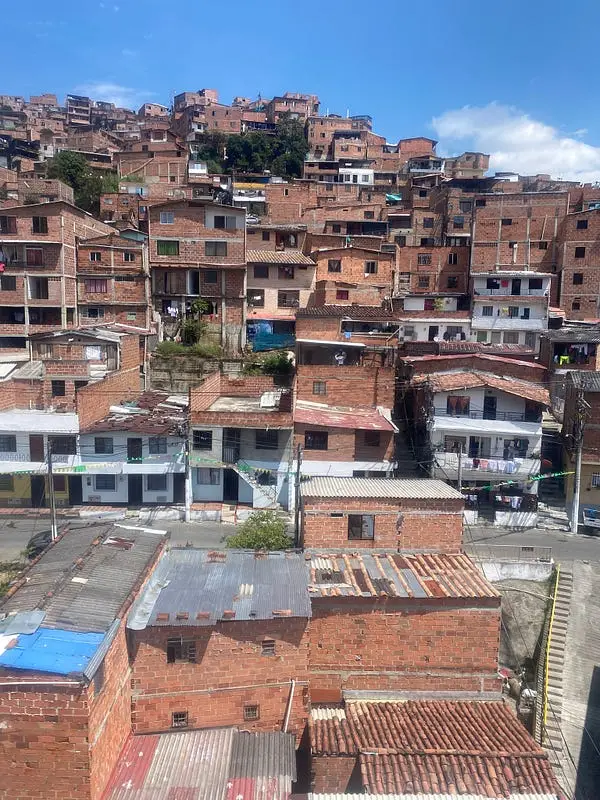
As we approached Comuna 13, the social fabric began to change. It was clear we were entering a poorer neighborhood. This area was once controlled by leftist groups and guerrillas. When right-wing forces took over, they used paramilitary groups, leading to tragedy. Over time, many NGOs began working in the area, sparking a wave of transformation. It became not just a tourist zone, but a hub for education, culture, and hope.
The 25-year-old guide who grew up in the neighborhood proudly shared this journey. Schools opened. Programs in language, dance, and software gave locals new opportunities. The community itself played a big role in this transformation.
There were emotional moments too. Stories of violence, memorials to children caught in crossfire, a basketball court used for executions, homes raided by soldiers or riddled with bullets by paramilitaries. The past was painfully real.
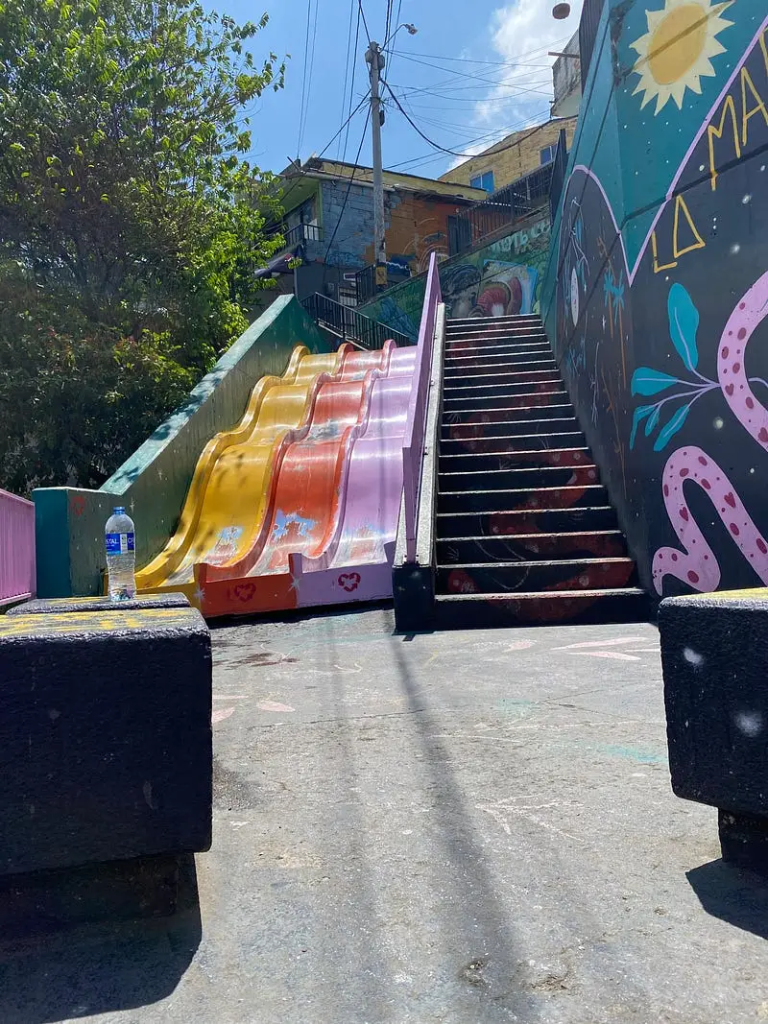
This slide was built to honor a child who died between two lines of fire. Everyone on the tour, even the elderly, took a turn. The guide asked us to smile, play, and remember the child with joy.
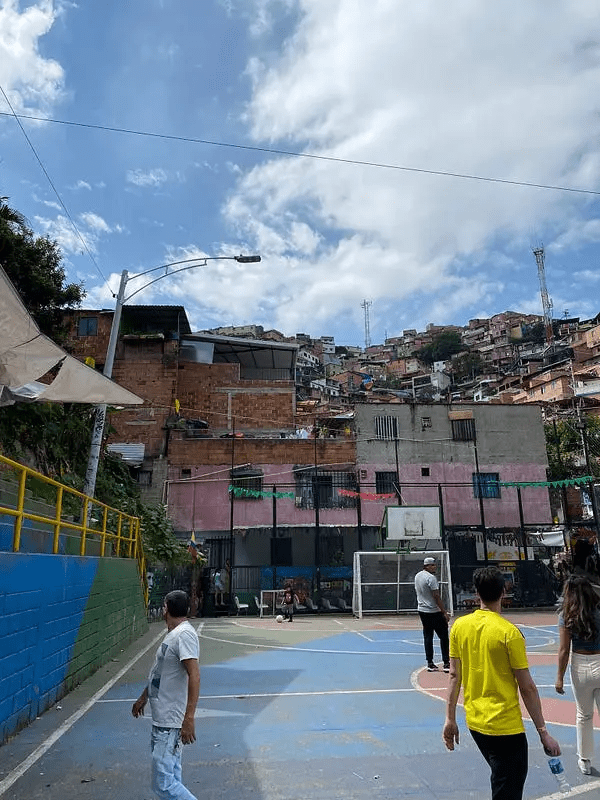
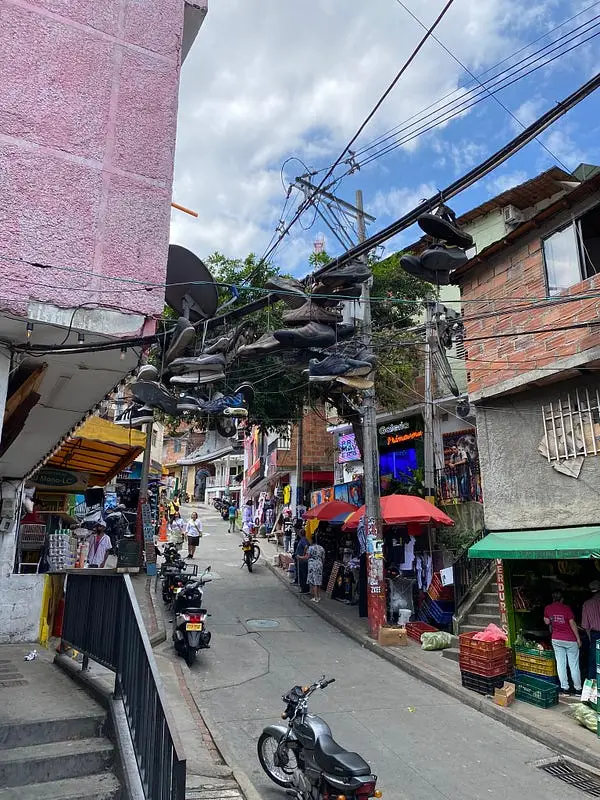
On the left is the court where people were publicly executed—clearly visible from all around, meant to inspire fear. On the right, hanging shoes mark neighborhood borders. Beyond those lines, open fire was permitted.</figcaption></figure>
Despite the heavy history, the resilience of the people—how quickly they transformed—was inspiring. But it also reminded us of how geography shapes destiny.
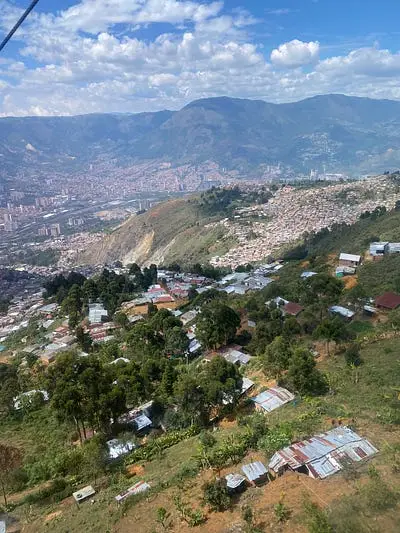
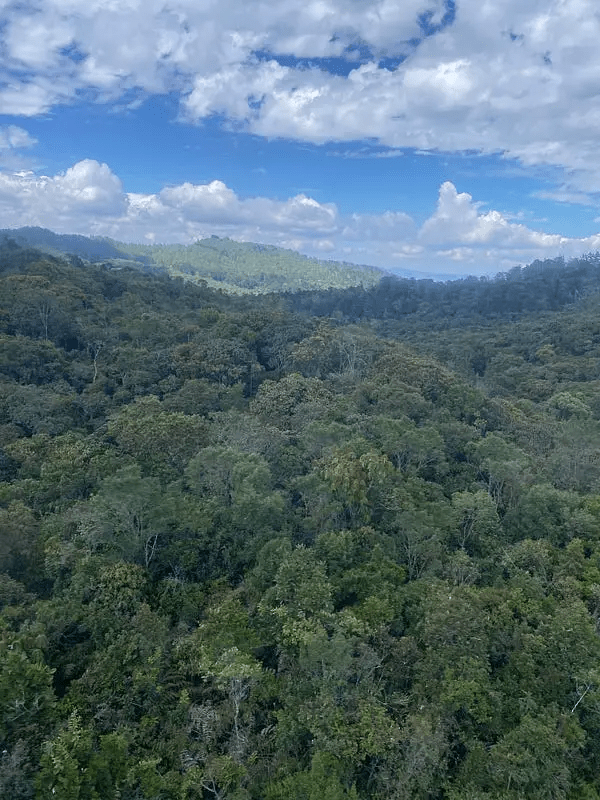
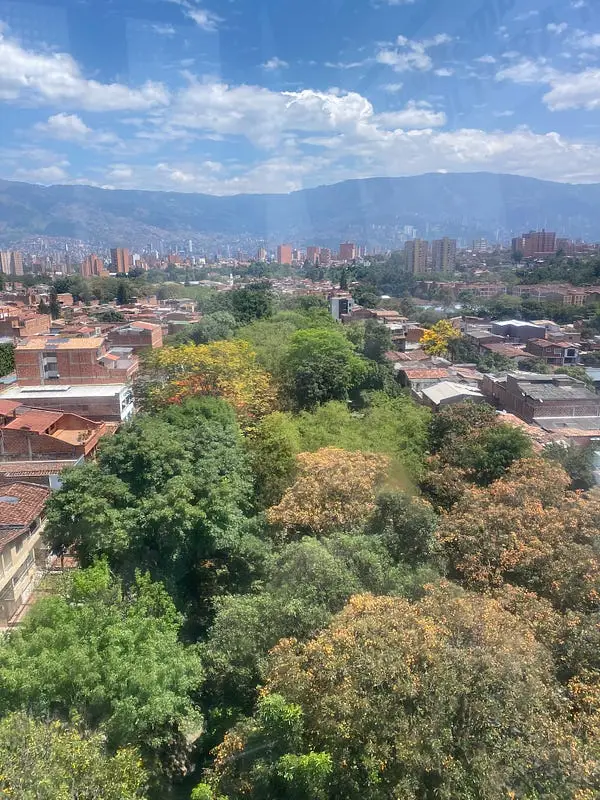
After the tour, we headed to Arví Park via the cable car, which is integrated into the city’s metro system. Even riding over informal housing areas was impressive. But the route to Arví pushed the limits of cable car design—stunning both for the view and the engineering.
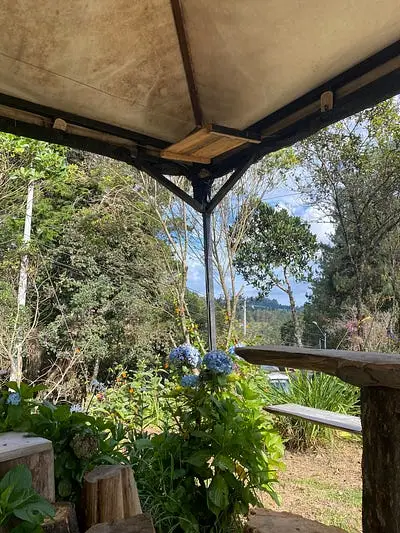
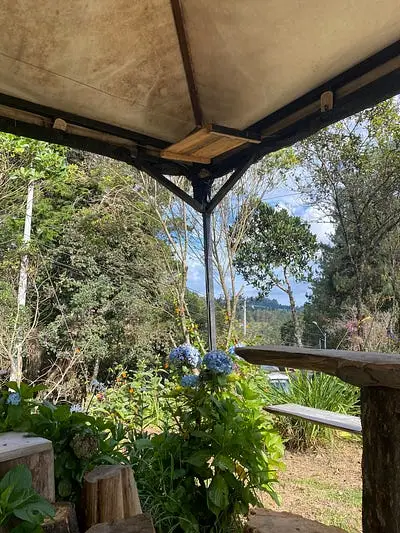
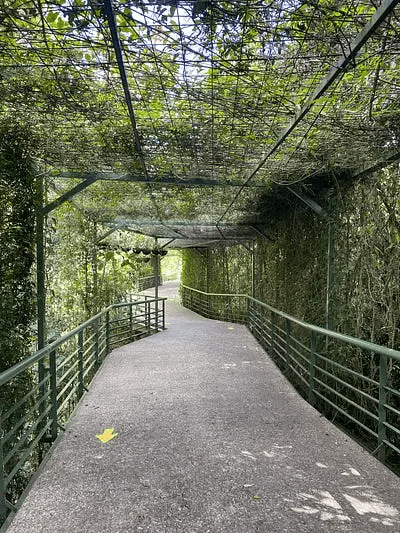
To wrap up: Arví is a national park, still largely natural despite a few facilities. It’s a great place to get a feel for the region’s ecology. While the forest trails require a fee, there are also free paths and nearby villages. We walked around a bit, then relaxed in a small garden by the road and ended the day.
 bahadirhancicek
Leave a comment