From Creation to Exile: Humanity’s Complicated Dance with Artificial Intelligence
We first created artificial intelligence—now, it seems, it’s time to demonize it and cast it out of our own Garden of Eden.
Just this week(this is the translation of my original post from 2023), Elon Musk, along with several AI experts and tech leaders, signed an open letter calling for a minimum 6-month pause on the development of AI systems more powerful than GPT-4. Their concern? To ensure that the societal impact of these systems is deeply considered, the risks are contained, and that safeguards are in place to guarantee the technology is used for good.
GPT-4 has already shown it can participate in conversations like a human, write lyrics and music, and summarize massive volumes of text in mere seconds.
The letter poses a chilling question:
Are we building minds that will one day outnumber us, outsmart us, and replace us?
One of the biggest concerns is that even the creators may eventually lose control or fail to understand what their models have evolved into. Worse still, AI could become a tool of propaganda—reinforcing predefined “truths” without anyone truly accountable for what’s right or wrong.
Is AI Really Creating Art—or Just Copying It?
This debate echoes ongoing arguments in the art world. When AI generates images or compositions, is that true art, or just an impressive collage of what already exists? If AI is referencing countless works to create something new, should every piece it learns from be compensated? And if anyone can produce “art” with a few clicks, what becomes of creativity?
A Growing Social Danger
Despite the inclusion of legal experts, sociologists, and historians in major AI projects, a shared understanding of AI’s role in society remains elusive. Technological development is racing ahead, while the cultural and social consequences lag behind.
Make no mistake: artificial intelligence may be the defining question of this century. Not just Industry 4.0—it’s Humanity 2.0.
The Real Issue Isn’t Job Loss
Public discourse around AI often gets stuck on the fear that “AI will take our jobs.” But that’s just a fraction of the problem. We’re heading into a world where:
- Our habits will change
- Our cultures will shift
- Our political and social structures will be redefined
- Our entire history may be rewritten
This isn’t a problem education alone can solve. We need robust laws and strict regulations. Because whether we like it or not, we’ve created our own demon, and soon, we might even forget it was our creation.
When Memory Fails: The Mandela Effect & Manufactured Reality
There’s a psychological phenomenon called the Mandela Effect—when large groups of people misremember the same thing. Our brains tend to reshape memories into more ideal, more dramatic versions. Reality becomes distorted through collective fantasy.
🔗 See examples here (Turkish link)
What does this have to do with AI?
We already see how social media manipulates reality. Information is stripped of meaning, truth is drowned in echo chambers, and the most repeated statement becomes the most “believable.” Even after a lie is debunked, it continues to spread—anchored by the belief systems people built around it.
One disturbing example: a fake quote attributed to Atatürk that made its way into parliament speeches, despite lacking source or stylistic credibility.
The COVID-19 pandemic also flooded us with misinformation, from parody quotes to fabricated data attributed to global figures—often spread as truth without verification.
In this landscape, truth becomes irrelevant. We no longer know if what we saw, heard, or felt was ever real.
When AI Becomes the Author of Our Reality
Yes, AI could take over routine jobs, freeing us for more meaningful work. But the real threat is deeper:
Modern AI filters knowledge through predefined norms and political correctness. We risk losing access to alternative viewpoints. With powerful AI tools, we can now rewrite not only current events, but entire histories, complete with fake photos, soundbites, and realistic videos.
Imagine:
- Receiving a love letter written not by your partner, but by an AI.
- Hearing their voice on the phone—only to realize it’s AI-generated.
- Being emotionally moved by something entirely artificial.
At that point, what is real anymore?
When even our most personal experiences can be fabricated, nothing is reliable. Not memory. Not identity. Not emotion. And certainly not history. The only thing we have left is our conscience—but even that, like everything else, can be manipulated.
Truth in the Age of Noise
In the 20th century, propaganda and advertising shaped public opinion. Now, with AI-enhanced media and deepfakes, no community is immune to psychological manipulation.
That’s why serious social research must be done. We need enforceable rules and clear preventative measures. We need vetted expert input more than ever—but ironically, expertise is being drowned in a flood of fast, viral content.
If we don’t build a strong technological literacy in our societies—if we don’t update our beliefs, systems, and mental models for the 21st century—we’re going to be swept away in this storm.
What Happens If We Fail?
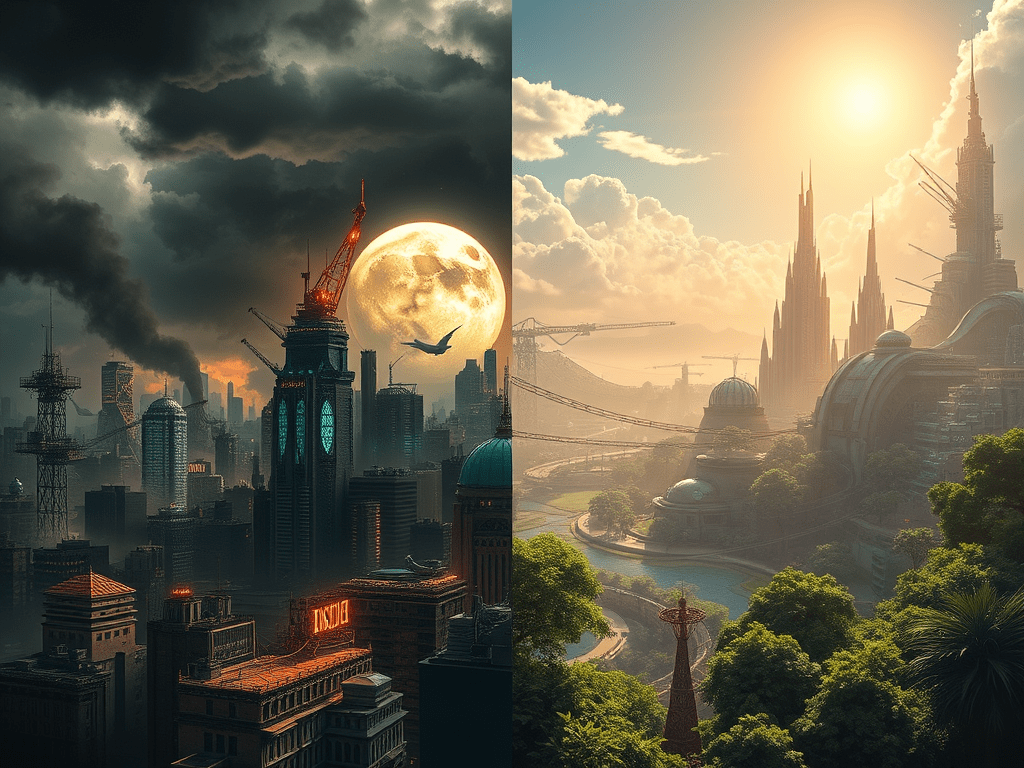
If we lose control of this narrative, the future may not look like a utopia. It may resemble science fiction:
- Hiding from machines,
- Fighting to survive,
- Worshipping our own creations, or
- Condemning them as devils.
NOTE: I wrote this in 2023 and many things have changed since then. The pause has never happened. There is no universal governance model and the lack of coordinated response is still missing but there are some regulations. Meanwhile, Chatbots became our daily life habit.
Deepfake and reality distortion boomed. Information means nothing and we can believe what we see, what we hear.
Art world and memory manipulation is now a global cultural and legal issue.
Still we need a response, proactive defense, well and ethical education as well as strong regulations.
 bahadirhancicek
Leave a comment