We live in an age of infinite possibilities. Millions of choices. Endless complexity. And yet here we are — struggling with depression, anxiety, identity crises. Trying to find our way without getting swallowed by the chaos.
Compared to those living in war zones or suffering from famine, we’re lucky. And when we compare ourselves to the rest of human history, we live with more comfort and opportunity than ever before.
So why, despite all this abundance, do we feel so hopeless about life?
Blaming outside forces is the easy way out. The economy, politics, or technology won’t provide the answers we seek. The real problem lies much deeper — in the foundation of freedom itself.
1. The Rootless Nature of Freedom
Modern life has liberated us from tradition, religion, and rigid identities. Some may cling to them still, but the broader culture has moved on.
Yet, no one told us what this “liberation” really means. We were never taught how to handle freedom — that it’s not just a right, but also a responsibility.
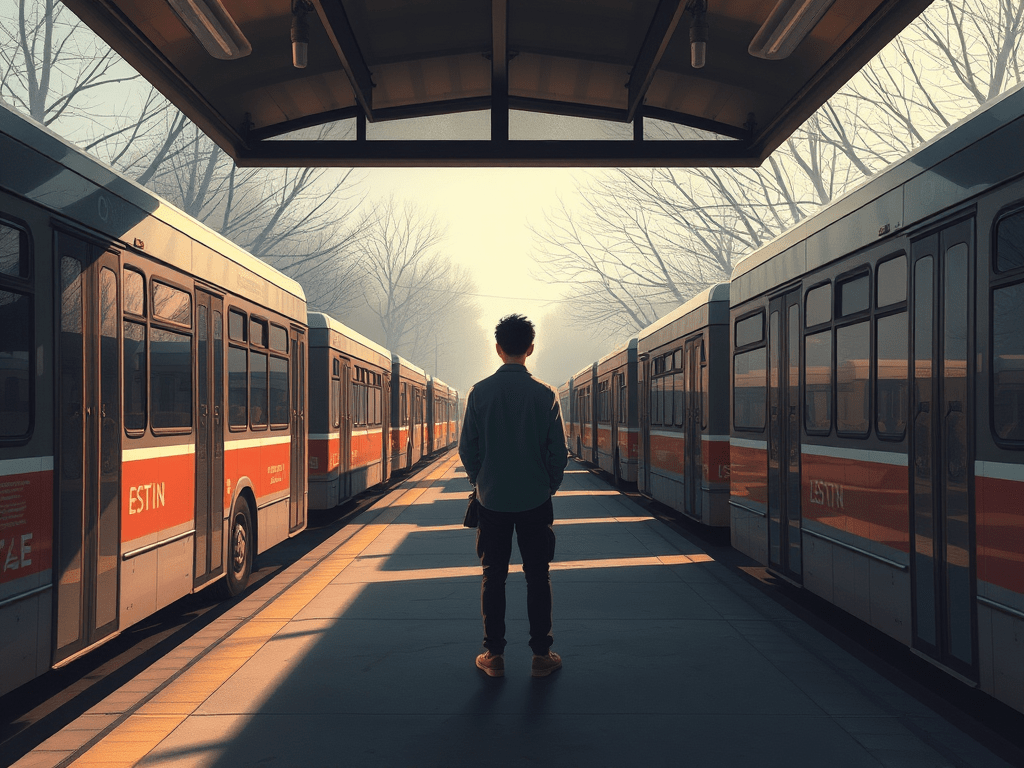
When every path is open, nothing feels necessary. Like a passenger standing in an empty bus full of vacant seats, we wobble forward without direction.
We were told to “be yourself,” but no one explained what that means. Who am I, really? What does being myself involve? What are my responsibilities in this freedom?
In the past, freedom was rare and hard-won. Now it’s common — and instead of empowering us, it weighs heavily on our backs. We try to carry it, to mold ourselves into something coherent, but the hunger for meaning grows stronger each day. And the weight keeps pulling us down.
2. The Collapse of Shared Narratives
We no longer believe in collective stories like we used to. Ancient religions, for example, are losing their hold — even among believers. Faith is questioned, values are personalized, and truth has become subjective.
The stories that once held communities together — traditions, myths, ancestral duties — have crumbled.
In their place, we’ve built personal brands and online tribes. But these superficial identities can’t replace true belonging.
Without shared meaning, we’re left isolated, disconnected. Our only universal experience seems to be drowning in meaninglessness… and maybe, loyalty to a few brands.
3. Turning the Self Into a Startup
Another trait of modern life: treating the self like a startup. We brand ourselves, optimize, and sell curated versions of who we are. Social media is the showroom for this performance.
We bought into the myth of self-actualization. Some found depth in it. Others turned it into a shallow hustle.
The pandemic revealed how fragile we really are — the more we focused inward, the more we broke apart when distractions were stripped away.
Our ancestors weren’t so dependent on themselves. Their identity came from family, rituals, and their connection to nature. We, on the other hand, are redesigning even our bodies to escape from nature.
They didn’t have to “find themselves” — they were part of something. And their hardships gave life depth and meaning.
4. New Beliefs, New Inner Journeys
Religion may be fading, but the human spirit still longs for meaning. This has sparked a wave of new spiritual quests — yoga, meditation, political movements, astrology, psychedelics…
These explorations can help, yes. But many of them are highly individualistic, disconnected from ethics, collective values, or spiritual depth.
That isolation, too, feeds the fragmentation we feel.
5. What Would Our Ancestors Do Without Religion?
It’s not about religion itself. It’s about belonging. Our ancestors didn’t need organized religion to feel they were part of something larger — and many lived without it.
Their lives were hard, but not disjointed. They lived slowly, grounded in experience. Suffering, hitting rock bottom, even death — these were natural, accepted parts of life.
Today, we avoid pain. Some make it to age 30 without a scar. Death is invisible, sanitized, denied.
The universe is now a data machine, burying reality under algorithms. We’ve built mountains between ourselves and nature.
What we’ve really lost isn’t belief — it’s the pure, unfiltered relationship we once had with ourselves and the natural world.
 bahadirhancicek
Leave a comment