In February(2023), I traveled outside of Europe for the first time. The destination: Colombia—specifically, Bogotá and Medellín. After watching countless documentaries, films, and series about the country, I’d be lying if I said I wasn’t excited. In this post, I’m taking a break from my usual focus on personal growth and instead sharing raw, real observations from the trip.
First Stop: Bogotá
Landing in Bogotá, I felt a strange mix of emotions—excitement, curiosity, and an unexpected hesitancy. Despite having visited 23 countries and 119 cities, there was an odd sense of caution this time. I’d done so much research on what could go wrong—from warnings not to resist if someone tries to steal your wallet, to stories of tourists getting shot for doing just that. I even read not to hail taxis off the street to avoid potential kidnappings.
Fortunately, once we passed through airport security, a sense of relief settled in. People were warm, smiling, and kind. That helped. But when we went to exchange money, all those TV scenes of shady dealings came rushing back. They asked for a passport, photocopied it, and even inquired about my job. Later, we nearly fell for a common airport taxi scam—something familiar in any underdeveloped country—but finally found a decent cab and began our journey into the city.
Part 1: Bogotá
The music playing in the taxi, the driver singing along, and his friendly demeanor helped us relax. On the way, one thing stood out: Colombia’s poverty—but also its diversity. I hadn’t expected it to be so multicultural. Clearly, Anatolia isn’t the only place where civilizations converge. 😄
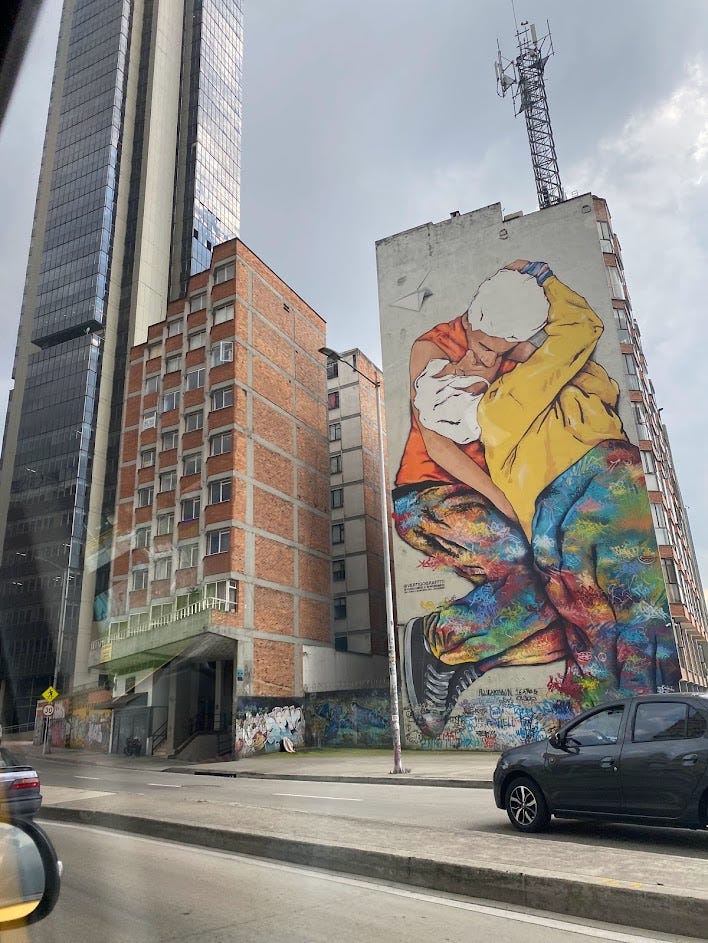
When we arrived at our hostel, a guy on a motorbike eyeing us a bit too long made us uneasy. The hostel was in a lively area but also in a part of town people advised against. All the rumors made us cautious. Thankfully, those fears proved unfounded.
The hostel was safe and comfortable. We settled in and headed straight out. First stop: Botero Museum. I was surprised such a high-profile museum, filled with works by Botero, Picasso, Matisse, and Ernst, was completely free.
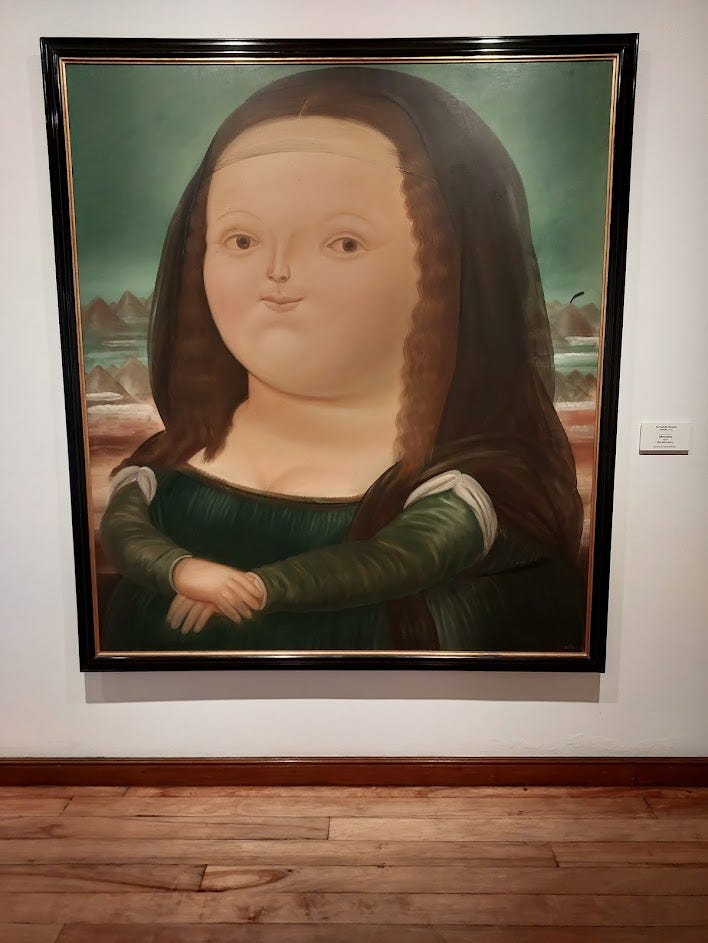
For those unfamiliar with Fernando Botero (90), he’s the world-renowned Colombian artist famous for his exaggerated, oversized figures and political satire.
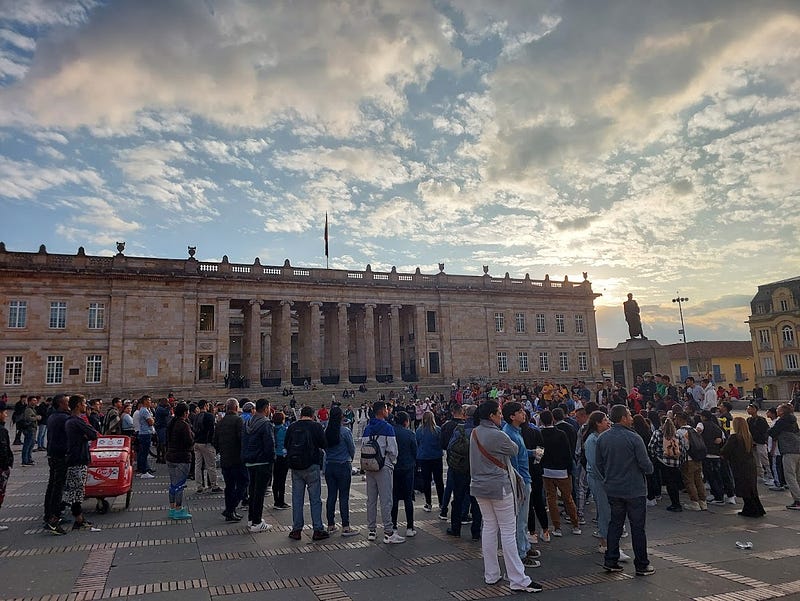
Next, we visited Plaza Bolívar, Bogotá’s main square, surrounded by the Cathedral, Congress, and Palace of Justice. Picturesque and touristy—but something caught our eye. The moment we took out our phones, people started tracking us from a distance. Eye contact? They vanished into the crowd watching a street performance. We’d just met South America’s famous pickpockets.
At 2,625 meters (8,612 feet), Bogotá’s altitude (combined with jetlag) started to hit. We walked back toward the hostel…

…but the desire to explore beat out the need to rest. We wandered through graffiti-covered alleys, drawn by the music echoing from every corner. Eventually, we stumbled into a lively square full of dancing, music, weed, alcohol—and joy. It felt chaotic yet heartwarming. Colombia was drawing us in.
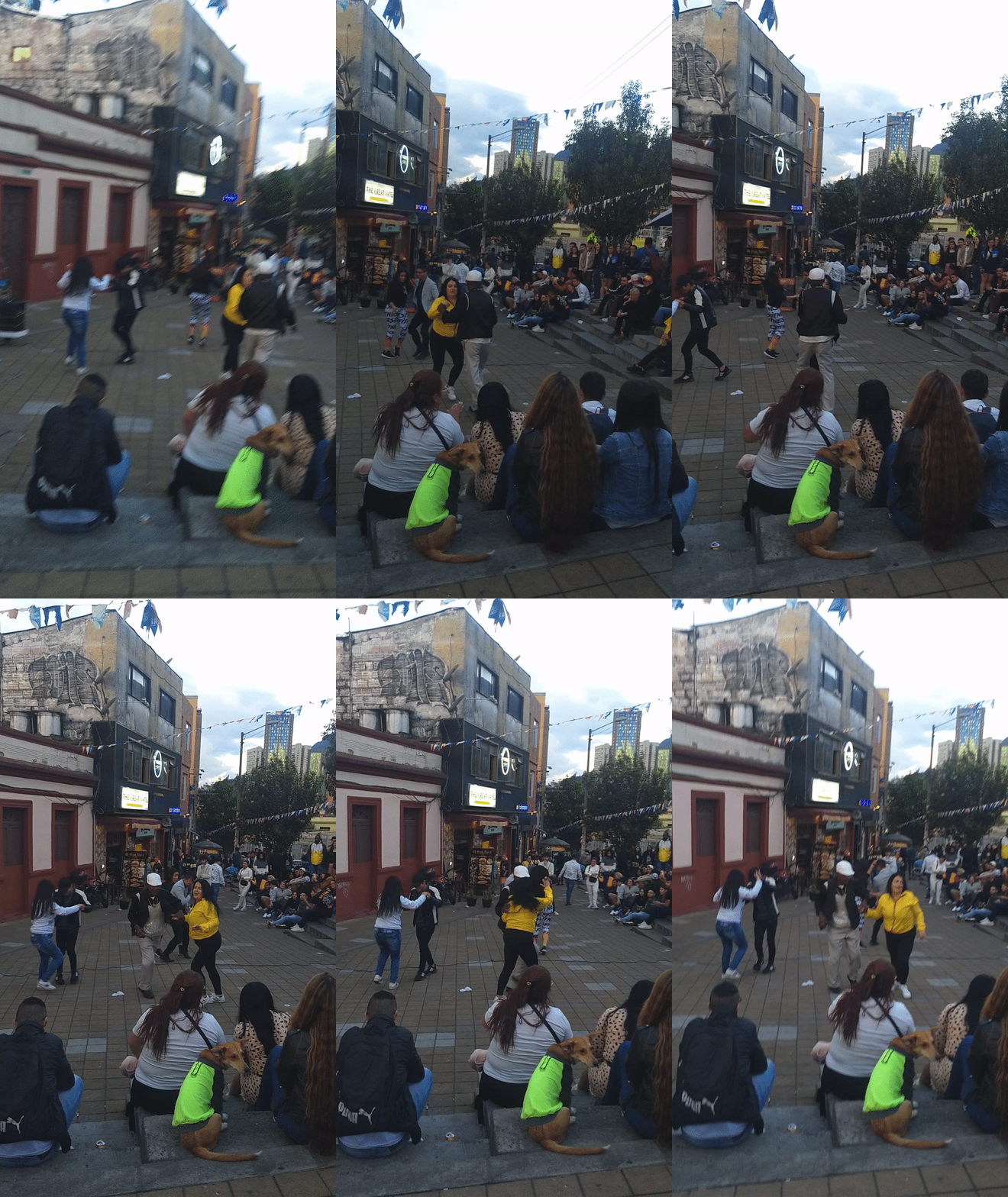
Locals carried minimal belongings: just enough cash, a backup phone maybe, and small bags worn in front. A sign of the street smarts learned here.
Day 2: Monserrate
We woke early, as advised by the hostel receptionist, to visit Monserrate—a 3,152-meter (10,341 ft) mountain overlooking Bogotá. Sundays were sacred here, with locals flocking for religious services. Tourists were told to avoid the crowds—but we saw it as a rare opportunity to blend in.

The streets grew busier the closer we got. Vendors popped up everywhere. Music—again—was everywhere. There are three ways to reach the summit: a 3-hour hike, funicular, or cable car (which doesn’t operate Sundays). We opted for the funicular, and by 7:45 am, the line was already enormous.
Families, couples, and elderly folk all made the climb. It seemed like a mix of church day and fitness day. Once at the top, the altitude hit hard—but the view was stunning.
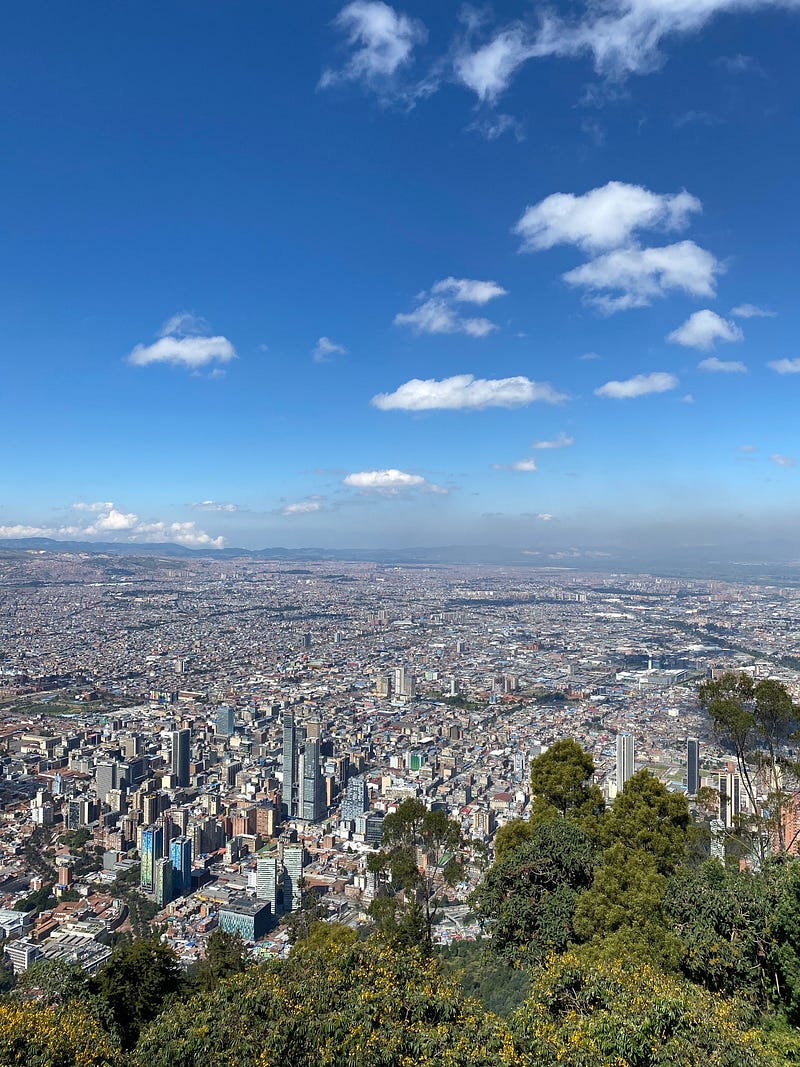
To one side: a sprawling urban jungle, like Istanbul. On the other: green, mountainous serenity.
Salsa music played from afar… or was it a hymn? From the church. Once again, the joy in this culture felt unshakable.
Zona Rosa
Zona Rosa is known as Bogotá’s safest, most upscale neighborhood. Think European cars, fancy restaurants, and polished sidewalks—a bubble for the rich and for tourists. It felt like a different universe. We visited, ate, drank, and left. It was interesting, but compared to the rest of Bogotá, a bit… bland.
Departure to Medellín
As we headed to the airport, I saw something amusing: workers mowing grass while dragging makeshift barriers to protect the road. Colombian innovation. 😄
The country reminded me more of Turkey than of Europe. Even their billboards used construction to symbolize “innovation.” I loved an Opel ad that simply read: “Very German.”
Our driver, Carlos Arturo, confirmed our impressions of Colombia—warm, talkative, and caring, even when we barely understood each other. He spoke in Spanish the whole ride, repeating himself patiently and using gestures to warn us about Medellín.
We left thinking:
We need to come back—either already speaking Spanish or to learn it here.
Back to Bogotá
We’ll save Medellín for another post. Here’s how our last day in Bogotá unfolded.
We wanted to take it easy—just one final museum and a relaxing walk.
We returned to the hostel, where the receptionist didn’t speak English—but didn’t mind either. Somehow, she always got her message across. That’s become our image of the “typical” Colombian: language is optional, warmth is not.
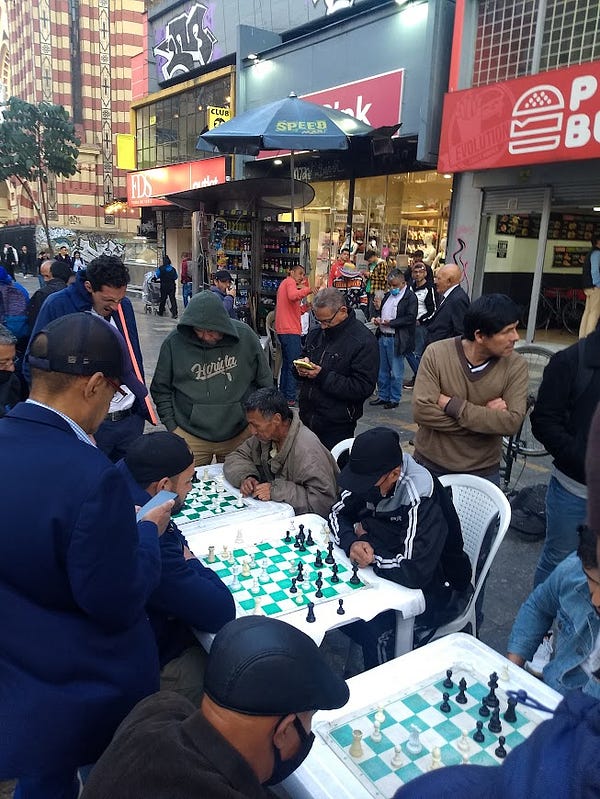
We took a stroll down one of Bogotá’s busiest streets. Music, vendors, laughter—everywhere. A crowd had gathered. Chessboards were set up, and spectators took turns watching, critiquing, and joining the games. Most players were middle-aged or older, though some kids joined too.

At Plaza Bolívar, we were met by protesters in red, waving Che Guevara flags. Most had dispersed, but some remained—camping outside Congress. I later learned they were Indigenous Inka communities protesting rising costs and demanding equal access to healthcare and education.
Local Diner Surprise
We ended the day at a local diner. The prices? A third of what we’d paid elsewhere. We pointed to a photo on the menu and left it to chance. Soup came first, then endless appetizers and salads—even when we tried to decline. “All together,” the waiter gestured. We couldn’t finish it all before the main dish arrived.
I had two thoughts:
- They’re going to charge us for every plate.
- Or we’ve been overpaying all week.
It turned out to be the second. This meal was incredibly cheap—and delicious.
Salsa Night
Our last night in Colombia. We reserved a table at a bar with live music. Salsa was playing. A well-dressed European man (clearly trained in salsa) got up and started dancing with his friends. Good dancer, but… stiff.
Then the locals joined in. Everything changed.
It wasn’t a performance—it was like breathing. Natural, flowing, joyful. People danced solo or with partners, asked politely, danced, returned to their tables. There was no pressure, no awkwardness, no performative sexuality. Just music and joy. It was contagious.
We didn’t dance—we just watched. And we were in awe.
Final Stop: Gold Museum
Before our flight, we visited the Gold Museum.
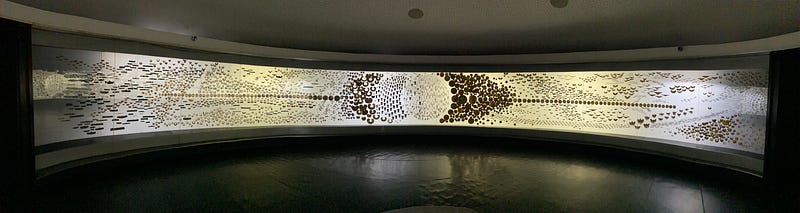
The exhibits covered gold, silver, copper—and Colombian history from ancient times to the present. Their beliefs, rituals, interactions, colonialism, and more.
What struck me most was this:
Across the globe, regardless of geography, societies follow similar paths—through faith, politics, social structure.
And if you skip those phases, they don’t become a “win.” They become a missed opportunity to learn.
 bahadirhancicek
Leave a comment