
Global Warming
The term global warming is often misunderstood. Unfortunately, ignorance about technological literacy shows itself here too. We still cannot truly grasp the importance of this issue.
There is a significant group of people who claim “global warming is a lie, it doesn’t exist.” In fact, in one of the world’s biggest countries, you can even run for president with such a claim. Similarly, in the most developed countries, an entire political platform can be built around this rhetoric. It’s a shame.
Global warming means the increase in the Earth’s average surface temperature.
But why is this happening?
The concentration of greenhouse gases in the atmosphere is increasing. Gases like carbon dioxide, methane, and nitrous oxide trap heat from the sun, preventing it from escaping back into space — this is the greenhouse effect.
When I was a kid, teachers would explain the greenhouse effect in school, but I don’t remember any of them ever explaining it in practical terms — what it is, what it causes, and how it affects daily life. Hopefully, this has changed.
Small fact: N₂O (nitrous oxide) is also used as an anesthetic — known as “laughing gas” in English. Perhaps humanity will go extinct with a smile on its face.
In a previous post on extinction, I mentioned that just like many other things, this is something we can’t fully reverse either. The destruction caused by global warming cannot be undone. We can only try to slow it down and soften its effects. We can’t bring back melted glaciers or extinct species.
“Global warming is a lie”
Why do some people draw such conclusions from tweets or headlines? Is it because they are stupid?
The answer is yes.
Because they don’t question the information they receive, they don’t think critically, they are far removed from scientific thinking, and they expect everything to change instantly. It’s also the fault of science and technology — we’ve rarely considered the ethical consequences of today’s technologies.
Modern media has become total chaos. So much false information, people believing unedited content as truth, and when someone suggests we need editors, they respond with: “Oh, so you want to censor information?” — the age of gatekeeping is over, say the self-proclaimed geniuses. It’s a bottomless pit.
Now Wikipedia is no longer trusted, and AI outputs are treated as gospel. And when you question them, people say: “How do you know? Have you processed as much data as the AI?”
It’s hard to understand how humanity has made it this far with this mindset.
Another reason why many people deny global warming is that the subject is complex. To understand a scientific explanation, you need to think scientifically — and even that isn’t always enough. When you add political propaganda and so-called “professors” spouting nonsense for attention, the situation becomes even messier.
Yes, there is a green industry that profits from this too — some organic product companies, many environmental businesses make money from it. This is not a lie — it is observable. And it’s normal — saving the world without money is impossible. Every effort creates value. But if an influencer said this, there would be chaos, and big players would start following. The influencer would keep rambling, happy to have found an audience.
The human brain, sadly, rejects the complex and the abstract.
So professor, is global warming real?
Yes.
In 2019, France recorded 46°C temperatures. 1,500 people died indirectly. Similar in the US.
In 2021, Istanbul and Ankara hit 40°C. By 2023, temperatures of 45°C were recorded. In 2024, it became normal to say: “Wow, this year is so hot.” 37°C and above is now normalized.
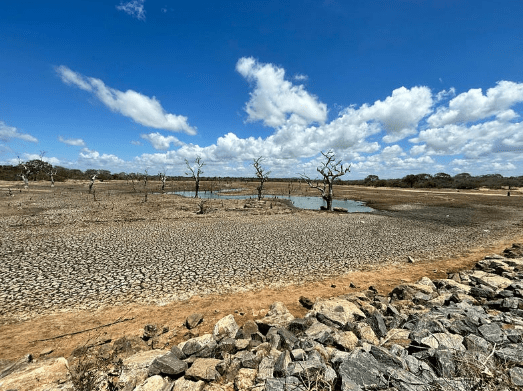
Many rivers and lakes dried up.
We encountered unusual insects, fish, and other creatures. It’s not just “because the sea is warmer.”
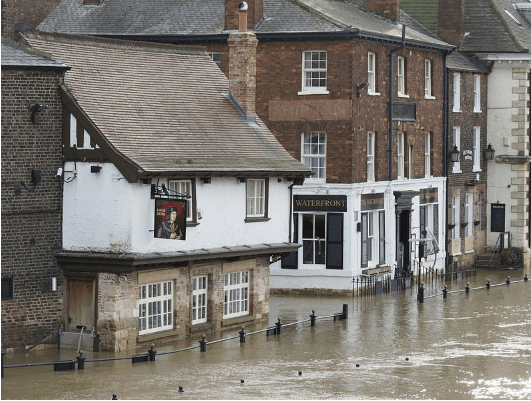
In 2021, Germany experienced floods that killed 200 people. In the summer of 2024, similar scenes unfolded in the Alps. Rivers overflow with every rainstorm.
In 2022, Pakistan saw flooding affect 33 million people — rainfall was 190% above normal.
In Turkey, floods caused dozens of deaths in Bartın in 2021, and later in Adıyaman and Şanlıurfa in 2023. Flooding on the Black Sea coastal highway is now a yearly news item.
Hurricanes and tornadoes are becoming more frequent worldwide. In one week in 2024, Croatia recorded 20 tornadoes. Libya, India, and Bangladesh faced similar disasters.
Turkey is seeing more tornadoes too. Western Turkey now regularly experiences severe storms, extreme weather, floods, hail — these are becoming the new normal.
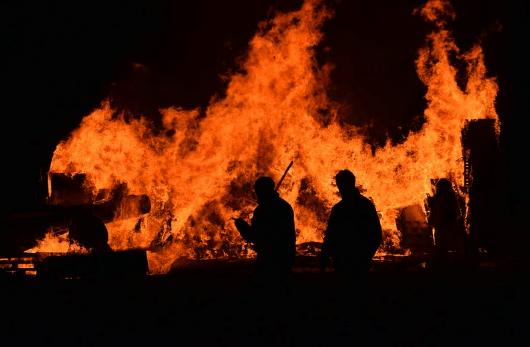
In Australia’s 2019–2020 “Black Summer,” 18 million hectares burned, 33 people died, and 3 billion animals were lost.
In 2023, Canada saw millions of hectares burn in Alberta.
In California (2021), 65% of the state experienced extreme drought. East Africa (Ethiopia, Somalia, Kenya) faced one of the worst food crises in years. Food security is increasingly threatened.
Turkey faces ongoing water shortages, with rainfall in some regions down to half the normal level.
But how does this really affect us?
It’s proof of human stupidity that global warming isn’t discussed as seriously as migration issues. For example, a Bavarian state leader recently said during a flood crisis:
“If it rains too much you complain; if it rains too little you complain.”
This is the level of idiocy we’re dealing with globally.
Heat waves cause diseases, increase deaths, and provide ideal environments for new viruses and bacteria. Malaria is making a comeback.
Diseases carried by mosquitoes are increasing. And we use more energy for cooling — consuming more resources and accelerating global warming further.
Extreme weather damages infrastructure: homes, workplaces, airports, ports, and more. Rebuilding costs billions that could be spent on education, quality of life, and innovation.
In the meantime, we face higher taxes, more restrictions, and supply chain problems. Rising fuel prices and food prices hit us hard.
Food isn’t just about cost — it’s also about safety. As extreme weather events grow, food storage and supply chains become more fragile.
The global warming deniers often come as part of a package deal:
“No global warming, migrants are bad, LGBTQ+ will destroy families.” It’s like a product being sold. People repeat these slogans like parrots.
Climate-related disasters displace not only humans but animals and insects too.
Migration will increase, whether people like it or not — and refusing to address real problems will only make the symptoms worse.
We’ll face more dangerous insects, animals once harmless may become threats.
Biodiversity is at great risk — something I’ve written about before.
We don’t fully understand nature’s dynamics. You can’t replace a lost plant species with a machine. Many creatures are disappearing rapidly.
So what are we doing about it?
Not much.
We’re using more air conditioning, buying more cars, emitting more CO₂. We buy “green” electric cars but destroy forests to mine lithium-ion batteries.
We exercise in air-conditioned gyms, then consume more protein, which leads to more intensive agriculture and more deforestation.
We produce more plastic waste. We buy more homes, demand more services, and build more roads. We burn coal and wood for fun.
We have more children — for population or military reasons — without thinking about the planet we are leaving them.
We consume more, chasing status and trends.
On the positive side:
There are international agreements: the Paris Agreement, UNFCCC, Kyoto Protocol, Doha Amendment, Montreal Protocol, and others.
Countries pledge to reduce emissions and limit temperature rise to +1.5°C.
They invest in science — but often ignore scientific advice.
There is some progress: renewable energy investments, more energy efficiency, and better farming techniques. These are small but positive steps.
Current situation:
At our current pace, we’ve already overshot the 1.5°C target.
Projections now say we could hit +2.4–3°C by the end of the century.
More extreme weather events.
Rising sea levels.
Flooding and erosion becoming the new normal in coastal areas.
40,000 species reported as threatened in the past decade; 900 species extinct.
Governments still don’t allocate enough to prevention. Most of the money goes to disaster recovery, not prevention.
There are bright spots:
COVID temporarily reduced CO₂ emissions.
Renewable energy is booming.
Electric vehicles, though imperfect, help reduce CO₂ emissions.
In short:
The world — and Turkey — have bigger problems than migration.
We need smarter politicians than those telling “migrants eat dogs” stories.
The world must move away from a consumerist culture, from empty status-chasing, from appearance-based values.
Humanity needs to be educated on global warming and technological literacy.
We must think more about the consequences of every action we take.
 bahadirhancicek
Leave a comment