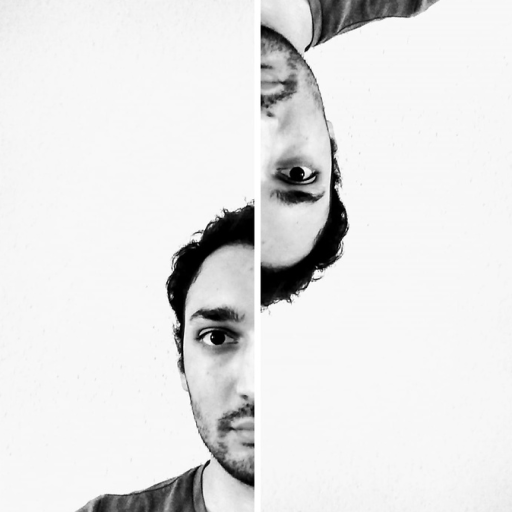
“People think in the past, judge in the past, compare in the past. The fact that an action was done in the past matters more than whether it was a mistake.”
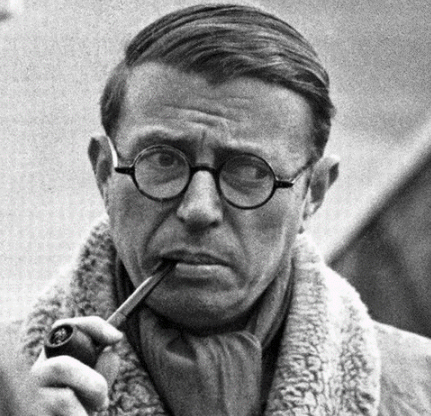
Jean-Paul Sartre — writer, philosopher, political journalist — is one of the most important philosophers of the 20th century.
Short, cross-eyed, wearing large, attention-grabbing glasses, and in his own words, an “ugly” man.
“One cannot imagine a life more beautiful than the one he lived: But did he really live it?”
He became popular, especially after World War II, as the defining figure of existentialism.
He expressed his philosophy in many plays, screenplays, novels, and articles. His first book, Nausea (1938), gave him an opportunity to convey his ideas on life, existence, and freedom.
To understand Sartre’s perspective, it helps to know a bit about his life.
In Nausea, he tells the story of Antoine Roquentin, a writer who fears and is repulsed by his own existence.
Roquentin’s struggles with philosophical and psychological dilemmas give Sartre the opportunity to dramatize the core principles of existentialist belief — that everything is stranger and more absurd than we think, and that individual freedom is paramount.
For example:
A romantic dinner at a wooden table with your partner would look very different to Sartre.
In his view, you are not dining at a table — you are sitting next to a slaughtered and dismembered tree, putting bits of dead animals and plants into your mouth.
In other words, many things in life are deeply strange.
“I feel very far from them: they are relaxed from the warmth, and in their hearts they carry the same sweet, powerless dream. They feel safe, gazing with confident eyes at the yellow walls, at other people. For a while, each finds the meaning of their life in the experience of the other. After a time, their lives merge into one heavy, warm experience devoid of meaning — but they will never realize this.”
The book throws you into a deep well.
As the pages turn, the lid of the well closes, the light disappears.
You search with Roquentin for a way out, but the walls close in and the well starts to fill with water.
As time passes, you think about the futility of struggle and the absurdity of life, and yet you also feel the strength of your individual freedom — just like in Descartes’ “I think, therefore I am.”
“I’ve seen many who pride themselves on their experience. People who live their lives in a daze, like draft horses that sleep standing up. They marry hastily, have children by chance. They encounter others only in cafés, at weddings, or at funerals. Occasionally they get swept up in the current, struggling without understanding what is happening to them. Everything around them begins and ends without them. Distant, shadowy events briefly touch them with a fleeting sensation, but when they try to grasp what happened, it is already over. By the time they reach forty, they cling desperately to their obsessions and stubbornness, calling it wisdom. Then they begin to dispense this nonsense like a machine.”
When you finish the book, its effect will stay with you for days.
Your perception of life will change.
Perhaps you’ll be filled with an unexpectedly powerful joy for life — or perhaps the opposite, prompting deep reflection.
“Among those little figures I can see on Boulibet Street — I will be one of them.
From up here on this hill, I feel so distant from them. They seem to be a different species. After a full day of work, they leave their offices with a satisfied look, gazing at the houses and squares, thinking this city is theirs — a beautiful provincial city. They are not afraid; they feel at home. They see nothing beyond the water from their taps, the light from their bulbs, the hybrid trees held up by supports. Perhaps a hundred times a day, they confirm with their very lives that everything is mechanical, that the world is ruled by unchanging laws. All bodies abandoned to nothingness fall at the same speed, the park closes daily at 4 p.m. in winter, 6 p.m. in summer, lead melts at 335°C, and the last tram leaves City Hall at 11 p.m.”
 bahadirhancicek
Leave a comment