
The Leaf-Cutter Ants and the Vanishing Lungs of the Earth
One of the permanent workers of the Amazon is the leaf-cutter ant. In forests where trees can grow up to 90 meters tall, they form a bridge between the canopy and the forest floor. After humans, they create one of the most complex animal societies.
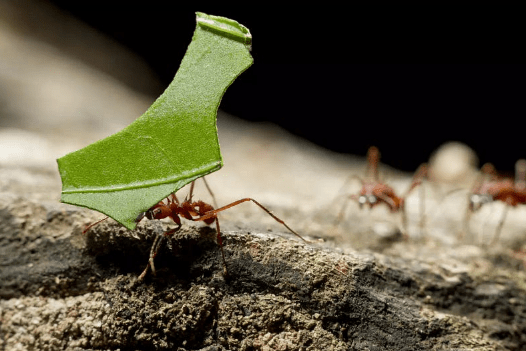
They usually cut fresh leaves from the treetops and slowly carry them down to huge soil mounds. Their goal is to use them as a base for growing fungus, which they then use to feed the colony. These fungi have been domesticated by the ants and therefore no longer produce spores.
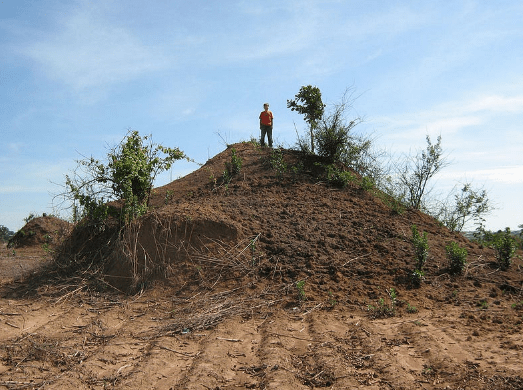
The soil mound they build (their underground nest) can grow up to 30 meters tall and have a radius of 80 meters — about 3 times the size of a standard tennis court or half the size of an Olympic swimming pool. It houses up to 8 million individuals.
Leaf-cutter ants have a caste system, with 4 main castes:
- Minims: The smallest workers. They care for the larvae and the fungus gardens.
- Minors: The first line of defense. They scout for food and quickly defend if a threat arises.
- Mediae: The collectors. They cut leaves and bring them back to the nest.
- Majors: The largest workers, acting as soldiers to defend the nest. They also clear debris from foraging paths and help transport bulky items back to the nest.
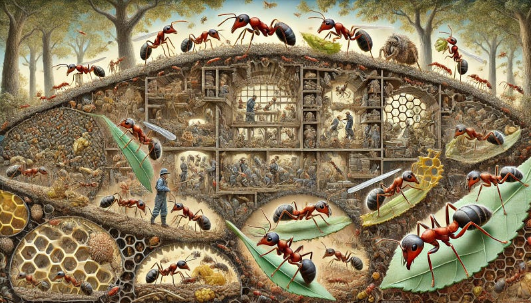
Older ants mainly handle waste management, which is critical to the colony’s survival. They sort and move waste to designated piles and constantly mix it to aid decomposition.
The relationship between ants and their fungus is more than just leaf transport. Actinomycetota bacteria living in the ants’ metapleural glands produce antibiotics that protect the fungus from Escovopsis parasites — the same bacterial group responsible for producing most of today’s antibiotics. If parasitic fungi still appear, the ants remove and discard them.
While leaf-cutter ants play a vital role in recycling biomass and maintaining the Amazon ecosystem, they can also be agricultural pests — particularly problematic for citrus farmers.
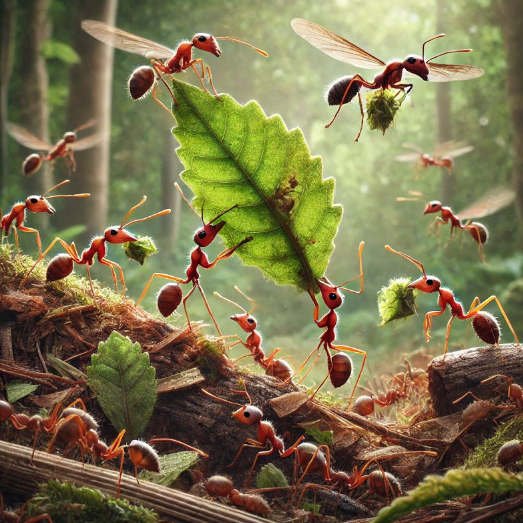
One colony may have up to 500,000 worker ants that can carry loads 20 times their body weight, transporting leaves as far as 100 meters from the trees to the nest. Smaller ants often hitch rides to reduce attack risks.
The leaf-cutter ant colony described above is just a tiny part of the Amazon ecosystem, known as the lungs of the planet — spanning 5.5 million km² (7 times larger than Turkey), home to 16,000 species and 390 billion trees.
Despite centuries of research, much of the Amazon’s biodiversity remains unknown. New species are still being discovered, offering unique genetic traits crucial to future scientific and medical breakthroughs.
In fact, calling the Amazon “the lungs of the Earth” may even be an understatement — it is more like the very fabric that sustains life on this planet. Sadly, it is being slowly destroyed by human activity. This not only accelerates climate change but also drives species extinction, leading to unknown disruptions in the ecosystem. Even if some of this could be “fixed” with technology, much of it cannot.
The Amazon alone absorbs as much CO₂ as is produced annually by 2 billion people. In doing so, it mitigates the greenhouse effect and slows global warming, helping sustain life cycles and prevent species loss.
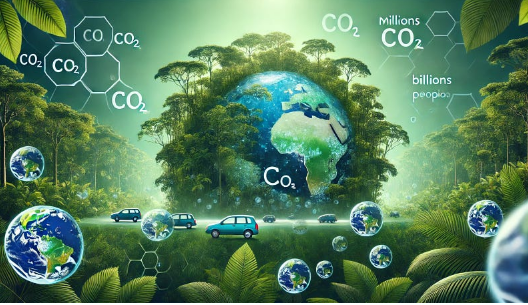
Unfortunately, many people fail to grasp this importance. Perhaps it would be better to say: this is the most important issue on Earth today, yet it is the least discussed. When it is discussed, people tend to react negatively — to carbon taxes, rising prices, or anything that threatens their consumption habits.
Our relentless desire to own everything, to consume endlessly, and to indulge in luxury is our greatest obstacle.
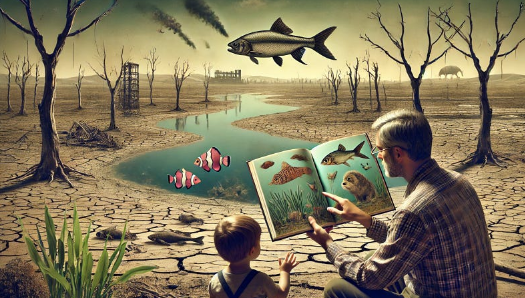
It may sound dystopian, but 10 years from now, there may be no more seafood. We’ll tell our children fantastical tales about how we used to eat fish caught from the ocean. We’ll show them empty fields and say: “This used to be water.” In Turkey alone, nearly 70 lakes have completely dried up in the past 30 years.
Soon, what is “normal” today will be a luxury. We’ll produce to order instead of in bulk. Many things will shift from ownership to rental and sharing models.
When water runs out in vacation hotspots, buffet-style all-inclusive holidays and those “Instagram selfies” will become embarrassing relics. The concept of holidays will fundamentally change.
Many regions will burn. We will mourn high numbers of casualties, just as we do after earthquakes.
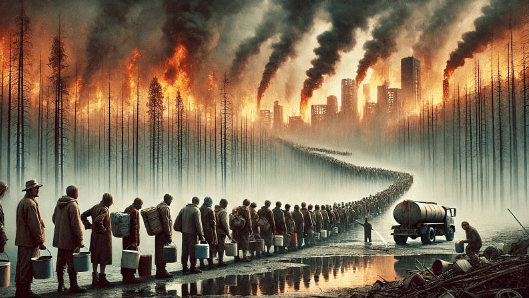
Turkey is already facing a water crisis. Natural water sources are depleting. Water will become a luxury. Supply may be rationed. You’ll spend half your salary on water. No more watering gardens or washing cars. You may even feel guilty turning on the tap. Diseases linked to water scarcity will rise, but by then it will be too late.
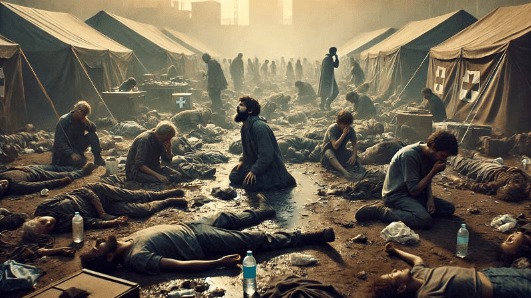
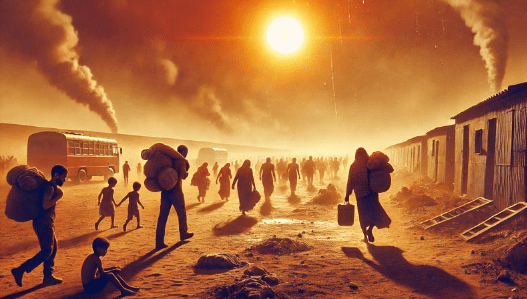
Meanwhile, India is hitting 50°C, and Antalya is close behind. We’ll see large migration movements as people flee unbearable heat. The relatively minor problems we face today will pale in comparison.
And airplanes? Yes, our choices — like short-haul flights — contribute heavily to this crisis.
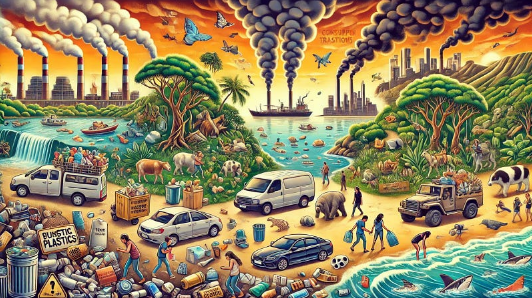
Selfish, thoughtless consumption is the main driver.
The Amazon is heavily impacted by meat consumption — not just there, but globally. Beef production causes massive deforestation as forests are cleared for grazing land. Supermarket meat is literally costing us the planet. In 2023, there were 933 million farm animals, most of them bred purely for human consumption — a huge climate and health threat (antibiotics, conditions, parasites).
Pet ownership also contributes significantly — pet CO₂ output is equivalent to that of millions of cars.
Soy production is another culprit, with deforestation driven largely by the need to feed livestock, not humans.
Logging and paper use are massive threats. Unsustainable harvesting accelerates deforestation. Paper, once an alternative to plastic, also drives demand. We’re simply shifting the problem elsewhere.
Palm oil — found in countless food and cosmetic products — also fuels deforestation.
Fossil fuels remain the most infamous driver of climate change. Even in the Amazon, natural gas and oil extraction causes great damage. All for the sake of flying, driving, and avoiding discomfort.
Plastic is another massive problem, poisoning land, water, and ecosystems. And urbanization compounds this, as expanding concrete jungles displace forests and wetlands.
Fashion and fast consumption culture further drive waste and resource depletion. The same goes for electronics. As an electronics engineer, I see this clearly — most products are made just because we can, not because we should. Sustainable design should be our future focus.
We don’t need to own everything. We don’t need endless variations of every product. Marketing and consumer culture trick us into believing otherwise — manipulating our vanity and sense of identity.
Many species are going extinct, and countless forests and lakes are disappearing. Ice caps are melting. Extreme weather events are rising. Related diseases are increasing. Migration is becoming a greater challenge. WWF estimates that 17% of the Amazon has already been lost, and global deforestation continues at the size of Portugal every year — far too fast to be fixed by “planting a few trees.” 80-meter trees and entire ecosystem dynamics cannot be replaced overnight.
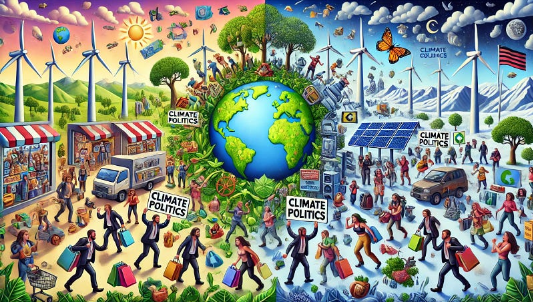
If we don’t change our habits and priorities, the future will not be bright.
Losing the Amazon will impact not only climate and biodiversity but also human well-being — triggering biological, cultural, and social crises.
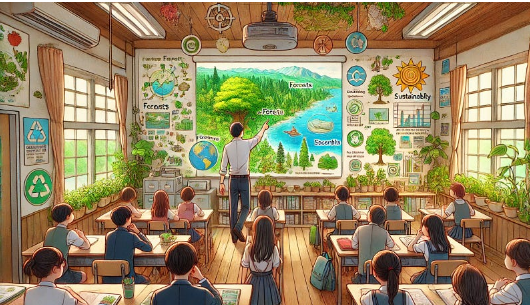
This is a non-political issue that demands global cooperation. People need to be educated. They need to reflect on the consequences of their actions. They need to help guide their governments toward science-based solutions. We must focus on protecting what remains, and make sustainability a way of life.
We must pressure leaders to combat deforestation and promote reforestation, instead of getting distracted by trivial political debates. We must change our consumption, travel, and dietary habits. We must recognize that environmental responsibility starts with the individual. And we must spread this awareness through conversations and actions.
Climate change is often poorly understood. Because its effects are slow and not always immediately visible, people dismiss it.
Yet species around us are already disappearing. Many insects and natural phenomena are vanishing, but people chalk it up to “how it’s always been.” They won’t fully grasp the loss until their own familiar animals disappear — but by then it will be too late.
Even the terms we use can cause misunderstanding. For example, we say “global warming,” but Europe now faces the risk of freezing like in ancient times. People read this and think, “Wait, I thought it was getting warmer?” We need to find better ways to communicate the seriousness of this crisis.
I hope this article sparks some light in readers’ minds, encouraging them to talk, write, and act — so that these ideas reach even more people.
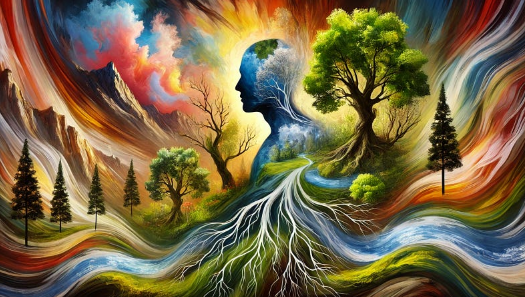
Humans are part of nature, and protecting nature should be one of our highest purposes — even higher than mere survival or reproduction.
 bahadirhancicek
Leave a comment